Dewdrop Refractions: In the Wink of a Moment

Tuesday, July 31, 2007

Indeed it is appreciation—to appreciate and to think critically about what we are doing before we lose what we have:

I stood outside this morning with our blue teacup poodle, Jetta—blue, the poodle people say, because white curly flecks marble her otherwise black coat—when I noticed the sunlight refracting violet, red, yellow and green through the dewdrops onto the grass. My mind sailed back to Ship Bottom, New Jersey, where, when I was a child, my mother took my brother and me to spend a few days visiting relatives. Everywhere yards were covered in gravel, no grass, gravel—cream, apricot and ochre, the small, flat stones marbled with brown flecks—glaring in the hot August sun, digging into the souls of my bare feet. We slept on iron cots in the big attic room, the pungent smell of wood beams and walls baking and drying under the heat.

The poignancy in the light of the moment this morning refracted a spectrum of such memories across my mind. I revisited the crystal clarity of my uncluttered childhood psyche where I experienced many such momentary phenomena, like watching the particles of dust lit up and dancing in a shaft of sunlight playing through the windowpane diagonally down across the room to my grandparents’ living room rug where I tended my dolls. As an adult, I experience far fewer of these mesmerizing moments.

This morning I recalled that I often observed the beauty and sensuality surrounding me as a child living outside Philadelphia: simply kneeling on the studio couch and looking out my bedroom window, as a four-year-old, up at the deep blue sky with the stray, wispy white clouds; examining a green fluffy caterpillar and noticing that its excrement is green and wondering what it eats to make it green; wandering the fields and woods with my black and tan shepherd/collie, Butch; standing on the hill with my brother and waving down across the field of high brown weeds to the engineer of the steam engine puffing black smoke out over the line of freight cars it pulled along the B&O tracks. As an adult, when I worked at the farm stand in Naples, Florida, during a lull I’d study the legions of lizards, noticing that they hiss when they fight and that they fight like cats; and that tree frogs when they get into the refrigerator, lodge on a plastic orange juice bottle and get cold, stretch flat out and become lethargic, but when you peel them off and put them on a fence in the sun, in twenty minutes they plump back up, draw their legs back under them and hop away. It takes twenty minutes every time. There was even my simple experience of standing in the radiant Southern California sunshine, with my luggage cart stacked with picnic coolers, selling sandwiches to office workers and outside the warehouse where we got the sandwiches, in the parking lot, chatting with coworkers.

My experience this morning tapped me on the shoulder and spun me around to look at the past and remind me how much I love being outdoors and that I am constantly striving for that experience—pursuing my landscape photography, and my many trips to Mammoth Lakes, California, Yosemite and the High Sierra, there spotting a spring spewing from a crack in a granite rock or rounding a bend in a steep mountain path, suddenly coming upon a waterfall; and to the Grand Canyon and Southern Arizona wandering the back country, maybe trails where Geronimo tread; my hours spent walking the beach, padding along the edge of the foamy, sunlit surf—Atlantic or Pacific; or exploring the fields and woods; or just standing in the sun anywhere and feeling warmed.

In the wink of a moment this morning I realized why certain people touch me so deeply—it is my love of the intelligent mind, oneness of mind with another, my love of the sensuality of nature and of being outdoors—exploring and respecting what is given us on this beautiful and rare planet: “gathering the many questions the outdoors provides,” one biology teacher told me; gathering the many questions any subject provides.

It is the curiosity of a child, the seeking of a greater truth, a truth that may reveal itself in its awesome beauty as contradictory. Leo Tolstoy said the truth is contradictory. I travel in my mystical journey; as in a train carriage to stations along a railroad line, from one experience I come to another, unsidetracked. These thoughts and experiences ring for me, like Russian church bells—true yet cacophonous.

The instant I set foot at Monticello I fell in love with Thomas Jefferson. If ever I could have a conversation with him—I felt his presence so strongly and sensually there, as if he were standing in front of me in the room, watching and sensing my thoughts. –-Speaking to me? Maybe he’d speak in a soft, thoughtful, drawn out, Charlottesville accent, but not a drawl; and the conversation itself—the refracting of the one mind into many ideas: philosophy, science, nature, architecture, cities and farming, people, government, laws, intriguing and enjoyable discoveries in other cultures and civilizations—such as macaroni and cheese in Paris—and planning for the future and the history.

These poignant moments are my Marble Angel, the marble angel the sculptor, who was covered in white powdery dust as if he’d just crawled out of a sack of flour, walked me up the long hill on the ochre dirt path and showed me. There the flat, white angel lay in a wooden box of straw in the back of his studio high on the edge of a cliff overlooking the copper mine pit in Jerome, Arizona—my peak experience; the marble angel of Thomas Wolfe’s novel, Look Homeward, Angel: “…a stone, a leaf, an unfound door; of a stone, a leaf, a door. And of all the forgotten faces.” I had just read the novel.

“I saw the angel in the marble and carved until I set him free,” said Michelangelo.

To hear that certain voice over the phone, to see that face, to look deep into those eyes, to share thoughts deep in the mind; sometimes it comes with the music they compose or play, or the stories they write or speak; sometimes a musical or prose voice reaching down across the centuries—I was blown away when I heard on CD nineteenth-century Russian composer Alexander Scriabin playing his own music, music he’d made on piano roll in 1910.

These experiences are mystical. Like Jude (the mason) and Sue (his cousin) in Thomas Hardy’s novel Jude the Obscure, they exist for me as that soul realization, that oneness; what comes spontaneously:

I saw the sunlight refracted through the dewdrops this morning. I was teleported to a childhood moment in Ship Bottom and I knew the connection—all in an instant: setting one’s own angel free.

As I age, I feel like a relic.  So, I slow down, I observe, I appreciate. And I feel alone, especially in today’s world where the race is on and series of phenomena blur, engineless, as they speed past the windows of my mind, or like a watercolor carelessly left out on the lawn on a foggy night—the details run and smear. But it is seeing the sunlight refracted through the dewdrops on the grass. That is what it is all about.

I think it most significant to slow down, stop a moment and pay heed to oneself and one’s surroundings, to allow one’s mind time to perceive, relate things one to another, organize, make sense of it all. It is the wink of a dewdrop turning and bending the sun’s rays into all the details of the rainbow, passing from one medium and bending into another, a key struck on a piano, a string plucked on a cello, an instant, whether noticed or not, that reverberates through the empyrean spheres.

Wednesday, August 1

I saw the dewdrops on the grass again this morning and as I stood and gazed and marveled at the rainbow colors in the refracted sunlight, I flashed on walking on the Palos Verdes, California, bridle path with my Siberian husky, Kolia, black with blue eyes—and the red and yellow California poppies: the puppy and the poppies.

# # #

–Samantha Mozart
 

XIX. Must Love Peanuts

I picked two crisp jalapeños off our jalapeño plant in the pot on the front porch tonight. I cut them up and put them in the quesadillas I made for dinner, which I served with refried beans and the remaining quarter of the refrigerated cantaloupe I had cut the other day.

I once worked at a Southern California company that employed in our office a Japanese staff from Tokyo. A pretty, young non-Japanese coworker pulled the long strip of glue out of a magazine that some ad was stuck to and walked down the hall to our Japanese office. She had stuck the strip of glue under her nose, so that it dangled down below her chin. She stood at the office door and called to the sweet, young Japanese girl, “Look, look!”

That’s how Emma looked tonight. The freshly picked jalapeños made her nose run. She was eating her quesadilla with snot dripping down into it. I quickly gave her the napkin at hand, telling her to wipe her nose. She took forever to open the napkin and get it adjusted just right while meanwhile a lengthening strip of snot dripped down into her Mexican dinner.

We got that cleaned up. I continued to eat my dinner (well, look, I’ve kind of gotten used these episodes) and then looked over to see how Emma was fairing. Her nose wasn’t running, she had eaten some more and her left hand was comfortably resting in the remains of her sour cream-slathered quesadilla.

Jalapeños aside, I know you are waiting to hear how the state Attendant Care Services program worked out for us. I have held off telling you because I wanted it to be a cliffhanger so you’d keep coming back to find out. (Heh-heh).

Emma has become an employer. We were accepted into the program. Now we have to get her an EIN number, and I, holding her power of attorney, wield license to hire and fire employees. Would that it were that simple with everything.

The rep from the fiscal administrating agency, a nonprofit, asked me if Emma had had an EIN number before. Not anytime over the past century, that I could recollect.

The state provides the funds and this agency administers them. After a long afternoon meeting at our sweltering dining room table – this was Thursday, July 21, when the temperature was 102 outside, with the sun beating on our house and I wondering if our three window air conditioners were actually working – with the funds administration agency rep together with Geri, our Hospice social worker, and Tess, our Hospice nurse, whom I asked to be present, I signed an inch-thick stack of papers. We learned that the agency sets up a bank account and I, as agent of Emma, the employer, fax in time sheets, write out the paychecks, deduct the taxes from them, and pay quarterly taxes, just like any small business person. I can hire anyone I want, they don’t have to be certified – just undergo a criminal background check –, for as many hours up to 30 per week as I want, seven days a week. If an aide I hire doesn’t show up, I can employ myself and pay myself. It’s a sensible program, one designed by somebody holding public office who actually is in touch with reality, to keep patients out of nursing homes and thus save the taxpayers money, while simultaneously providing jobs and help, respite and sanity for the caregiver.

Now here’s the catch. You were waiting, weren’t you? It pays $9.75 an hour, before taxes and without benefits. So the persons I hire must love peanuts.

That’s it in a nutshell. I have some prospective employees in mind, and the agency provides referrals. I’ll fill you in on how it works out for us as we progress.

–Samantha, July 25, 2011

EVERGLADES CITY … or, The Idiot Who Wore Shorts

NAPLES, FLA., June 11, 1998 – Ten miles southeast of the Gulf of Mexico and the heart of Naples, Florida, I passed the last strip mall and golf course and crossed through the last busy intersection where the highway narrowed to two lanes and I plunged alone into the Everglades. The fierce June sun seared like the eye of a panther set on the flank of a deer. The rainy season hadn’t begun. I drove my little, unairconditioned Hyundai east across the Tamiami Trail, through the oppressive heat and humidity, palmetto palms and cypress trees, and the zzizzing of a zillion insects. The dense brush and trees thickened, grew taller and closer to the edge of the road, the zzizzing intensified. I wiped the sweat from my brow with the back of my hand and took another tepid swig from my bottle of water.

Thirty miles in, nearly halfway to Miami, I turned south on Highway 29 towards Everglades City. Zzizzing insects made the only sound. The eight miles of mangroves pressing in on both sides of the shoulderless two-lane county road finally surrendered to the river banks offering a sparse catch of houses on stilts, occasional net-casting fishermen, a Circle K and a café; and at the head, a New England-style town circle embracing a small green. Anchoring the circumference, commanding broad, green lawns from beneath the cool shadows of ancient live oaks, palmetto palms and cypress, stood an abandoned jail, the jagged, broken windowpanes gaping hopelessly; a functioning 1880s white, pillared courthouse; and the 1864 Rod & Gun Club, a restaurant–an Old-Florida style building, polished brown wood inside, white shingled outside, a series of broad steps up the front to the deep veranda complementing three sides and screened on the back overlooking the river, where you can dock your boat and come in and eat.This is Everglades City. The town natives, perhaps sixth-generation locals, all 800 of them, like things the way they are. That’s the way things have always been. They’re not fixin’ for Yankees to jump in and rock their boat. Sure, the boat leaks, but they plug it. In 1947 the establishment of Everglades National Park there banned commercial fishing from local waters. The sudden uncongenial climate snapped the anchor chain of their subsistence. Townsfolk tell that after that many of the locals went away to “college” for a few years. It’s where they were sent when they got caught ferrying “square grouper” imported from South America to drop points in the Gulf. Their unprecipitated flurry of fine new homes and fancy cars shot up a flare to the Feds. It’s rumored that some of the locals have money buried somewhere there, and that when the statute of limitations expires, they’ll dig it up and spend it.

This is Everglades City, founded more than a century ago as a fishing village and established as a city in the 1920s when the railroad came, bringing in tourist fishermen and taking out fish to sell on the commercial market. Barron Collier, a New York millionaire, arrived in 1923 and bought up the land. He bought the Rod & Gun Club, too. There he hosted foreign dignitaries and U.S. presidents. The newly arrived traveled a lot between Tampa and Miami and they soon realized they needed more than a couple of sand ruts upon which to drive. So, federal funds in tow, they set up their supply depot at Everglades City and, beating their way through the jungle with machetes, shovels and fly swatters, set to work building a road connecting the two cities. When the federal government ran into a snag, Collier offered to finish the road in return for the new county being named after him. He made Everglades City the Collier County seat. The new road, the Tamiami Trail, opened to great fanfare in 1928.

Everglades City is Ernest Hemingway’s Florida. It is Key West and the Keys fifty years ago. Hurricane Donna struck in 1960, ripping out the torso of Everglades City, older than Naples and too weak financially to rebuild. Everybody conceded that Naples, just up the Gulf, also begun as a fishing village, was the more important trade location at which to build. Coursing the same trail of blood, in 1993 Hurricane Andrew rose from the sea, and brandishing a weapon like some spiteful Spartan warrior rising out of the Gulf of Corinth in the Peloponnesian wars, raged across the southern peninsula of Florida, shredding the land, devouring the crops. Everglades City lay a skeletal carcass lashed to the Gulf of Mexico. Now they don’t grow anything there. Except …

My arrival at Everglades City unfortunately coincided with the hatching of the season’s first clutches of salt marsh mosquito eggs. As I climbed out of my car tens of thousands of mosquitoes attacked me – big sturdy, black mosquitoes, the kind that when you swat them don’t stay flat, they spring back. I swore the conflict in the former Yugoslavia had escalated, spreading to Transylvania and I had entered the midst of an insect warfare unleashed by none other than Count Dracula, found frozen after all these years, moved to the Everglades and thawed out. Blood suckers are why people living in the Everglades wear long pants and long sleeves even when it’s 98 degrees and 98 percent humidity. Clouds of mosquitoes mounted to near thunderhead status and swarmed outside screen doors, waiting to storm in with me as I entered stores and homes. Inside they’d swarm all over my arms and legs and especially my neck, following me all around boring into me with their extra-wide-gauge stingers holes big enough to build tunnels. Everywhere, people had placed mosquito coils and incense sticks in desperate attempts to deter the blood-sucking monsters.

I had driven down there to see about a job as the reporter for the local, weekly newspaper. The newspaper was one among a string of weeklies, put out by a publisher in Naples. I left my car at the Circle K and rode around all day with Jillian, the current reporter, in her air-conditioned Nissan SUV. The mosquitoes swarmed into her car with me. They didn’t bother her. In fact, I was more or less introduced as The-Idiot-Who-Wore-Shorts-on-Her-First-Trip-Ever to Everglades City. “She’s new. The mosquitoeslove her.” I was merely on an exploratory mission to see if I’d take to the job, not the first day of my job. I didn’t get paid for this. But the mosquitoes took to me, and they feasted.

Jillian bought me lunch at the Rod & Gun Club. She said, “Let’s eat outside on the porch overlooking the river.” I said “Okay,” but quickly changed my mind when the giant, black marauders ambushed me the instant I stepped onto the screened porch. We chose to eat in the dining room where the mosquitoes weren’t quite so dense.

We entered a deep umber vastness of polished, rich paneling, boards and beams outfitting walls, floor and ceiling. The floor of the huge old room heaved and rolled, like a deck exposed to years of hot sun and floods and hurricanes. Bronzed arms of ceiling fans suspended above us silently slipped through the air, and even though the floor-to-ceiling glass doors forming the back wall overlooking the river were closed, the dining room was remarkably cool and I had drawn my iced tea to a low ebb before I realized there was no air conditioning. The great place sat up high, had high ceilings, as to raise a toast to tropical breezes. The doors to the spacious kitchen were open and no one was in there, nothing was cooking, reminding me of stately homes turned restaurants I had visited in Mexico: we’d hang out for an hour and a half when five waiters wearing wide grins in dark faces would appear at our table bearing a fantastical feast.

After lunch we stood at the huge hotel-type desk in the entrance hall where Jillian paid our bill. The owner took the cash depositing it into what must have been Barron Collier’s original cash register. On one side of the entrance hall a polished wood staircase beckoned as it gracefully arced to a closed door at the top. A draft grazed the back of my neck as it passed along the hall traversing from one screen door to the other at the opposite end. Something got dredged up. Just there at the desk a feeling of déjà vu washed over me. I was trying to remember something, but it slithered darkly out of reach. A scene from the movie Key Largo: I am waiting for the hurricane to blow in, the river to roil and the palm trees to bend and reach straight out, when we hustle to board up the row of glass doors, run up the sensually-curved staircase and down the hall and enter a back room to find Bacall poised on the edge of a bed, and Bogey, a short man casting a long shadow as he stands over her. Jillian said nobody she knew had ever been up there, that she thought the owner’s mother lived up there. I wondered. The feeling gripped me. I couldn’t shake it. I half saw Ernest Hemingway, once a guest there, rise from his fishing boat out of the dark river, saunter across the veranda and right past us to the bar, not knowing he’d been at sea more than a morning, the screen door banging shut as the wind wheeled and shot at his back.

We left the way we came, through the hallway, faded photographs casting sidelong glances at yellowed news clippings hanging about the walls, whispering stories of earlier days. We stepped outside the screen door and across the porch into a sun shower as we descended the broad front steps and crossed the wide lawn to the car.

We distributed newspapers and that evening went to the city council meeting in the old court house, where I nearly dozed off. The mosquitoes kept me awake. The council room was closed and air conditioned, yet was full of the dreaded creatures. “We set ’em free and now we can’t round ’em up and get ’em back,” said a town official, a white-haired man in his 50s who looked easily persuaded to bend an elbow, who looked more like the persuader, and who allegedly yanked out the asbestos from the old jail building, which he bought and was now trying to sell, and threw the asbestos into the river. Jillian was investigating him.

I got home about 10:30, driving through mosquitoes so thick in the Everglades I couldn’t tell whether it was raining or just bugs. I got home in the nick of time, because I could barely see out the windshield. The next morning I found the front of my car completely plastered in black with mosquitoes. I took it to the car wash.

The publisher called me and offered me a weekly wage to render even a mosquito searching empty pockets at the grocery checkout. I didn’t know whether to be insulted or what. His low valuation of my writing talent left me standing on bare sand at a new moon ebb tide. I said I’d think about it. I still am.

Jillian wanted out of the reporter job. She had bigger fish to fry. On my plate stood indefatigable mosquitoes, late nights and long drives, and low pay. On the side steamed a stew of small town politics and a river seasoned with asbestos served up in a smoking cannabis blind of good old boys. I sensed my journalism jaunt could cast a long shadow onto future tables, mainly my own. I liked a white cloth.

I’d sure like to stumble into Ernest at the bar, though. I’d pull up a stool next to him. Was he privy to what the walls whisper, what went on upstairs? A coupla drinks and he might tell.

Everglades City remains lurking in my veins; on my mind and in my senses: the old buildings that smell faintly of mildew and orange blossoms; the cast of the place, those scents mingling with the heat and humidity and mosquitoes, the soft air, the gentle breezes, linger with me, hauntingly, like a sweet refrain shared with a long-ago lover. From over my shoulder its shadow looms before me still.

The End . . .

–Samantha Mozart


Flight Over the Badlands


FLIGHT OVER THE BADLANDS

By Samantha Mozart

We fly over windswept buttes

Carved in antler patterns, visions of ghostly dancing winds;

Semiarid, broadly roamed by herds of trees

Rushing toward precipices of yellow, buckskin bluffs.

Flat, brown land. Puffy white clouds.

Like popover dough spooned onto a baking sheet

Regimentally, like charging cavalry, shadows

Casting spectral tepees across a high, wild plain.

Hot, dry weather to the north, the weather report said this morning;

Hot, muggy weather to the south.

Nations divided.

We fly over the side that won our flight.

XVIII. Ahh, but It’s a Dry Heat

Central Delaware, July 23, 2011 – It is hotter than June in Everglades City, Florida, here today. It was even hotter yesterday, Friday. Today the temperature has gone up only to 99 degrees Fahrenheit. Yesterday it peaked at 102. By 7 p.m. it had plummeted to 97. The New York Times stated the temperature hit 104 in Central Park yesterday, saying it felt like Death Valley. Oh, I don’t know, out there it’s a dry heat. I’m afraid to find out what the humidity is here.

There’s a town in the middle of the Mojave Desert, near Barstow, called Baker. I can see why. In downstate Delaware there’s a town called Blades. Today someone down there may be introducing a resolution to change the name to Blazes. Then I suppose one could say that in Death Valley it’s hotter than Blazes. I see it’s going up to 113 in Baghdad, Iraq, today. But, there again, it’s a dry heat – humidity 15 percent.

I do remember a place hotter than Blazes. It was Tucson, Arizona, in June. We flew out there from Delaware in the year, well, let’s just say I was delighted to be in Cowboy Country, because I was watching Hopalong Cassidy and The Lone Ranger on TV at the time. Emma and her dad, Granddad, took my brother and me out there to visit second cousins. We flew across country on a four-engine Lockheed Super Constellation aircraft, state of the art in that day.

When I fly, I like to sit next to the window. I like to watch the scenery and the white puffy clouds and the flaps and propellers. This day, though, was only my second flight ever. I looked out the window. “Yikes!” We called the stewardess. “There are flames coming out of the engines!” I exclaimed. Someone had to make that discovery. “Oh, that’s normal,” she assured me. “It’s when they don’t come out that you have to worry.” Well, OK, I thought. I remained a bit concerned that she knew what she was talking about.

Here are two YouTube video examples of that aircraft. If you love airplanes and flying, as I do, in particular the takeoff, you’ll love these. If you don’t, well, then, keep reading; I’ve included some hot day recipe suggestions down below.

Ahh, the joy of flying. I haven’t flown in 20 years. I can’t believe it has been that long. I have foundered in Lost Decades. I worked for a commuter airline. We flew a Beechcraft 1900C, a pressurized, 19 passenger, twin-engine turboprop. That was some aircraft. It was the BMW of its class. I flew it, one night ferrying (no passengers) from Los Angeles (LAX) to Las Vegas. The pilots let me sit in the right seat (the left seat is the captain’s seat) and pilot it for a few minutes. I did well, they said. My job was to keep the nose up and the wings level – flying on instruments and looking out the window. I lost only 500 feet altitude. They said that was good. And, maybe you can imagine the thrilling spectacle of the glow and then appearance of the jewels of the Las Vegas lights laid out across the black desert night in the far distance.

Back on the Arizona desert, our cousins drove us all over Arizona in their green Plymouth. The daily high temperatures were 114 degrees. Ah, but it was a dry heat. Indeed, speaking of Baker, my brother and I sat in the backseat. There was no air conditioning in those days. Homes, crouched low to the ground beneath cottonwood, acacia and mesquite trees, were cooled by a swamp cooler. As we rode all day on the straight, sparsely-trafficked, two-lane roads, of which, delightfully, Arizona still has plenty, we had to keep the back windows rolled up; otherwise, when we rolled them down, we’d get burned – the air felt like heat blasting from an oven.

We have three window air conditioners here in our Victorian house. The rooms with the air conditioners are comfortable; the rooms without are blazingly hot and stuffy. Again, we might want to open windows in those rooms to let a breeze through, but that only makes you feel like you’re steeping in a steamy tub in a bathroom with the door closed. The A/Cs keep the humidity lower. I have lowered the storm windows, as in winter. Down, they effectively keep out much of the humidity.

Emma is coping. I keep the house as temperate for her (for me, too) as possible. She gets more confused in this heat and humidity, even if it is kept at an ebb indoors. But, she’s managing. She always loved Florida, Southwest Florida, where the weather is like this nearly year round.

I’m making a Levantine dinner tonight – baba ghanoush, tabouleh, chopped tomatoes and cucumbers with basil, garlic and green onions in olive oil and lemon juice; and purifying green drink – green beans, celery and parsley cooked until soft, pureed and then taken warm or cold. Methods of making tabouleh vary, but essentially it is made with bulgar, finely chopped parsley and mint, green onion, chopped tomatoes and lemon juice and olive oil. The Pioneer Woman (http://thepioneerwoman.com/cooking/2009/10/baba-ghanoush/), Ree Drummond, has a great and graphically depicted baba ghanoush recipe on her site. I make mine about the same, only this time, because it’s so hot, I microwaved my eggplant rather than roasting it – pricked it all around with fork tines first, then microwaved it for four to five minutes. I used two eggplants today, one purple, one white. As soon as they’re done cooking, I plunge mine into a bowl of ice water for a moment, then peel them easily.

I think now it’s time for me to go plunge my feet into a bowl of ice water.

–Samantha

XVII. The Help

My friend R was walking down the alley next to the historic building housing his place of business the other day when he stepped on the metal cellar door in the sidewalk and fell through onto the dirt floor below. The hinges, worn, gave way. I knew he had fallen, because I got an email hailing “Help!” in the subject line. He had lost his cell phone in the fall and needed someone to call him so he could locate it by its ring. Although he finally found it, he did not find it that way, though, because the ringer was turned off.

Besides body abrasions and fracturing the big toe bone and metatarsals of his left foot, he ripped the pad nearly off that left big toe. He drove himself, depressing the clutch to shift gears, a mile to the emergency room where the staff dressed his toe, took x-rays and prescribed a $20-a-pill antibiotic. Today, entering a convenience store, he ran into his landlord, whom he had phoned after the accident, exiting. The landlord, no doubt seeing a lawsuit coming at him head-on, barely acknowledged him.

Our July weather here in Delaware has been typically unbearably hot and humid this week. It finally rained yesterday, the 18th, after two weeks. Today we have a hazy sun, and when you step outside it smells like mildew.

I am feeling cellarish. I am having trouble shedding the residue of the situation with our Hospice aide arising Friday, the 15th, spreading over the succeeding three days, and culminating yesterday, Monday, the 18th. Trying to seep through my body’s ethereal layer, it drips from it like the raindrops lingering on the dogwood leaves outside my window this humid Tuesday morning.

We ran out of toilet paper Friday morning – two squares to spare –, so while Emma was still in bed, I walked to the store towing our shopping cart to gather necessities and get home before she awoke. When I got home, I found a note stuck in the door from the aide saying she had been here at 10:30 but couldn’t stay because she was ill and therefore would not return later that day. She wasn’t due until 1:30. Had I known she was coming, I would have waited. Friday. I had pressing urgencies needing attention; I was overwhelmed. So I called our former healthcare agency aide of nearly three years – the one whose aide the agency cut off on a recent Friday night because I’d run out of Medicaid funds – and asked her if she would have time to get Emma up, bathed, dressed, fed and exercised, that I would pay her. The aide came in 15 minutes, thankfully.

Monday, the Hospice aide came, completely healed, at her usual time, 2 p.m. Two weeks earlier, for a week she had been caring for two extra men, substituting for a vacationing aide. She asked me, therefore, if she could come to our house earlier than scheduled during that time. I said yes, if it would help her, and that it would help me because she could get Emma up in the morning, a chore. Emma likes to turn away from me and roll all around in bed, ever so slowly, like a breakdancer in a sweet potato and prune puree. Now that the vacationing aide had returned, I assumed that we were back on schedule as usual, that she would not show up arbitrarily to accommodate herself, whether or not I had plans – you know, like sitting around finishing the last of the bonbons while watching Oprah reruns and trying not to get the remote all chocolaty.

A few years ago, I got my keyboard all buttery while lounging at my computer writing my novel and eating popcorn. I love this keyboard. I’ve had it for years, since way back in my PC days. Now that I have my Mac, I was thrilled to be able to connect this, my buttery keyboard, to it in addition to my Mac keyboard used for specific Mac commands. I emailed R to find out how his toe was and told him I needed to spend the day writing a new post for “my glob – er, blog” – a genuine typo, glob, for which I blamed my buttery keyboard. It types things like that sometimes. Yet the term is apt: many blogs are unabashed globs. I therefore will get back to my subject before this becomes one.

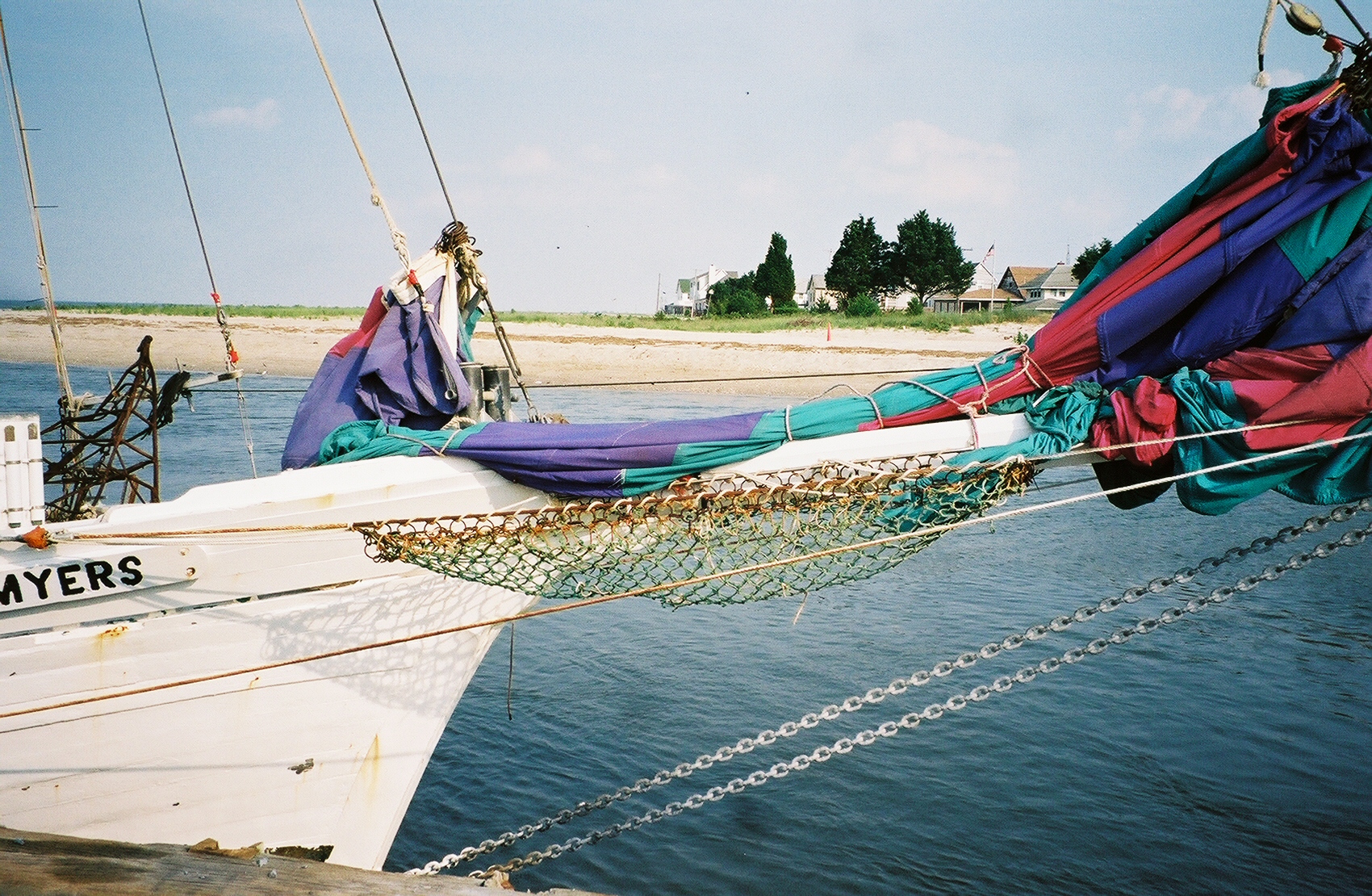
Monday I asked the aide if she had used Emma’s little footbath tub to wash her feet. She was sitting at the dining room table tilting Emma’s lunch bowl so Emma could spoon out the last of her soup. My question and subsequent reaction launched her into a protracted song and dance that made me glad I had time out on the historic Maggie Myers oyster schooner on the Delaware Bay on the fourth watching the fireworks and Chinese lanterns float across the night sky. Her performance played like this:

Aide: Well, I do that on Tuesday.

Me: On Tuesday?! She hasn’t had a bath since Friday. And besides, you owe me twenty-five dollars [I didn’t expect her to pay, but I thought I’d lob it out there] because I had to hire another aide Friday to take your place since you showed up in the morning while I was at the store instead of coming at your usual one-thirty time and I couldn’t do all I had to do by myself.

Aide: Well, I came in the morning instead of the afternoon because I was doubled over sick and blah, blah, blah, blah, blah, blah, blah…

Me: Yes, but–

Aide: Don’t interrupt me. Let me finish. Blah, blah, blah, blah, blah, blah, blah.

Me: That’s it. Leave. Just leave.

Aide: (To Emma) I’m sorry you have to listen to this.

Me: {{{{   }}}}

Her superior, the nurse, when I told her later: {{{{   }}}}

Twisted and finessed as a breakdancer’s moves. Anyway, why would you come to take care of an elderly person if you were doubled over? Not only are you ill, but what if you gave that to the elderly, 96 year old, person? Why not double over an arm at the elbow and make a phone call saying you’re too ill to work?

I sent her packing. She told me not to treat her like she’s my daughter. Well, she’s not, and my daughter didn’t act that way. Nor did I when I was growing up – not if I wanted to keep my teeth.

I didn’t care whether the aide ever returned. If she did not, that meant I would have sole bathing, dressing, feeding and toileting duties for Emma. So be it. Rather that than taking the stress.

Now it is Thursday. The Hospice nurse spoke to the aide and told her to arrive on schedule and just say yes when asked to do something and not argue. She returned and she has been compliant.

Today I’m to meet here at home with the funds administration organization rep for explanation and paper signing for the 30-hour-a-week state Attendant Care Services program. We will see how that goes. I am hoping that in fact does mean that I will have Medicaid-paid help 30 hours a week.

–Samantha


The Broccoli Episode

Dover, Del., October 27, 2006 — Of my five-year-old granddaughter my 91-year-old mother said, “She’s just like you.” I asked her in what ways. “She’s determined,” she said. “Oh, she will do just fine in life. When she sets her mind to something, she finds a way to do it.” She recalled the time my granddaughter jumped off the steps when she was visiting and my mother told her not to, that she might get hurt. My granddaughter did it anyway and fell on her knees. My mother saw. Tears welled in my granddaughter’s eyes. Seeing that my mother saw, she was determined not to cry.

Ah, mothers … so insightful; they never cease to enlighten.

And then there’s the broccoli episode. One night at the supermarket, determined to have them get the price right, I got the broccoli free. I have a strong sense of equitableness, and believe not only in free trade but also in a fair market: If you’re a legitimate business selling a product, you ought to charge a fair price and not, oh, say, some price at random.

Not much broccoli was left in the supermarket that night. What was there was scattered sparsely across the table, but it was beautiful – fresh, moist, blue-green – that just picked appearance, no signs of burning on the tops. Also, no signs of pricing on the shelves. I knew the price was up the past few weeks. “Oh, well, I’ll take it,” I thought. I selected a beautiful, large crown. “It doesn’t quite weigh a pound. It couldn’t cost that much. Besides, it’s rare to find broccoli so beautiful and fresh and sweet. It’ll be worth it.”

At the checkout counter I said to the pretty, young cashier, “How much is that broccoli?”

“One ninety-nine,” she said. “A pound or a piece?” I asked. “It’s one ninety-nine,” she said, perfunctorily, continuing to converse with a very cute young male co-worker.

“Are you sure?” I asked. “It’s one ninety-nine a bunch,” she said. So I get out to the car and I’m looking at the broccoli and I’m thinking, “There’s no way.”

I go back into the store, carrying the broccoli and my receipt and ask the customer service woman, whom I clearly disturbed from her sleep. She read my receipt and said, “It’s one ninety-nine.”

{ !!! }

“I know that,” I said. That’s why I’m here. That’s how much I was charged, but how much is it actually?”

She pulled out the store flyer and carefully flipped the pages, running her finger up and down the items. “Well, it’s not on sale,” she said.  “So it’s one ninety-nine.”

“How do you know that?” I asked.

“Because that’s what it was.”

“When was it that?” I asked.

“A week or so ago.”

“Well, what is it now? There are no signs back there.”

“That’s because the price fluctuates a lot.”

“Ohhh …,” I said, and left. No. Not really. I stood my ground.

Here, had I been my father, I would have said, “Let me go get you a hat so you can pull out a price.” It’s a good thing I hadn’t bought ice cream.

Instead, “Why don’t you call a produce person,” I suggested. “In fact, why don’t you call the produce person up to this counter so they can see what it is.”

After a few minutes a short, round, gray-haired woman resembling a mama duck waddled up to the counter with her price book. She was accompanied by that same cute guy who had been talking to the cashier. He was the assistant manager. She was patient and accommodating.

When I retold the assistant manager the dialog between me and the customer service woman, his reaction was subtle yet akin to that of Marie Dressler inDinner at Eight when Jean Harlow’s blonde bombshell character tells her, “I read a book once.”  {{{     }}}

“I asked the cashier the price,” I told the assistant manager. “But she was too busy flirting with her boyfriend to care.”

At that point he demurred, tripping over his words, “Oh …. You flatter me,” he said. “I should be so young.” If he had reached 30 yet, you could call me for dinner at eight.

Mama Duck and I looked through her book together.

“Well,” she said, running her finger down the page, “We didn’t get any broccolibunches. We ordered them, but they didn’t come in. And that’s the last of the broccoli crowns back there.”

“There,” I said, pointing to the page. “Broccoli crowns – two pounds for three dollars.”

“Let’s go weigh it,” I said.

“Why don’t you take her over there and weigh it,” said the customer service woman from behind her high counter, where the cute assistant manager had now perched.

We weighed it: 0.71 pounds.

Back at the customer service counter, I told them how much it weighed and graciously thanked Mama Duck for her help.

“Let’s see,” said the customer service woman, “Two pounds for three dollars. That’s a dollar fifty a pound.”

“Yes,” I said.

She began fumbling at the layer of air along the top of her counter.

“Do you have any change?” the assistant manager asked her.

I looked at my watch. It said 6:20. I had taken my groceries out to the car at 6. I had worked all day and I was tired and hungry. I still had a half hour drive home in the dark. Then I had to carry the groceries into the house and put them away and, well, you know…. I considered submitting a bill for my time.

Well, we went through this whole rigmarole (Sounds like some kind of lettuce, doesn’t it? “I’ll have the rigmarole with the romalade dressing.”) of calling the produce person up front, determining that it was indeed a broccoli crown and not a bunch, weighing it, finding out it weighed less than a pound and tonight was selling for $1.50 a pound and were going to give me change.

I said, “Isn’t it the policy of the supermarket to refund the customer’s money if they mischarge you?” Sigh.

They refunded my money. I drove home, exhausted. I got the groceries into the house and put them away. I poured myself a deep glass of red zinfandel. Finally, dinner was served. It was eight. The broccoli, by the way, was delicious.

–Samantha Mozart


The Great Gadabout

Dressed in his tuxedo, Boots, my next-door neighbor Cheryl’s big black and white cat, quite tall on hind legs, leans over the rim of the birdbath for a drink. He looks like a little man attending a jazz age party who has boozed too much and is throwing up in the fountain. Despite the bowls of fresh water Cheryl leaves all around outside the house, Boots prefers drinking from the birdbath. Enticing as that water may be, frankly, what bird would flap about gleefully in a basin of water infused with cat backwash?

Boots didn’t always live with Cheryl. In fact, he’s her first cat. He used to live down the street with Thelma and her family. When he was a kitten, Boots broke his jaw. The situation was touch and go. Determined to save him, Thelma held him in her lap for weeks and nursed him back to health. Nevertheless, Thelma’s big dog and other cat didn’t much like Boots. So, he set out to find a new home.

Quite the gadabout, Boots promenaded up and down the block, perennially dressed to the nines in his evening clothes, his long white whiskers flowing, hobnobbing with passersby, and filing into neighbors’ homes with family members as they entered, as if to drop in for tea and bread-and-butter.

Cloaked in black on top, white underneath, his cheeks white below a Lone Ranger mask, Bootsie looks like the theatrical Joker, always laughing – and probably is, at us. We suspect he was a man in his last life who lived on our street, died and came back as a cat.

Bootsie often visited Cheryl. One summer evening two years ago, she sat out on her front porch suffering from the aftermath of dental surgery. Bootsie padded up her steps, onto her gray porch boards and leaped onto her lap. He nudged her cheek with his big pie face and then patted her jaw with a paw resembling a white-gloved palm frond. “That’s it,” Cheryl said. “I’m adopting him.”

Thelma was O.K. with the idea. After all, he would be free to come home any time he wished. He never has, though, except for a quick schmooze. Well fed, party to every toy in Catdom, Bootsie clears tabletops of alarm clocks, lamps and other annoying debris, where he sprawls vainglorious in his new domain.

When he first moved in, Cheryl had nearly finished putting together a thousand-piece puzzle laid on a glass tabletop. Noticing Boots sitting under the table looking up at the engaging array, Cheryl placed a white cloth beneath the puzzle and then folded the four corners, covering the puzzle. She was blowing her hair dry in the other room when she heard the crash. Bootsie had jumped up onto the table, pulled at the cloth and dragged the bundle across the table and over the edge. There she found him, standing amid a thousand scattered pieces looking, well, puzzled.

Every day, near time for Cheryl to come home from work, Boots, as if taking a pocket watch out of his waistcoat, at the appointed hour looks for her car to pull up behind her house, and runs across the lawn to greet her. “He is such a little man,” she says. “If I’m not home on time, he gets mad, like ‘Where were you? What were you doing? Who were you with?’ He turns his back on me. He jumps on me ready to play at three-thirty in the morning, and then I can’t get him off the couch all day.”

On those days, when Cheryl gets home from work, there he is curled up on her bed.  “Hey, sleepyhead, are you going to get up today?” Cheryl asks.

He wakes up and yawns such a cavernous yawn that you’d half expect bats to come flying out of his mouth.  He stretches one arm and then the other as if to say, “Hey.  How was your day?”

On days when he goes out, Boots does have his adventures—he was part of a chase scene involving a slobbering German shepherd with big yellow teeth, and has gone for a ride on a red bicycle.

He nonchalantly held a squirrel hostage on the low roof over Cheryl’s enclosed back porch while he lounged on a bench, back to his prey, evincing “What squirrel?” The tip of his dangling tail twitched barely perceptibly while the squirrel ranted and howled, forearm to forehead, and scurried hither and thither over the roof – one suspects squirrels tend towards the theatrical – for 20 minutes until Bootsie got removed from the scene and taken into the house.

While the squirrels are away, Boots amuses himself by crouching in the grass by the hedge and intently peering down the rabbit hole beneath our shed.

One afternoon I baked chicken. He nosed his way in my door: “I like chicken—squirrel and fresh rabbit, too,” I think he said. Just inside the hall, I gathered him up, draped over my arms like a five hundred pound boa scarf. His large, clear, pale yellow-green eyes surveyed the rooms, his black and white chessboard nose twitching slightly. A brief inspection and he was ready to head out. So, I carried him to his porch where he dropped into a doze on a cushion until time to check his watch.

A week ago, Bootsie and Cheryl moved. Not far away, but I will miss his affable presence, stretched out sunning himself on my green porch boards on bright, warm mornings.

–Samantha Mozart


What Am I Reading? II. An Unwitting Journey

An Unwitting Journey Through the Dark Night of the Soul

I stumbled into my dark night of the soul journey, so I thought, but I suspect my subconscious was directing my interests, and so the authors of the series of books I read at the time led me gently and actually enjoyably into this dank cave of night and out, reinvigorated, into the fresh lilies of morning via their own dark night experiences.

Years ago, I read Dark Night of the Soul by St. John of the Cross (San Juan de la Cruz), the 16th century Spanish Carmelite priest and mystic. Then, a year or so ago, my daughter sent me Water for Elephants. These two books set me up for my reading to follow.

Water for Elephants made me think about what I stated in my previous “What Am I Reading?” entry – that you are born, grow up, get married, have children, lead a vibrant life, have grandchildren, become decrepit, watch everybody else lead their lives, and die.

This sounds perfunctory, as rendering human life meaningless. But I believe that while we are here, with thought we can perform deeds to elevate ourselves and help humanity. After I wrote this sentence, I searched online for Leo Tolstoy’s exact quote saying that if you help one other person, you are helping the world. I couldn’t find it; what I stumbled upon, however, was his short story “The Three Questions.” Here Tolstoy relates how the hermit sage shows the emperor that the right and immediate thing to do is to help the person in front of him. So, I find that my seemingly inadvertent journey led by the hand by each author through this series of books enabled me to accept this same conclusion, one I knew but had been stepping around.

Of course I reread Tolstoy – two novellas: “The Death of Ivan Ilyich” and “The Kreutzer Sonata.” In conjunction, I watched the movie The Last Station and then watched an episode in George Lucas’s superb The Young Indiana Jones Chronicles series, where young Indy visiting Russia, runs away from his parents and in so doing runs into Tolstoy running away from his family.

After those, I read Abraham Verghese’s Cutting for Stone, John Updike’s In the Beauty of the Lilies, Khaled Hosseini’s A Thousand Splendid Suns, James Joyce’sPortrait of the Artist as a Young Man, and followed the latter with Elizabeth Gilbert’s Eat, Pray, Love, and I watched the movie.

Then I took a little side trip to Provence reading Peter Mayle’s delightful Encore Provence where I enjoyed the locals’ tales and boule playing, toured an olive grove, ate baguettes warm out of the oven and washed it all down with bottles of fine wine, both red and white, to be specific.

Reading and thinking with mystics such as St. John of the Cross, Leo Tolstoy, and those Liz Gilbert encountered, I engaged in listening to the music of mystics – one such is the Russian composer Alexander Scriabin. It blew me away when I found a “Scriabin plays Scriabin” recording on Amazon.com. This is a recording of a 1910 piano roll he made of some of his compositions. It’s like he’s right in the room with me playing these pieces. As it is, of course, when you’re reading the works of an author who passed on many years ago.

Two movies I have watched related to the Russians are: one – The Duel, based on Anton Chekhov’s novella and evocative of Tolstoy; and two – The Return, a recent and intriguing Russian work.

Currently I am reading, besides Orhan Pamuk’s The Naïve and the Sentimental Novelist, which I mentioned in my previous entry, Susan Jacoby’s Never Say Die: The Myths and Marketing of the New Old Age. I highly recommend this book to caregivers, young old-age people (over 60) and you who think you’ll never age. Trust me, it happens. My favorite t-shirt is the one I saw worn by a geezer in Florida: it read “How did I get this old?” Frankly, I remain mystified by this, my current state of affairs.

Somehow, Thomas Hardy’s Jude the Obscure plays a bass line through all of these works. To me, all of Thomas Hardy’s novels do. I cannot explain the reason fully and lucidly, so I’ll leave it to you to fumble around with. And, then, there’s Thomas Wolfe – Look Homeward, Angel– …a stone, a leaf, an unfound door; of a stone, a leaf, a door. And of all the forgotten faces…, and Wolfe’s succeeding novels.

Finally, my friend, the Tibetan Buddhist Rinpoche, mentioned how we must walk the razor’s edge – I have read the book and seen the movie, The Razor’s Edge.

This is all sort of self-serving, I guess, enumerating and thinking on stories I’ve read, movies I’ve watched and music I’ve listened to. But these works and train of thought have supported me through my caregiving for Emma.

Maybe you happen to be riding on the same train and might want to share your thoughts or works you have come upon which have helped you. I put these out here, therefore.

The Orient Express, this train is not; but one can only hope that some day—

–Samantha


What Am I Reading?

I think this round started in the spring of 2010 with my wanting to create a website combining my recipes and my stories and essays. So, I re-read Marjorie Kinnan Rawlings’ Cross Creek Cookery. She bought a citrus grove in rural Florida, moved there, and wrote. She loved to cook as much as she loved to write. Me, too. Every time I envision Marjorie Kinnan Rawlings, I see her as Mary Steenburgen, who played her in the movie, Cross Creek. I saw the movie and I read that book, too. I thought Rawlings’ Cross Creek life, which I read about in the ‘90s when I lived in Florida, was ideal – writing and cooking and camaraderie – not, however, the raising and killing of pigs and other animals.

Then there was something about Cinema Paradiso – I always liked that movie; it had some kind of an impact on me, I’ve never understood what. I like the music, too; I bought the soundtrack. And then there was Murder on the Orient Express – the David Suchet as Hercule Poirot version in the PBS Masterpiece Mysterymovie, and the book – I read Agatha Christie’s story. I have been writing a novel for years, three, in fact, and I was looking to the best authors for plot and character development: What are the red herrings? What creates the twists and turns and makes you want to keep reading or watching? Why do I like this character so much, why do I relate, what makes him or her so real? And the settings, the sensuality – the pictures the author portrays, so that while you are reading, you have a movie running through your mind and then you forget you are reading; you believe you are there.

This latter analysis comes from Orhan Pamuk, the Turkish, 2006 Nobel prizing winning author, in his new book, his 2009 Charles Eliot Norton Lectures at Harvard, titled The Naïve and the Sentimental Novelist. I am reading this book now.

Around this time of reading Cross Creek Cookery, I was thinking of Like Water for Chocolate, which I had read in the late 1990s and had watched the movie, and I read Orhan Pamuk’s Istanbul: Memories and the City. I had just read two of his novels, Snow and My Name is Red. But Istanbul impacted me profoundly. The feeling adheres to me to this day – the huzun (melancholy), yes, but more, a whole sense of being. Most likely Orhan Pamuk’s masterful writing drew from my own deep well my feelings and my personal memories of growing up and my family. I could relate to his childhood and his feelings, to the place where he grew up: “Hey, that’s me, too.” Certainly I did not grow up in Istanbul, rather in Philadelphia, another big city, but in ways our families were similar – his were civil engineers, mine bankers, but generational, close and secure until our parents’ divorce. We each grew up with one sibling, a brother. We rode ferryboats, we stayed with our families at summer beach houses – well, a lot of similar memories and memorabilia.

I just received a treasure of old family photos from my aunt, who was married to my father’s brother and who is 97 and just entered a nursing facility. She can’t keep all the family memorabilia there – her room is like a college dorm room and she has a roommate; there’s no space, and the nursing center will just throw them away: these are the nostalgic items you see at auction, insensitively discarded. Among these are my grandmother’s photos I had never seen of young girls in Gibson hairdos and posing on the beach wearing striped bathing costumes. I spent two afternoons going through these photos, looking at pictures of my family members when they were babies, then when they were young and vibrant and got married and had children; then their children had children and they served in World War II and I came along and then I had a child and grandchildren. Here were my family, all around me, once again. They had come back, if only for a day or two. And here I am, nearly 70. They were born, they lived their lives, engaged in meaningful activities, they laughed, they taught me and took me places, and then they died. That’s it.

Orhan Pamuk is completing his Museum of Innocence in Istanbul, a physical representation, essentially, of his most recent novel, The Museum of Innocence. In the physical version, Pamuk is collecting memories of the city, Istanbul, and of Turkey and his lifetime experience there.

Well, here is my trolley stop. I must get off. Thus far I have described the platform onto which I unwittingly stepped to arrive in my protracted “Dark Night of the Soul.” I will write about my journey through this land in my next installment.

–Samantha


XVI. Rolling Out the Dough

I bought a locally grown cantaloupe yesterday and set it on a plate on the kitchen table to ripen a day or two. This morning the kitchen smelled like a farm market, with textured aromas of full sharp citrusy Mexican coffee brewing and the fresh cantaloupe. The aroma wafted me back to when my brother and I were growing up. Emma would bake a pie with flaky homemade butter crust, and then lay out the crust trimmings in thin strips, sprinkle them with cinnamon and sugar, roll them into little wheels and bake them. I loved those special bite-sized treats.

Yesterday my friend Paula, after having read on my blog that I now have no car, emailing me and offering to drive me wherever I needed to go, chauffeured me around for three hours while I stocked up on our supplies. Paula is a gourmet cook and asked if she could “foist off on me some ravioli” she had made because she had made so much it was outgrowing its space in her freezer. Homemade pasta and a dinner prepared by a gourmet cook, how could I resist.

I must tell you that the raviolis were superb – delicious flavor and delicate pasta. Emma finished her dinner before I did. OK, I did give myself the larger portion. Nonetheless, this was a testament to an exquisite dish, since Emma picks at her dinner, shoveling some of it over the rim of her plate, long after I have finished. This delicate pasta, too, reminded me of Emma’s cinnamon pastry rolls.

I told Paula I am going to hire her as my personal chef — that is, when my ship comes in, but I think it struck a tree stump somewhere in the muck in the marshes of the Delaware Bay and catapulted the captain overboard; so who knows when I shall see it.

Personal chef on the shelf for now, we have been managing with less help since the healthcare agency fired me and my aide of nearly three years on July 1 because we had run out of state Medicaid funds for that particular program. Our Hospice organization has covered a few extra hours – so that Paula could chauffeur me shopping, for instance. It is thoughtful and kind that people have rearranged and extended their schedules.

Today, though, I received notice from the state Division of Aging that our application for 30 hour a week Attendant Care services has been accepted. As I understand it, the way this program works is that I become the employer, the state funds are administered by an outside agency, and I hire and pay an aide out of those funds for 30 hours a week, seven days. The aide could be me, but I choose to write and to build this website – to raise awareness and a dialogue for caregivers and to develop a following and monetize the site – so that I can earn a bit of an income while simultaneously creating a caregiver network and retain my patience and sanity. I will be meeting next week with an agent who will explain the program and bring papers for me to sign. These state and healthcare programs often come with pop-up issues, no matter how many times you level and sift the questions. Let us hope the program will roll out as the recipe appears.

–Samantha

XV. A Song to Maggie

Maggie's Bowsprit

One day in 1998 – The weathered face of the old waterman standing alone on the beach, gazing out onto the dull, gray bay; an old wooden schooner, hull rotted with holes, lying on her side on the sand by the creek, gutted of her soul – her motor and masts: This could have been the fate of yet another wooden schooner, had not her new captain and his wife fallen in love with her at first sight and saved her the moment before the sun set upon her bow forever.

July 8, 2011 – I awoke this morning with a song to the Maggie in my mind. The Maggie is a 118-year-old Delaware Bay oyster schooner, the Maggie S. Myers, owned for 13 years by my good friends Jean and Thumper. The Maggie is believed to be the oldest continuously working oyster schooner under sail in the United States. She has never been out of commission. Thumper sails her out of Bowers Beach, Delaware, onto the Delaware Bay nearly every day where he and his crew of two or three or more work her dredging for conch, oysters (when ever-tightening regulations permit), blue crabs and more. A few years ago, Jean and Thumper restored one of the Maggie’s two masts; Thumper sews his own sails. Thumper often works her under sail, thus saving fuel. The Maggie is 50 feet long and 18 feet wide with a five-foot draft. She sits low in the water like a fat white goose.

Fat Maggie

For the evening of July 3, Jean and Thumper invited a group of us out on the Maggie to watch the Bowers Beach fireworks from the bay. For this annual event, Jean lays a seasoned red Oriental rug across the Maggie’s deck and spreads the workbench with a lace tablecloth. Jean, a vegetarian (as is Thumper), has traditionally prepared the food for these events to which we are so honored to be invited; but this year she had it catered by the same guy who catered the food for the Green Eggs & Sand (a curriculum teaching teachers to teach kids about horseshoe crabs) 10th anniversary celebration in May 2010, where he prepared the cedar-plank grilled salmon, among other amazing dishes. The fare this year was equally as dazzling. Delicious. I’m so glad I went.

I am so glad I went not only because of the food but also because of the camaraderie, the friends onboard who have dedicated their lives to humanitarian achievements. I, among them, am the bumbling writer who writes to let the world know about the better place these leading exemplars create for humans, animals and the environment. There are Thumper and Jean: Jean buys and prepares the meals for a periodic series of soup kitchens for low-income watermen and others; she rescues cats (mostly dumped on her doorstep or in the marshes). Thumper created an innovative bait bag whereby he could use a quarter or less horseshoe crab for bait rather than using a whole crab; now he no longer uses horseshoe crabs; he uses mussels. Gary won awards for his Green Eggs & Sand curriculum.

Maggie's 50-foot mast

Glenn travels the world advocating for horseshoe crabs (ERDG, horseshoecrab.org – see the left sidebar with my list of friends and nonprofits); Glenn is also a Tibetan Buddhist Rinpoche. Glenn’s wife Mariko has family in Japan affected by the recent disaster (see the Tomodachi Project in the left sidebar); Glenn and Mariko’s daughter, Julia, is an extraordinary textile artist; and Glenn’s mom (who was not on the Maggie this night, is an acclaimed watercolorist and Sumi-e artist). Thumper plays the guitar, writes songs and performs these and sea chanteys, often playing for funerals. Another friend, who could not be there this night, Michael Oates, is an Emmy-winning independent documentary filmmaker, of 302 Stories. His PBS horseshoe crab documentary “Dollars in the Sand” was the progenitor of “Green Eggs & Sand.” Mike is an adjunct assistant professor at the University of Delaware and he and his partner, Jeanne, regularly engage in projects to help the less fortunate. Thumper and Jean have spent 13 years and hundreds of thousands of dollars restoring the Maggie: they fondly call this effort “The Maggie Myers Restoration Project.” Yes, Maggie must work to support herself.

Day's End - Photo by Robert Price

My friend, R., a most talented and versatile creative artist – he calls his painting technique sharp pointillism – (Assemblage 333 in the left sidebar) drove me to the Maggie, while a Hospice volunteer drove to my house in her Prius to stay with Emma. Kindle in hand, she was assured of having plenty to read while I was out on the bay.

I climbed down the ladder onto the Maggie’s deck. We waited at dock until the tide rushed into the creek enough to carry us through the cut where the Murderkill Creek meets the bay. While we relaxed out on the bay, the tide rushed in, rushed in so fast that when we returned to dock and Thumper was backing the Maggie into her berth, he had difficulty going against the tide: “She only backs up at six knots,” he said. But, Thumper’s a skilled captain, the Maggie did her best, and we made it.

Out on the bay, Thumper’s crew raised the main and jib sails. We ate, chatted, and Thumper got out his guitar, sat among us and sang us a beautiful song, one he did not write, “let me flow like the river” went the words. People had set two huge bonfires along the Bowers beach. Platoons of torches lit the yards of several big beach houses. The fireworks were unique one to the next and extraordinarily beautiful for a small town budget, and they lasted a long time. Someone lit a Chinese lantern or two or three and set them off. Then they set off more. Then hosts of them with their orange flames floated in the black night over the bay above us, like spirits floating across the sky.

–Samantha

If you are interested in the Maggie and the waterman’s life, I think you will like reading the story I wrote for the Spring 2009 issue of Delmarva Quarterly, “The Low Whistle of the Wind.” Find it here under the menu heading “The Ocean Bar and Seaview Grill.”


Relaxing, Touching the Memory, Music Helps With the Final Transition

http://www.nytimes.com/2011/07/04/nyregion/music-therapy-helps-the-dying.html

XIV. Grasping for … Well, Candelabra

Emma parked her walker in the usual spot one recent morning, to the left of the credenza behind her dining chair at the head of the table, and instead of turning to her chair, overshot the dining table and headed for the corner. After much coaxing, I redirected her. On her way back, grasping the credenza, she grabbed the candelabra and then the candlestick holders. At least she didn’t bean me with one. Phew. She’s so afraid she’ll fall, she grabs onto everything in reach – bed quilts, candelabra, doorjambs…. Kind of like building your house on sand – nothing that will hold.

Emma is hard of hearing and belligerent. She thinks she knows best. And, true, sometimes she does, but she can’t communicate her reasons; I find out later. But, most of the time, she only thinks she knows best – and she tells me about it, vis-à-vis, “I’ll have you fired!” “Keep your fingers off me.” “You leave my walker alone!” She can talk when she wants to. Thank goodness that kind of talk doesn’t happen often. Although, now, she’s become combative at times. I’ve learned to stand back so when she swings, she won’t hit me. She sits in her chair next to the bed and grasps her bedpost with that firm grip only women of her generation can (accustomed to kneading dough, flattening it out with a rolling pin, rubbing laundry against a washboard, wielding a laundry iron made of iron, scrubbing the kitchen floor on hands and knees with a scrub brush, to name a few routine activities), so that her health care aides and I cannot get her arm into or out of her shirt. I try to pry her hand off and she swings at me. She is kinder to the aides.

Last night she made it to the table OK, but when she proceeded to eat the salad with baby arugula, she picked each arugula leaf out by the tip of its stem, as if lifting out a Southwest Florida lizard upside down by the tip of its tail, and placed it on her folded paper napkin beside her plate. At least she eats. I’ve been told that many dementia patients are more combative and ultimately, they stop eating and their bodies shut down. So, thankfully, we’re not there yet.

Her first major fall happened when I was helping her get out of the tub and she folded up and got wedged on the tile floor between the side of the tub and the front of the toilet. It was her birthday. Her legs and an arm were bent at odd angles. She could not get up on her own and I could not get her up. So I ran next door hoping to get my neighbor. She is strong and has had experience with these kinds of occurrences. But she wasn’t home. Her brother, however, in his early 40s, was. Stunned momentarily by my request, he rallied quickly and immediately helped. It was his indoctrination. He looked away as he helped her up. Emma was, of course, dressed appropriately for her birthday – in her birthday suit.

She experienced a major fall soon after that. This was about four years ago. She didn’t have her walker yet. Even then, though, she was grabbing onto furniture as she made her way around the house from one piece to the next. This time when she fell she hurt her arm. She couldn’t climb into her king size bed. I had to help her, but I couldn’t lift her. I called the wife of my lawn care guy to see if she knew anybody who could help me. I didn’t know whom else to ask. I thought possibly someone in their Mennonite congregation might do such work. She came right over herself, even though she lives 20 minutes away, has six children and it was dinnertime. She stayed for two hours while Emma finished her dinner and we got her undressed and into bed. She would not accept pay. (I did pay her something later on, though; I felt she helped us kindly, patiently, and cheerfully above and beyond the call of duty.) I placed a small stepstool beside Emma’s bed after that. She still uses it every night, although she can climb in the other side of the bed without it.

Somewhere around that time, I had a party, and a friend said to me, “You need help. You really need to get help with her.” I don’t know why I hadn’t thought of it. I thought I couldn’t, I suppose. But, then, I spent weeks calling various healthcare agencies and the state Division of Aging learning what was available, financially and healthcare-wise. Most agencies did not return my call. One agency, Bayada, jumped on the task, got an aide – the best aide I’ve had – right out to me and organized everything within our case. Medicare paid for this, since Emma was injured and required a physical therapist. The therapist gave her range of motion exercises. The aide bought a foot tub for Emma in which to wash her feet, applied body lotion, face cream, perfume and jewelry, all of which Emma would have done on her own had she been able. And Emma got a walker. Medicare paid for the walker. You get one such support instrument a year paid for by Medicare, it is my understanding.

Our time with Bayada was short. Once Emma’s therapy was finished, Medicare no longer paid for her aides. And Bayada was not a Medicaid-paid agency. Emma never thought she’d live this long, so she spent all her money. There was no way we could afford to pay an agency for her care. But with Bayada and her walker we were set on the right path. All I had to do was spend weeks making dozens of phone calls and hoping an agency would respond, and hours with the state Division of Aging and a Medicaid attorney learning about the Medicaid Waiver, the Miller Trust, and our options, signing papers and taking care of as many legalities as were necessary at the time. I already held power of attorney for Emma; that we had set up a few years before when she was still of sound mind but had forgotten to pay some bills.

Finally, we got signed up with a Medicaid-paid healthcare agency and got an aide who is very good and has been with us for two and a half years. In fact, if it weren’t for this wonderful aide, I wouldn’t be using the agency. I find their lack of communication and general thoughtlessness astounding. Maybe it’s just because I am old and things have changed; for it seems that most business entities slack off these days – yet get paid, nonetheless.

Two nights ago, Friday, July 1, at 7:40, as I was stirring my homemade spaghetti sauce with tomatoes and basil from the garden, a guy from this agency phoned me. “I just called to tell you,” he said, “that your aide will not be coming back. You’ve run out of Medicaid hours; that is, until October.”

That’s how you fire people: tell them at end of the day on Friday. Our aide had been with us faithfully, patiently and reliably for two and a half years.

–Samantha

Without Words – NY Times Video

video.nytimes.com

Jack Agüeros, a New York Puerto Rican poet with Alzheimer’s disease, has lost the ability to read and write, but still has moments of lucidity.