I fled down to the shores of the water — Walt Whitman
The Scheherazade Chronicles is dedicated to the development of storytelling and to raising awareness of and promoting access to the humanities for the edification and enlightenment of humankind, thus to save humankind from death by the cleaver of ignorance.
I treated myself for my birthday last week and gave myself a Kindle. Since then I have engaged in stuffing the grand court of my mind to the galleries, mezzanine and balconies with great classics and other good things to read – Jane Fonda’s new book, Prime Time (With Bonus Content): Love, Health, Sex, Fitness, Friendship, Spirit–Making the Most of All of Your Life; Jane Austen: The Complete Collection (With Active Table of Contents); Marcel Proust’s À la recherche du temps perdu, (In Search of Lost Time (formerly translated as Remembrance of Things Past)), which I have been wanting to read my whole adult life – I guess I had to wait until I had my own experiences to remember; and more, many of the classics, out of copyright, free.
If you haven’t gotten a Kindle yet, you can buy one right here from this very page, through my Amazon store, Babylon Revisited (click on the link in the upper right-hand sidebar), and through the Amazon search box lower in the right sidebar. You know, I love holding a book in my hand and leafing through the pages; I love the smell and feel of books; I love the way a library smells; I am a library nerd; in fact, I’d like to find some candles or incense with a library aroma. But with a Kindle, I can download classics that I’ve been meaning to read, free, and I’ll always have them, without having to be concerned about dusting them.
How appropriate that I write this about great books on my favorite author and kindred spirit, F. Scott Fitzgerald’s birthday. He’d be 115.
And while I’m blowing my own horn, I suggest you check out the other sections in my store. Here at my Salmon Salad and Mozart theater, I hope my symphony composed of journal entries, counterpointed by essays, poems, music, videos, Emma’s watercolor and my photo gallery develop a theme and a harmony you will enjoy and maybe intrigue and inspire you to purchase the items for yourself or someone special.
There are those who don’t blow their own horns. I’m thinking of our Hospice team who interact every day, all day, with humans who are performing the grand finale of their lives: the gentle and patient doctor who paces hospital halls seeing the suffering lying in beds in room after room, or drives the highways and byroads visiting nursing homes and entering all kinds of private home situations to see patients; the nurse who specializes in the heart, whose true specialty is her own compassionate heart of a Mother Teresa; the chaplain who sits at the bedside, holds the hand and sings, and coos comforting words to some who are mute, unable to respond beyond a glimmer of a smile; the music therapist who looks and sings like an angel playing her guitar; and the bereavement counselor who prepares families for the before and hereafter. My bereavement counselor, Geri, and our nurse, Tess, spend hours patiently listening to my long narratives; they sit with me in my horn section and listen to my cadenza to the Concerto for Emma and Samantha.
Our loyal and conscientious aides have told me that some families keep their ill one – I can’t even say loved one – in their Jane Eyre Mr. Rochester room, locked alone in a room upstairs at the back of the house or left alone in a basement room, say, that they do not do one thing at all for their ill one, they do not see their ill one’s suffering; they wait for the aide to come for her daily hour or two of service. Or, they dump the ill one in a nursing home. Maybe sometimes, the latter is the only solution. I remember when Emma put her mother, my Nana, in a nursing home. We went to visit her. As we concluded our visit, and were walking away, Nana cried. “Don’t leave me; ohh, don’t leave me,” she begged. I’ve never forgotten the incident. Well, maybe Nana had to be left there, because, once the finest seamstress who sewed me beautifully smocked dresses, born of a textile family come to Philadelphia from Lancashire, England, a woman who canned her own vegetables, regularly carried the rugs out to the clothesline and beat them, and washed all the windows in her Victorian home every week, she had had a stroke and lost much of her mobility and ability to do for herself. Nana was 72 when she died.
Before Nana was married, she was a seamstress for the Philadelphia Wanamaker’s department store, doing alterations for the customers. You had to be one of the best to be hired by Wanamaker’s. When I came along and was old enough to go shopping, I used to thrill to listen to the Wanamaker’s organ. Once I sat by the console up in the store gallery overlooking the grand court and watched the organist play. You had to make an appointment to do so. This organ is one of the finest in the world. With 28,543 pipes and six keyboards, it is said to be the largest operating musical instrument in the world. Macy’s, who ultimately bought the center-city Philadelphia store, together with funds and efforts of private donors, restored the organ. Macy’s marketing strategy is that when the organ plays, people feel good and when people feel good, they shop more. During the restoration, 61 new pipes, a rank of vox humana stops joined nine others, their vibrato tones, it is said, calling to mind a choir of angels. According to a June 9, 2007 New York Times story, “The instrument started life at the St. Louis International Exposition of 1904, when the Los Angeles Art Organ Company built it along orchestral lines, rather than according to the baroque organ ideal, as Bach and Buxtehude knew it. It was a smash hit at the fair, but bankrupted the company. Then it languished in storage until 1909, when John Wanamaker bought it for the Philadelphia store that he was planning to open two years later.”
If you love pipe organs, I recommend you click here to read the full story, where you go inside the organ and see a slide show with close-ups of the pipes, and hear the organ.
Three years ago, I wrote a magazine profile of Bill Carter, organist at the historic Everett Theatre in Middletown, Delaware. And, although he has never played the Wanamaker organ, he, too, has sat up by the console while the organist played. This organ has 729 stop-control tablets, and 462 sets of pipes, ranging from 32 feet to less than an inch long. It would take too many hours of practice, Mr. Carter said, to learn how to play it, because some of the pipes are spread across both ends and multiple rooms and floors off the store’s grand court, effecting, as you might imagine, a delay between what the organist plays and what he hears. “It’s disconcerting,” he said.
The sound of this organ, the heart of the store, opens your heart. If it blows your socks off, you’re right there where you can always buy another pair.
Emma did bring Nana’s sister, Aunt Mary, into her own home and cared for her there for the short time until she died. But Emma was in her 40s then with much more energy than I have now at my age. Aunt Mary died of natural causes of old age.
Susan Jacoby, in her book Never Say Die, the Myths and Marketing of the New Old Age, states that most of us, even if we try, have no foresight into what our lives will be like at the end of our time. With the little help I get now from family, I cannot imagine what my life will be like when I can no longer care for myself. And, don’t think you can rely on friends to help, says Ms Jacoby; they’ll all be dead.
Emma, with her dementia, has no idea how fortunate she is. Or maybe she does; she just doesn’t vocalize it. She does occasionally smile; and now, in the hospital bed in the living room, she has her little dog, Jetta, at her side, and is surrounded by people and activity all day. Even in the afternoons when the aides are away and she is sleeping, often she is immersed in the camaraderie of visitors –Tess, biweekly, to check Emma’s heart and blood pressure; on alternate weeks, Tess and Geri and I together telling stories and laughing about the events of the past days; and the chaplain comes and sings and plays Emma’s electronic organ, alternating weeks with the music therapist, who sings and plays her guitar. We sit and talk, laugh and play music, and Emma, eyes closed, looks content. She loved hosting parties and being surrounded by people – her friends and her family. Often one of her friends would sit at the piano or organ and play while the others stood around and sang.
I believe God has a sense of humor. At least she does around me. She snickers when Dr. Patel opens the door a crack and I stumble through like a drunk. She laughed at things Emma used to do, that weren’t funny to me at the time but were later – like when Emma rebuked me to “Get out of my whale!” when I stepped in front of her, trying to guide her walker. She laughed heartily the time two years ago when my daughter Kellie and my two granddaughters were visiting – The Three Kellies. My friend was here with her son and daughter. It was a dreary, rainy April day. The three girls and a boy, 5 to 9 years old, had just finished a session sliding down the narrow, carpeted front staircase. When my friend’s 5-year-old daughter came down with a case of rug burn, we all ended up in the living room for a breather. Emma sat in her usual spot on the loveseat. Even then, she didn’t speak much. My 5-year-old granddaughter sat in the blue swivel chair and swiveled back and forth, back and forth, back and forth. Suddenly, “Sit still!” said Emma. The whole swirling, spinning room wobbled and settled to a halt. My friend’s and Kellie’s eyes got as big as the pancakes my 9-year-old granddaughter had made us for breakfast. “That’s how I grew up,” I remarked.
One of the stories I enjoyed telling Tess and Geri when they were here one afternoon patiently listening to me was the time I walked downtown to visit my friend Jackie’s store, The Gathering Place. I was wearing sneakers and walking along the concrete sidewalk on Main Street on my way home when I tripped over nothing. I sailed horizontally past two storefronts before landing on my feet. No horn fanfare, but I can only imagine the looks on the store inhabitants’ faces when they saw me sail past their plate glass windows.
That trip illustrates how life is, I think. For now, I’m going to pick up my Kindle and read Jane Fonda’s book and see what’s in store next for me, and pick up some navigational pointers while I am still able and eager to explore the many mysteries of life and of myself.
My older granddaughter, now 11, who doesn’t like to focus on many things, is passionate about music, asking me to teach her the guitar when she’s here (she now has her own and takes lessons.) But when she visits, she will sit by the hour at Emma’s organ, read the sheet music and play.
Well, I ranged all over in this piece, as if I had six keyboards. Nonetheless, I, leading the life of the mind as I do, am easy to please. Given someone to stay with Emma all day, and given a ride to the Wilmington train station (Why rent a car when I love riding the train?), I’d take the train to Philadelphia and Macy’s. Even better it would be with a traveling companion to whom I can say “Listen to that! Look at that!” I’d be in heaven just to listen to that Wanamaker Grand Court Organ again.
Only a specter, I stumbled into An abandoned amusement park, Over haunted relics, And the dizzying merry-go-round ride Of those ragged days: Through cobwebs of disenchantment I groped, to uncover Half buried in dust The scattered fragments Of a long-ago … Read more »
Before deciding to buy our historic home in 2002, Emma and I drove an hour from Wilmington, Delaware, south across the Chesapeake and Delaware Canal, to see the Victorian home a second time. We got to the historic district of our town and then couldn’t find the house. I looked at a map and drove around and around, but couldn’t find it. We pulled up to ask directions of a guy raking his lawn. He smiled, leaned on his rake, and casually spent ten minutes describing the layout of the town and providing a choice of routes to get to the house. The house was just around the corner and a couple blocks over, it turns out.
This house with its high ceilings, large rooms and bay windows feels so always safe and warm. It is welcoming. It loves to be filled with people. When we moved in, I wanted to place a plaque above the front door with Bob Dylan’s words, “Come in” she said “I’ll give you shelter from the storm”. Now, I just want a sign that says ring the doorbell, dumbbell. Otherwise, when I’m upstairs in the back of the house, I cannot hear visitors knock. The ones who knock do set off the dogbell, but she barks at people on the street, too. Nevertheless, I go and look through the door window and, frequently, see no one, because the visitor is hunched over beside the door, rummaging through an unwieldy purse she has set in the chair there.
Indeed, residents of our town are open, warm and welcoming. Even the ghosts are friendly. Of the latter we have many; they simply integrate themselves among the rest of us. Those of us still in human form are familiar with them and speak of them (some, even to them). A number are celebrities, having been written about.
Yesterday afternoon I walked to our annual wine-tasting garden party downtown to benefit our Main Street association. The plates of food, warming pans, flowers, utensils, all were laid out beautifully, as usual, down the long, white-clothed table sheltered by a canopy against the gray sky; the food deliciously prepared by members of our organization; the wine donated by our local liquor store (one that is too far for me to walk to) superb and enticing.
I would not have been able to get out and taste the wine, savor the camaraderie were it not for Emma’s recent acceptance into the state 30-hour a week Attendant Care Services program. To cover an additional hour or so yesterday, I had a Hospice volunteer come to sit with Emma until the aide came. The volunteer brings her Kindle, so she is set for a while.
At the party, one of the women, a friend near my age, learned that I do not own a car and tried to sell me one like hers, a red Smart car. She took me out for a ride in it. She drove onto a back road and pulled over. “You drive,” she said. I got out, walked around the car, and took the wheel. It’s a cool car, a two-seater, but big on the inside so that you have the sensation that you’re riding in a big car and forget that you have nothing behind you or in front of you to protect you from, say, an oncoming big rig. But it handles well; the rear engine reminds me of the successive three early VW beetles I owned. “Step on it,” she said. “Let it out.” “Oh, you don’t know me,” I told her. “Cops pop out of the bushes at me.” But of course, I gave in, checked all the mirrors, bushes and hillocks three times and accelerated into a splendid Thelma and Louise moment.
Before we went out in her car, she said to me, “Now that you have help, you can get yourself back. And yesterday and with nearly full-time help, I find it good to begin to feel and see glimmers of myself again.
Yes, that’s it. That is exactly it. I have realized over these past six plus years, since Emma began losing her mind, that I have been gradually losing myself. I had begun to wonder if I weren’t one of our town’s resident ghosts come back to find some lost love. This is especially so this last year when Emma’s care took most of my time; and social services, healthcare entities, utility companies and business organizations I dealt with acted like they were the ones with dementia. Already on the razor’s edge, a slight nudge could push me over.
Antithetically, even with the few words Dr. Patel and I have spoken, I find that our coming together for our brief minutes each visit every 60 days is like coming to meet an oasis of the mind.
The portent of losing myself made me feel the floor of my chest open and my heart plunge into my stomach when that day in 2001 I made the decision that I needed to stay in Delaware and help Emma. All of my belongings were in storage in Southern California, where I had intended to return – my library of books, my writings, my thousand phonograph records, my guitar sheet music, and of course, all my household goods and my clothes. Everything is still there. Nearly all that is here is Emma’s – all her furniture, her china, crystal, and flatware. When you enter our house, you don’t see much of me. You see Emma, the human being she once was, where now remains only the sheltering shell.
When Dr. Patel came for his visit the other day, I had to go out and find him. His GPS didn’t bring up our street and, coming from a direction different from usual, he couldn’t find our house. And maybe he was exhausted by a business trip from which he had just returned. I gave him directions over the phone and then walked out front to the sidewalk so that as he drove by, he would see me and I could bring him in.
Our visit was brief as usual. He checked Emma’s blood pressure, and since it has trended low again, even after discontinuing most of her blood pressure medications, he halved the dosage of the one remaining. He explained that Emma could remain on her current plateau of getting up in the morning for bathing and eating breakfast, sleeping all afternoon and being fed dinner at a table over her bed at night for up to six months, or maybe only a few weeks. He said that the next change might be some sort of infection, because as her body shuts down so does her immune system.
Then, he stood up, said, “It’s really good seeing you again,” extended his hand and I gave him mine. He told me to call him if any sudden change occurred, that he could come by if need be. And, then, he was gone.
“Come in” she said “I’ll give you shelter from the storm”.
Yesterday, the world commemorated the 10th anniversary of the 9/11 attacks on the United States, but Sunday had another significance for Japan. It marked six months since the massive earthquake and tsunami on March 11, a date now seared in the country’s national consciousness. At 2:46 that afternoon…
(See my link to the Tomodachi Project, here in the left sidebar, under “Friends & Nonprofits”.)
You should watch The Butterfly Circus. Everyone should. It is being made into a full-length film. Heartland Film Festival 2010 Best Short Film. Tens of thousands have viewed this beautiful and thoughtful film.
My grandmother told me that when she was a girl she thought the name of the hymn they were singing was “Bringing in the Sheets.” She later learned, of course, it was “Bringing in the Sheep.”
This reminds me of the Monty Python movie, “Life of Brian,” where the spectators in the back at The Sermon on the Mount thought he was saying “Blessed are the cheesemakers.”
Things have been quiet and peaceful here since Emma settled into her hospital bed in the living room and our 30-hour a week attendant services aide began. Emma is given compassionate care morning and night – bathing, dressing, feeding – and she sleeps in the afternoon. She rests peacefully there, sometimes smiling contentedly, along with her blue teacup poodle, Jetta. So I thought I’d use this time to rummage among stuff moldering in my mental closets and air the laundry.
Maybe I’m in a Maze
Vous êtes un grand fromage, my father used to say to my brother or me, blessing us with his French language expertise, when we were kids.
Cheesing up my life currently are the rats employed at M&T Bank – yes, I feel compelled to name the entity here because, after our 2008 economic crises, didn’t the banks promise to behave? Oh, well, I hallucinate when feverish. These rats in their merger-acquisition of the venerable, albeit stuffy, Wilmington Trust Company failed to think their way through the maze. It’s like they just grabbed it and swallowed it whole. Consequently, among their other indigestible machinations lobbing nightmares at me, I will have to download and store somewhere two years and two months worth of electronic statements, before the end of 90 days when they will all disappear.
If I light some sage and swish it around inside my computer, will all this go away? I’m always seeking an easy way out. The takeover of Wachovia Bank by Wells Fargo was seamless. They have posted on their homepage that all Wachovia statements can be found in their archives online. How simple could this arrangement be? Voilà! Let’s just move it all on over. Nothing tricky there.
Ah, the Writer’s Friend
A few weeks ago, my friend R’s car was parked, at the curb, engine off, unoccupied, when the alternator caught fire. Passersby called the fire company, located a block up the street. Fortunately, there was little damage and he was able to have the alternator replaced. A few days later, he was waiting in line to ship some packages at the post office. A woman called across the room to the man behind him, “Hi, Doctor Patel!” R turned to the doctor and proceeded to tell him that he is a friend of his patient Emma’s daughter, Samantha, the writer.
“Ah, the writer,” said Dr. Patel. It was hard to tell from R’s description whether it was our Dr. Patel or some other Dr. Patel. There are a number of Dr. Patels in this area, and our Dr. Patel would have been somewhat out of his territory, though it is possible.
Soon after this encounter, R fell down the hole into the cellar when a worn hinge on the door in the alley pavement next to his place of business gave way. He’s madder than a hatter. In the incident, he ripped open the pad on his big toe and had to drive himself to the hospital emergency room a mile or so down the road. Now he has a medical bill worth roughly all the tea, bread and butter, knives, plates, cups, saucers, spoons and napkins in China. A close relative of his said, “Well, if you’d been wearing shoes, it wouldn’t have happened.”
“No, because – let me think this through,” I told R – “you would have fallen, still, because the hinges were weak; but, wearing shoes, you would have caught your heel on a rope or chain by the steps or the string to turn on the light – something – which would have catapulted you into somersault, landing you on your head on the mud floor and splitting open your scalp. Then you would have had to drive yourself to the hospital with a broken ankle and split open head, and with blood streaming down your face, unable to see, thereby running into a city bus and setting your alternator on fire. With a broken ankle and unable to see, it would have taken you a while to get out of your car. Luckily, though, you were able to get out safely, and for that, certain family members should be grateful. Then, thankfully, too, you were able to hobble the next nine blocks to the hospital emergency room, where, when you opened the right-hand door to enter, getting the handle all bloody, of course, a 19-year-old exited, thanking you for holding the door open. After you filled out a 10-page form printed in 6-point type and ticked off all the correct boxes, a Dr. Patel passed through the lobby, saw you holding the bloody papers and said, ‘Ah, the writer’s friend.’”
My Name Is White
Since my car died last winter, I have been getting plenty of walking exercise, whether or not I actually need it, rather than sitting here at my computer accumulating long hours of screen time. And when my wine stash ebbed, one hot day I walked a mile up to a liquor store to see if they had Red Zinfandel, preferably Woodbridge, specifically in the 1.5 liter bottle. Their reds and their whites were all jumbled together.
“What kind of organization do you have here?” I asked the Pakistani or Indian woman.
“I don’t know,” she said. “It’s my husband’s store. He does the organizing.”
“Oh, so you’re just babysitting,” I said.
“Baby?! What baby?! I don’t see a baby. Do you see a baby? What are you looking for?”
“I’m looking for Red Zinfandel,” I said.
“Here it is, right here. See?” She pointed to a large bottle.
“That’s white,” I said. “It says WHITE on the label.” So when she accused me of being rude, I left.
Then I walked another mile back, down to another liquor store – easy to spot with the white, 2002 7-series Beemer parked out front that the store-owner father gave the son – and bought a 1.5 liter bottle of Woodbridge Merlot (they don’t carry Red Zin, either) and then spotted the Cupcake Red Velvet and the Apothic Red, both for a good price, and carried them another mile home. I thought I was just going out to pick up one bottle of wine, but then…. I do not do humidity well. On further thought, maybe I should have walked the mile to the supermarket and bought tea. It’s lighter to carry.
I should point out that here in Delaware liquor sales in grocery stores are illegal, even beer and wine. Apparently, whoever sat there and thought this prohibitive law through decided that rather than be safe in a supermarket, alcoholic beverage drinkers need to be shot in liquor store robberies. This is one way of ridding society of drinkers, since liquor store robberies occur commonly.
Ohun Impooped*
I returned home from my circumambulation of our town carrying three bottles of wine, which I should have drunk before leaving the liquor store so they wouldn’t be so heavy, to find a phone message from Crystal at a creative temp agency. Her message said to call her because she found my resume in their files and she was so very excited that this job they have available would be a perfect match for me. I’m pretty sure I filled out that application in, oh, 2005. She left a 215 area code phone number. That meant calling long distance from Delaware to Philadelphia, Pa. So, since I don’t have a flat rate phone plan, I had to pay for the call while I waited on hold. Dum-de-dum-de-dum….
“Are you working full time?” she asked when she got on the phone.
“What do you have available?” I asked.
“Are you working full time?”
“I’d like to know what you have available so I can see if I will be able to work it into what I am currently doing.
“Well, I have two jobs.”
“Can you tell me about them, please. I am calling long distance.”
“Oh, do you want me to call you back?” she asks.
“If you will, please.”
She asks for my phone number and I give it to her. “Why don’t you call me back when you’re done talking long distance,” she says.
“I’m talking long distance to you,” I say.
She hangs up. Well, the work was online copyediting jobs. I thought I was speaking English to her, and I believe I gave a lucid demonstration of my command of the language.
*Orhan Pamuk, author of the novel My Name Is Red, won the 2006 Nobel Prize for Literature.
Nite Lites
Recently our town crew came around and replaced all the bulbs in the street lamps – with nite lites. It’s downright creepy outside at night now. It looks like the power’s out. I can’t wait to purchase my black hoodie.
Night lights – you know, those little 4 or 7 watt bulbs you thoughtfully place in electrical outlets in rooms around your house so you have as much light at night as maybe one candle would produce, so you don’t trip over the cat nestled in a meatloaf position in the middle of the floor. Oh, and I would advise that you don’t wear shoes, so that if you do accidentally kick the cat, you won’t hurt it.
I find it unsettling when I want to know the time and I glance at the microwave clock and it says “End.”
I brought in our weekly town newspaper from the mailbox this morning. It is such a beautiful day after the hurricane, one in a string of such days. This is my favorite time of the year, from mid August to mid November, when the sun is still warm and (cooler in November) and the air crisp, when I can smell the warm leaves baking and drying and see the golds and reds appear. I paused a moment there on our warm, green porch boards at the mailbox. I inhaled deeply and felt the comforting sun limbering my muscles and joints, stiff from a summer spent in air conditioning. Crinkled green and brown leaves littered the ground, flying in on the wild winds of Hurricane Irene to land on our strip of lawn, lush and green from our August registering more rain than any month in recorded history here.
Chattering, chirping blackbirds flocked, blackening the ground in the open lot across the street, hundreds of them, pecking seeds, I guess, or grubs, to fatten up for a white winter. Sparrows called to one another across tops of tall, old trees. A chorus of crickets sang an incessant counterpoint to our tone poem, and our theater was redolent with the aroma of warm pine needles. I wanted to doze to the contretemps zizzing of the locusts.
As I turned to enter our house, shifting the paper from one hand to the other so I could reach to close the door, I created a little draft wafting up to my nose the warm scent of paper and ink.
This scent made me think of my childhood and my father. He always read his newspaper, reading two a day, the morning paper and the evening paper. I remember when our daily newspapers had a flag or two or more printed in the upper right corner of the front page to indicate the edition and whether it was the evening’s final. The time for more than one edition of morning and evening papers ended long ago, around the time television started delivering daily nightly news; the publication of morning and evening papers ceased soon after. Now we’re lucky to have even one daily paper. It is said the print era is at an end.
I wonder how much Emma knows now of these colors, scents and their musical accompaniment. She stopped reading her newspaper and working her crossword five or six years ago. She sensed nothing of Hurricane Irene. She sleeps most of the time, except when she’s eating – and sometimes begins to fall asleep even then. She senses something, though, and that is the good care she is receiving from my Hospice aide and my state Attendant Services aide. The two work in tandem to keep Emma clean, fed and resting comfortably. I can see she is at peace. She is very fortunate to have such good care here in her own home surrounded by all her familiar things and attended by her little poodle, Jetta.
We were uniquely fortunate having missed Irene’s brunt. We had no flooding and the cellar stayed dry. Winds didn’t exceed tropical storm force. A branch fell off my neighbor’s maple tree and landed in their flowerbed. That was all. The only puddling was where my cheesy neighbors on the other side had some dipwad cut the grass in bare feet and then spray weed killer along the chain-link fence, creating a withered brown swath about a foot wide on either side where there’s no grass. We didn’t lose any siding – my concern, since last year in a windstorm siding blew off the house. I called my handyman and he came over right away, from about 10 minutes north of us, in the midst of the high winds and pulled it down – it was hanging by a nail above my upstairs bay windows, threatening to swing and break some historic glass. He came back in a couple of weeks, placed his ladder at about a 30-degree angle against our high-ceilinged Victorian house, climbed up and replaced the siding. Then he came to my front door, white as a sheet, and informed me that he’s afraid of heights.
My Attendant Services aide had a friend drive her here a couple weeks ago when her car wasn’t working. This young girlfriend had kidney stone surgery recently that sent a blood clot to her brain, so then she had to have her hair shaved and a brain operation. After that she had a stroke (after she was at my house) that left her with limited mobility in one leg. While this young woman was here, however, she was sitting in the dining room with the aide and me and she was very antsy. She had to get up and go outside. It was only last evening that our aide asked me if I knew the history of my house. I said, somewhat. She told me that her friend had to get up and leave because she saw in our dining room a woman dressed in a long white gown, “not a nightgown, but a long, white flowing dress”; the woman had dark hair.
I said, “Oh, The Woman in White. Everybody’s seen her.” (Most often walking in the yard between the two historic homes a few houses up, in the next block. And for generations.) It gave me goosebumps. That is absolute confirmation of the existence of The Woman in White. I had seen shadows in the house recently, assumed it was a ghost and let it go on its way. About 25 percent of the population of our historic town are ghosts, it would seem. We all see them, especially the children see them. Most of them are friendly spirits; some, the children, are pranksters. I ask any who live in a historic home around here and each has a ghost story to tell. Probably the same woman and shadow that my next-door neighbor’s grandsons have seen in their bedroom opposite mine. A workman in one, unoccupied, of the aforementioned historic homes up the street would buy a small box of doughnuts each morning, set it on the kitchen stove and go about his work. When he returned to the kitchen, the doughnuts were set out, one on each of the burners of the stove (not lit). It’s somehow comforting to have this woman in white. I’ve only sensed her since Emma’s been sleeping in the hospital bed in the living room.
My friend Jackie said, “Oh, that is so cool. … It is like she is attracted to people not well. A Caregiver.”
This fits because one of the two houses up the street was a former doctor’s office (with a leather floor in the examining room) and the other is said to have served as a Revolutionary War infirmary and later is thought to have been a stop on the Underground Railroad.
Our Woman in White came to the end of her life long ago, yet kept on. It is as if she digitally remastered herself to continue comforting the ill.
This week someone picked too many disasters out of the disaster basket here on the Eastern Seaboard. In choosing your own disaster, you’re supposed to choose only one.
Tuesday, August 23, we had Earthquake Virginia; and Saturday and Sunday Hurricane Irene promises to pummel the East Coast from the Bahamas right up into the Delaware Bay (we live 15 minutes west of the bay), up Delaware and across the bay to Cape May, New Jersey. She will potentially wipe out every boardwalk, pizza place, Ferris wheel and bathing beach along the coast of that state, and wreak havoc in states beyond – way inland. Our local Philadelphia Fox channel superb meteorologist, John Bolaris, said Irene is so big her tropical storm force winds can reach 250 miles inland. Here this August we’ve had the most rain ever recorded, over 13 inches – as much as we’d get when I lived in Los Angeles in two years. Rain was a major event there. Driving on oil-slicked roads after a year of no cleansing rains was like driving on ice. Drivers didn’t manage very well in rain there. Thunderstorms rarely occurred and when they did everyone raced outside to watch the lightning.
The heavy rain storm we had here all day today is moving out to sea where it will be picked up by Hurricane Irene and hurled back at us. Meanwhile a high-pressure trough, as I understand it, to our west will remain in place when Irene arrives, thereby sucking Irene into the trough and preventing her from drifting out to sea. Nice. Sounds like a premise for a new Stephen King novel.
Here in Delaware, not only is our ground saturated already, but also Irene could drop up to a foot more rain on us and bring us coastal sea and bay water surges of five feet or more. Stores sold out early of water and water wings. I’m glad I stocked up on batteries recently. I’m going to see if my old boom box that takes batteries will take a size I have and will work; it’s the only battery powered radio I will have.
Emma is as snug and secure as she can be in her hospital bed in the back of the living room, away from a window. There’s no way I could get her down into the cellar in her present condition. Jetta, our teacup poodle will be with her, as always, on Emma’s bed. This is the first hurricane Emma will not be aware of. She weathered Hurricane Andrew alone in her new villa in Naples, Florida. Watched the palm fronds stand straight out, like flags. Later, when I was staying with her, we evacuated to Orlando in the face of another hurricane. The hurricane amounted to nothing. But we enjoyed a nice drive up the center of the state through citrus groves, past Lake Okeechobee and through Ocala and horse country, through a beautiful part of the sparse remains of the old Florida.
I have heard Angelenos are yawning over our earthquake this week. Nevertheless, it takes a former Angeleno to recognize the onset of a quake. “Are you jiggling your feet?” I asked my two visitors from the organization overseeing the fiscal aspects of our state 30-hour a week Attendant Care Services program. They were sitting with me at my dining room table. “No-o-o,” they said. “We’re having an earthquake,” I announced, then, as our 118-year-old wood house with the balloon construction swayed and creaked and the crystal chandelier jiggled and then swung. Earthquakes being rare and mild here in Delaware, this one would rock slightly and subside, I thought. But it gained intensity and lasted long enough to set my adrenaline rushing (rare at my age). Still, I’d say the intensity here was about a 3.something, not enough to knock pictures off walls or knock anything over. We were fortunate. We did rush to make sure Emma was OK, though, in her bed. She was fine, impassive. Jetta, on the other hand (or paw), had been barking all morning. She settled down after the quake.
She took up barking again today—on the alert, like she’s expecting something. And when I took her out for a walk, she dragged until we turned homeward, and then it was like she was expecting a phone call (she doesn’t carry a cell phone.)
Our hurricane is supposed to start here Saturday night. I probably won’t get much sleep. Meteorologists predict sustained winds of 75 mph for us and gusts up to 100 mph for six hours. Great. I’ll let you know how that works out for us.
At the Shore By Samantha Mozart Small airplanes, awnings and a beach house Lounging on the upper wood deck Walking barefoot on the edge of the surf in the sun Rain A bridge lamp, a novel, and an Oriental rug … Read more »
It has been so humid here lately that the other night a jellyfish washed up onto my sidewalk. At least that’s how it appeared from the perspective of my front porch. On closer inspection, though, I identified it as a clear plastic bag lopped over itself and wet from the subsiding thunderstorm.
‘Tis the season for jellyfish. They wash up all over the beaches here in August in the Mid-Atlantic States, especially when there’s been a storm at sea. And, thus, in keeping with the season, Jetta, our sweet, blue, teacup poodle, 11, is still in some kind of pain much of the time – we think it’s her teeth, those she’s got left – and sometimes when we pick her up and then place her on the floor, her legs turn to jelly and she sinks to the floor, like when you let the air out of a cushion and it gets all low and flat. Then she regains her sensibilities and stands up and walks, but often she‘s not keen on walking far.
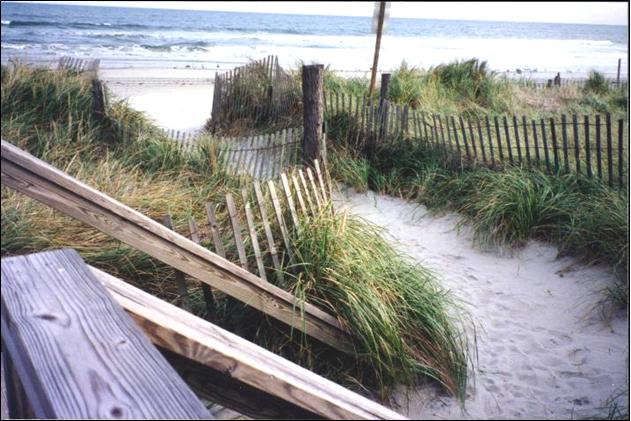
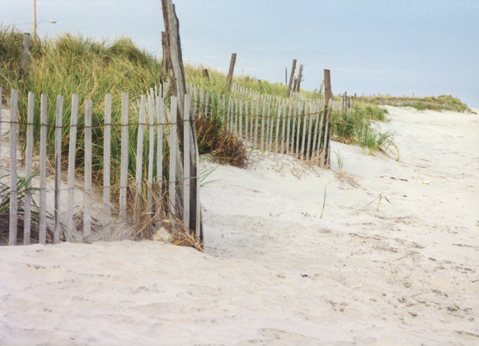
Emma’s legs turned to jelly, too, a week and a half ago, on a Monday, when her condition suddenly met a precipitous decline, as when sliding down a sand dune; her legs wouldn’t hold her upright. She sat at the dining table and ate lunch all right, but as she was finishing, her hands got shaky holding the orange juice glass; she got weak. Recently her eyes would close at the table, anyway, before she finished her meal. But this time her strength just sort of got sucked out to extreme ebb. Our aide had trouble getting Emma to the love seat, where she sits every day, but the aide didn’t tell me. I’ve been told since that Hospice, at least our Hospice, doesn’t like to point out downturns to caregivers lest they “worry” them. Instead, just let the caregiver be blindsided.
And I was. That evening, I struggled to get Emma off the love seat, to walk using her walker to the dining room table for dinner, as usual. Once she arrived in the dining room and I got her seated sideways in her chair, I then turned her body to face the table. I pushed in her chair and handed her the fork. Yet, even with coaching, she refused to eat. And, yes, I did prepare a meal I knew she’d like, not like the orange Jell-O and toast she’d feed me when I was a kid sick in bed with one of those horrible green sinus infections. Playing in the orange Jell-O fascinated me, though, until I got too weak and tired to sit up.
Although Emma had been accepted into our state 30-hour a week Attendant Care Services program recently, I could not hire anyone until we got our federal Employer Identification Number – Emma is the employer of any aide whom I, her agent as power of attorney, hire. Of course, the kid at the bank had not bothered to check to see if a business account can be set up by power of attorney (I call him a kid, because he’s way younger than I; apparently, though tall, has not yet started kindergarten; and must have been occupied all week texting). This bank is where the account would be set up to hold the funds to pay our employee aide(s). The kid had scheduled an appointment with us over a week ago. Two hours before our meeting he found out about the power of attorney: he picked up the phone and called to tell me they could not accept it to open a business account. He would have let me know earlier, he explained, but all morning the lobby had been filled with clients. I hung up on him.
The rep from the nonprofit fiscal agency that handles the flow of monies and implements the criminal background checks on all our prospective employees had driven 50 miles to meet with Kid Banker and me. Fortunately, this determined rep, using his ingenuity, pursued a solution, discovering that we could set up a personal account to hold the funds. So, we did. The banker was not present, though, when I met with the agency rep at our house, because by this time – early afternoon – he’d set up appointments with other clients (no doubt picked from the lobby in between texting bouts).
During the few weeks leading up to this occasion, I had to deal with Emma’s new weakness and inability to climb the stairs with only five hours help a week, from Hospice, five days, no one on weekends. Ironically, until this Monday downslide, climbing the staircase was one of the things she did best. With her vice-like grip, she would hold onto the balusters, going up or down, and manage to get upstairs and into her king-size bed in her own room, surrounded by her own things. We had a hospital bed already set up in the back of the living room, downstairs, behind the sofa, anticipating this event, but we had not yet used it. I had not put linens and blankets on the bed. We have a wheelchair, too. And, this first night, the Monday, although I managed to get a wobbly Emma from the dining table to the love seat in the living room, where she usually sits, because she would not climb the stairs, I could not later get her off the love seat and into the hospital bed.
I had to call Hospice for an on-call nurse visit. As usual, the nurse was 50 miles away with another patient, stopping a nosebleed. But she did come. She arrived at twenty past midnight. We called the ambulance company, which, fortuitously, is right around the corner, a block from our house, and two guys came, lifted Emma’s 75 pounds off the love seat and put her into the bed. They didn’t even need one of their surfboards, or whatever those things are called. The nurse helped me get the bed made properly – that is, with a cross sheet – look, I’ve avoided having anything to do with the healthcare profession ever since I was 3 and in the hospital for a week for a cyst and hernia operation. She showed me how to roll Emma over to clean her and change her clothes, and slide her up in bed using the cross sheet, deftly rolling Emma this way and that and lifting her torso and legs. I thought I was done helping her and started to walk away.
“Oh, no. You’re not done yet,” she said. “We have to do this now.”
“How can you be so bright and chipper in the middle of the night?” I asked the nurse.
“Oh, hon, I’ve been working nights for forty years,” she told me.
The next morning, I waited for my Hospice aide to arrive and get Emma up. Although I stretched the time, I thought it better to leave Emma in bed where she was somewhat comfortable than to try to get her up and drop her. That night, Tuesday, I tried getting Emma into bed myself and getting her cleaned up and changed. Emma was again too tired to eat dinner; in fact, for several nights she preferred to sleep rather than eat dinner. I got her into bed, but I couldn’t do the rest. I have the strength of a jellyfish. Plus, I’m not very tall, so I can’t get the leverage to reach across the bed. Besides, Emma pushes me away and claws at me. She’s so afraid she’s going to fall, even lying in bed, that when I try to move her, she clamps onto my arm (that vice grip again) and digs her nails in. She actually broke the skin. So, I had to call for a nurse again. This time she came around 10:30 and left just after midnight.
The following night and the night after, I tried again. I got Emma changed and settled in bed OK, but with her nightgown, cross sheet and Chux all bunched up beneath her. She did try to move her body to help me, but she was too weak.
This past weekend, my kind friend, a CNA (Certified Nursing Assistant), who works full-time, with two little kids and a dad having an 80th birthday party Saturday, helped me get Emma up, washed, dressed and fed. I don’t know what I would have done without her help.
Now, my 30-hour aide has started, and she is hugely helpful, as you might imagine. With cheerful coaching, she gets Emma to eat dinner. This aide has helped us before, working for an agency until they snatched her away from us. When they reassigned her, Emma’s condition and our situation slipped a couple of rungs. Now that she’s returned, she has lifted that burden immeasurably. She is a bright, radiant, energetic, positive young woman who, when you ask to do something, does three additional things; and she is aware: she notices small changes in Emma’s condition that I might not see – especially from my distance of avoiding being hit or clawed.
I receive many comments here on this blog telling me that I appear to be an expert on this subject. No, no, hon, I’m shooting in the dark, often blindsided, and with the strength of a jellyfish. (I don’t think jellyfish are very strong, are they? I just stay out of reach of their stingers.)
Red Boat, Chesapeake & Delaware Canal, Chesapeake City, Md.
Historic St. Michaels, Md. -- Navy Point Marina
After graduation from high school in 1932, Emma attended business school at night where she studied typing and shorthand and then worked as a secretary and executive secretary for many years. She was an ace typist. When I took my working vacation from Los Angeles one winter – which turned into seven winters (and summers, and springs and falls) – and stayed with Emma in Naples, Florida, I taught her how to use my computer for word processing so she could type a general Christmas letter to her friends.
Here is that letter, still filed in my computer. I have changed some of the names. Here I call my brother Tom, and Tony is the name I have given to my stepfather, a highly regarded watercolorist, award-winning sculptor, and successful commercial artist, who in his youth hung out at Frank Schoonover’s studio in Wilmington, Delaware, and who worked for a time at Disney. Tony loved to cook, often creating gourmet meals for Emma. Lying on his Hospice deathbed, head laid back on his pillow, in a morphine haze, his arms waved and fingers moved as he added a pinch of this and a dash of that to some dish he was preparing. That meal was the last of his creations.
Pumpkins, Historic Odessa, Del.
CHRISTMAS 1995 — ITS UPS AND DOWNS
Things were on an even keel till August when Tony learned he had stomach cancer with three months to live. Well, he’s still here and fighting with that strong will of his. He chose Homeopathic therapy rather than risking surgery at his age (85). He is painfully thin and rather weak but maintains a positive attitude. We go out to lunch once a week and also take a weekly class in Naples to learn how to operate a new Lowrey organ Tony purchased recently.
Several weeks after Tony’s bad news, I learned I had breast cancer. Of several options I chose to have lumpectomy surgery followed by radiation therapy. With one more week to go, ending Dec. 22, I feel fine and hope this treatment works for me.
So much for the “Downs”.
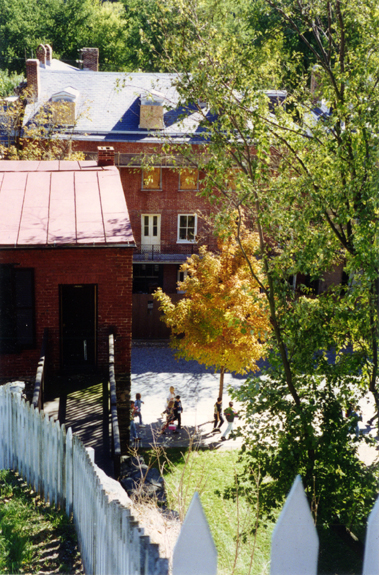
Picket Fence-Golden Tree, Harpers Ferry, W. Va.
Shenandoah River, Harpers Ferry, W. Va.
As for the Ups — After surgery I decided to go on vacation for 2 1/2 weeks before starting 6 1/2 weeks of daily (5 days/week) of radiation therapy. This was stretching to the limit my allowable time between surgery & therapy. But Samantha and I wanted to visit family and friends “up north” as we had planned and Samantha wanted to shoot some fall foliage photos to add to her Windancer photo-art collection of greeting cards/note paper line which she sells from home and galleries and shops in Naples and Torrance CA and in other parts of the country. So, we three, Samantha, BeeGee (my apricot poodle), and I took off for parts north to stop and visit (though very briefly) some friends and family and Samantha got some good photos of the fall foliage, with perfect weather the whole trip. We travelled almost 3000 miles through Fl, Ga, SC, NC, Va, WVa, Ky, De, (Tom et al and Wilm. girlfriends), and Marguerite, my former sister-in-law, the Lewes/Cape May ferry, Avalon, Ocean City NJ, Harpers Ferry, Front Royal, Skyline Drive, Blue Ridge Parkway, Great Smokey Mtns, Gatlinburg, and the Biltmore Estate, and back home to Fl. I’m sorry I missed a few friends – but I’ll catch those I missed hopefully in 1996. Quite a whirlwind trip but I’ll treasure the memories of family, friends, and sights. Would love to have visited more friends – but had the therapy deadline to meet, and as it was, we felt “pushed” to get back in time for the therapy appointments.
Hope this finds you well. HAPPY HOLIDAYS.
Love,
–Samantha
Ferry Wake, Cape May-Lewes Ferry Crossing the Delaware Bay
“Imagination, knowing and dreaming into the heart of the matter.”
Raphael Enthoven is a French philosopher. In his essay, “On Reverie,” published today, August 8, 2011, in the New York Times he places his thumb keenly on the focus I attempt for my blog. I wish I could say this so well as M Enthoven, my kindred mind.
August 2, 2011 — I commented on someone’s kitchen blog the other day that I am growing low-fat, shredded cheese in my garden. Or so that’s how the words came out.
Emma doesn’t say many words anymore. She hasn’t admonished me lately, even, with “You get your hands off my walker!” She just hits and kicks – oh, and sticks out her tongue. The other day, though, as I seated her at the dining room table and instructed her to put her feet under the table rather than to the side of the chair, she scolded, “Get your feet out of my way!” It was the chair legs. I was standing behind her chair.
Back in 2008, when Emma was still somewhat coherent, and she had just gotten her walker, she didn’t fall for a while, she was still continent and able to communicate and do some things for herself. Nevertheless, over the next year or so, some words came out funny, like the time my friend R came over and cooked dinner for us. When she was done eating, Emma got up from the table, took her walker, and as she passed behind R, still sitting at the table opposite me, said, “Spizzle jitney.”
“Spizzle jitney…?” said R.
“Yeah, I think so,” I said.
“What does that mean?” he asked. She used to refer to her walker as her Caddy, like the Cadillacs she owned, so R wondered if she was referring to her walker. “Or, is she saying that it’s a jitney?” he speculated.
“No. I think she was thanking you, telling you “Special dinner,” I replied. I still think that’s what she was trying to say. She doesn’t say much now, except “Thank you,” “Nice to see you” and “You leave my walker alone,” but back then, two to four years ago, she would talk a little and some words and phrases came out funny.
The handsome Dr. Patel came by one day last week to do Emma’s 60-day checkup. He asked me if I had any questions. Of course, I wanted to rush into “How old are you?” [Read: “Just how many decades younger than I are you anyway?” Tess, our nurse, says she doesn’t think he’s that much younger. Tess, as ever, is supportive.] And, “Why aren’t you married?” It’s my understanding he’s not gay – from what I’ve heard and from his demeanor.
Rather than a discussion in that vein, however, I directed our conversation toward his discontinuing certain of her medications and he explained what happens as the body gradually shuts down. This prelude led to our engagement in a protracted conversation about incontinence and bowel movements.
After those words, he stood up, looked me directly in the eye, said, “It’s good seeing you again” (I, the crumbgatherer), and headed for the door. He left his small black case in the blue chair where he had been sitting. I gathered it up, went after him at the door and handed it to him. “I wouldn’t know what to do with it,” I said.
{{{ }}}
My mouth opened and the words shot out, like verbal diarrhea, leaving my stunned mind to figure out how to retract the mess.
It seemed to me that for us both, this was our Columbo moment. How I miss the late actor Peter Falk, especially in the role he created as Columbo, the rumpled trench-coated, seemingly bumbling detective. He’d head out the door, hunch over, scratch his head, turn, just as the “person of interest” was closing the door in relief, stretch his arm forward and say, “Oh, and one more thing…”.
... a stone, a leaf, an unfound door; of a stone, a leaf, a door. And of all the forgotten faces.
Naked and alone we came into exile. In her dark womb we did not know our mother's face; from the prison of her flesh have we come into the unspeakable and incommunicable prison of this earth.
Which of us has known his brother? Which of us has looked into his father's heart? Which of us has not remained forever prison-pent? Which of us is not forever a stranger and alone?
O waste of loss, in the hot mazes, lost, among bright stars on this most weary unbright cinder, lost! Remembering speechlessly we seek the great forgotten language, the lost lane-end into heaven, a stone, a leaf, an unfound door. Where? When?
O lost, and by the wind grieved, ghost, come back again.
Thomas Wolfe Look Homeward, Angel
1929
Select Title Image to Buy My Book on Amazon
For some reason the images no longer show here, but when you click on the question mark, it links to my books on Amazon.
The Dead
“Gabriel Conroy reflects on his wife's former lover, Michael Furey:
The air of the room chilled his shoulders. He stretched himself cautiously along under the sheets and lay down beside his wife. One by one they were all becoming shades. Better pass boldly into that other world, in the full glory of some passion, than fade and wither dismally with age. He thought of how she who lay beside him had locked in her heart for so many years that image of her lover's eyes when he had told her that he did not wish to live.
Generous tears filled Gabriel's eyes. He had never felt like that himself towards any woman, but he knew that such a feeling must be love. The tears gathered more thickly in his eyes and in the partial darkness he imagined he saw the form of a young man standing under a dripping tree. Other forms were near. His soul had approached that region where dwell the vast hosts of the dead. He was conscious of, but could not apprehend, their wayward and flickering existence. His own identity was fading out into a grey impalpable world: the solid world itself, which these dead had one time reared and lived in, was dissolving and dwindling.
A few light taps upon the pane made him turn to the window. It had begun to snow again. He watched sleepily the flakes, silver and dark, falling obliquely against the lamplight. The time had come for him to set out on his journey westward. Yes, the newspapers were right: snow was general all over Ireland. It was falling on every part of the dark central plain, on the treeless hills, falling softly upon the Bog of Allen and, farther westward, softly falling into the dark mutinous Shannon waves. It was falling, too, upon every part of the lonely churchyard on the hill where Michael Furey lay buried. It lay thickly drifted on the crooked crosses and headstones, on the spears of the little gate, on the barren thorns. His soul swooned slowly as he heard the snow falling faintly through the universe and faintly falling, like the descent of their last end, upon all the living and the dead.
--James Joyce
"The Dead"
From Dubliners 1914
“Chasing Cars,” by Snow Patrol
We’ll do it all
Everything
On our own
We don’t need
Anything
Or anyone
If I lay here
If I just lay here
Would you lie with me and just forget the world?
I don’t quite know
How to say
How I feel
Those three words
Are said too much
They’re not enough
If I lay here
If I just lay here
Would you lie with me and just forget the world?
Forget what we’re told
Before we get too old
Show me a garden that’s bursting into life
Let’s waste time
Chasing cars
Around our heads
I need your grace
To remind me
To find my own
If I lay here
If I just lay here
Would you lie with me and just forget the world?
Forget what we’re told
Before we get too old
Show me a garden that’s bursting into life
All that I am
All that I ever was
Is here in your perfect eyes, they’re all I can see
I don’t know where
Confused about how as well
Just know that these things will never change for us at all
If I lay here
If I just lay here
Would you lie with me and just forget the world?
Songwriters: Nathan Connolly / Gary Lightbody / Jonathan Quinn / Tom Simpson / Paul Wilson
You forget me,” he said. “Am I not your steward?”
“I don’t know,” I answered. “I can but imagine.”
Dusk embraced us now, at the window here in the blog cupola. The Blue Deer lifted its head, sniffed the air, and then walked off into the woods. I pulled the window shut, picked up my purple and white iris the Phantom had picked for me and we headed down the winding staircase, I behind the Phantom. In case I stumbled I hoped he would catch me. If I went first I feared he would push me. I didn’t want to flatten my iris.
When we reached the foot of the stairs, I thanked him again. We parted there. I lifted the iris to my nose. The stem had a nutmeggy smell, like his hand.
“What is your name?” I called after him.
“Moriarty,” he called back.
-- S.M.
The Raptor
I took a lunch break just now and sat out on my porch in the sun. I watched a dark raptor circle the broad grass plot between the houses across the street. A pair of crows came and chased the raptor, pecking at it. The raptor landed on the roof of the house next to the grass plot. Every time the crows pecked the raptor, the raptor ducked. Then it spread its wings, staying perched on the edge of the roof. Imposing. The raptor's mate showed up and perched beside it. The crows flew down, took a bath in a puddle and flew away. The mate flew away. The raptor left the roof, circled and landed on the grass plot. Now I could see, this was a turkey vulture, and it proceeded to eat what had been a squirrel.
S.M.
The Fog
From the attic I view the fog hanging at eye level. In our tall, thin Victorian house, I have climbed the spiral staircase to the third floor and chanced to look out the window at apparitions of trees and through the belfry in the church steeple at the heavy black bells, the condensation tintinnabulation off the gray, dripping cloud beyond, and faint lights here and there, like spirits holding lanterns, seeking their way up out of the Underground Railroad, while the fog descends, descends upon them.
I watch the fog cloud stealthily drape steeples, trees, houses, and, I can see, it is soon to inch down tree trunks and creep across lawns and up steps and onto Victorian porches.
S.M.
I spent seven years in the 1990s binge-cashiering at a farm stand on a 30-acre farm in Naples, Florida. While strings of cashiers came and went, during the intervals I often worked nine days straight. I loved my job and the customers. Some became enduring friends and plenty produced sundry stories for my amusement. I wrote down the stories and saved them. Now, as thoughts poke through of gardens and rows of strawberries, corn, tomatoes, lettuces, herbs, peppers, eggplant, squashes and melons, I offer you samples of my stories and expert citrus advice. For your binge-reading pleasure, I am gathering these stories into a book called FUNNY FARM STORIES. You can find some of these stories up above, in the menu headings under the header photo, across the top of this page. Don’t know an orange from a melon? Check out WHAT SHOULD I DO WITH THIS GREEN THING…? I hope their flavors delight you. –Carolina Gringo, as told to Samantha Mozart.
Click on the images of the authors' books in the posts, in the sidebars and on the "Bookstore" page accessed via the top menu bar, and you can find out more and buy them on Amazon. The Scheherazade Chronicles receives a small sales percentage, so, be heartwarmed that on the day you've clicked through us to buy on Amazon, you've not only helped the author but also bought us a light lunch.
Gatsby
In my capacity as publisher of Scheherazade Chronicles Classics I have formatted for ebook and published for sale on Amazon F. Scott Fitzgerald’s The Great Gatsby. This is the link.
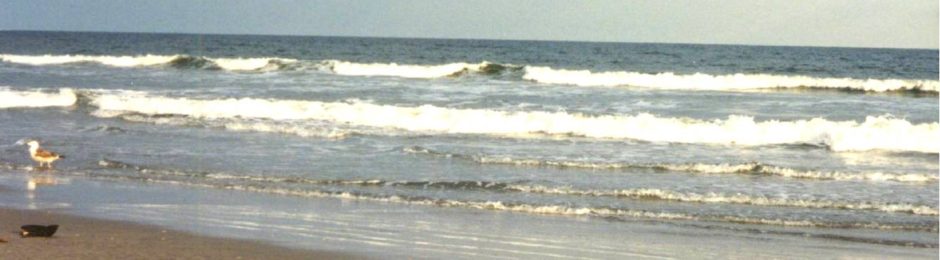

 Emma’s legs turned to jelly, too, a week and a half ago, on a Monday, when her condition suddenly met a precipitous decline, as when sliding down a sand dune; her legs wouldn’t hold her upright. She sat at the dining table and ate lunch all right, but as she was finishing, her hands got shaky holding the orange juice glass; she got weak. Recently her eyes would close at the table, anyway, before she finished her meal. But this time her strength just sort of got sucked out to extreme ebb. Our aide had trouble getting Emma to the love seat, where she sits every day, but the aide didn’t tell me. I’ve been told since that Hospice, at least our Hospice, doesn’t like to point out downturns to caregivers lest they “worry” them. Instead, just let the caregiver be blindsided.
 Services program recently, I could not hire anyone until we got our federal Employer Identification Number – Emma is the employer of any aide whom I, her agent as power of attorney, hire. Of course, the kid at the bank had not bothered to check to see if a business account can be set up by power of attorney (I call him a kid, because he’s way younger than I; apparently, though tall, has not yet started kindergarten; and must have been occupied all week texting). This bank is where the account would be set up to hold the funds to pay our employee aide(s). The kid had scheduled an appointment with us over a week ago. Two hours before our meeting he found out about the power of attorney: he picked up the phone and called to tell me they could not accept it to open a business account. He would have let me know earlier, he explained, but all morning the lobby had been filled with clients. I hung up on him.
 away with another patient, stopping a nosebleed. But she did come. She arrived at twenty past midnight. We called the ambulance company, which, fortuitously, is right around the corner, a block from our house, and two guys came, lifted Emma’s 75 pounds off the love seat and put her into the bed. They didn’t even need one of their surfboards, or whatever those things are called. The nurse helped me get the bed made properly – that is, with a cross sheet – look, I’ve avoided having anything to do with the healthcare profession ever since I was 3 and in the hospital for a week for a cyst and hernia operation. She showed me how to roll Emma over to clean her and change her clothes, and slide her up in bed using the cross sheet, deftly rolling Emma this way and that and lifting her torso and legs. I thought I was done helping her and started to walk away.
 Although I stretched the time, I thought it better to leave Emma in bed where she was somewhat comfortable than to try to get her up and drop her. That night, Tuesday, I tried getting Emma into bed myself and getting her cleaned up and changed. Emma was again too tired to eat dinner; in fact, for several nights she preferred to sleep rather than eat dinner. I got her into bed, but I couldn’t do the rest. I have the strength of a jellyfish. Plus, I’m not very tall, so I can’t get the leverage to reach across the bed. Besides, Emma pushes me away and claws at me. She’s so afraid she’s going to fall, even lying in bed, that when I try to move her, she clamps onto my arm (that vice grip again) and digs her nails in. She actually broke the skin. So, I had to call for a nurse again. This time she came around 10:30 and left just after midnight.
 imagine. With cheerful coaching, she gets Emma to eat dinner. This aide has helped us before, working for an agency until they snatched her away from us. When they reassigned her, Emma’s condition and our situation slipped a couple of rungs. Now that she’s returned, she has lifted that burden immeasurably. She is a bright, radiant, energetic, positive young woman who, when you ask to do something, does three additional things; and she is aware: she notices small changes in Emma’s condition that I might not see – especially from my distance of avoiding being hit or clawed.






 For some reason the images no longer show here, but when you click on the question mark, it links to my books on Amazon.
