I fled down to the shores of the water — Walt Whitman
The Scheherazade Chronicles is dedicated to the development of storytelling and to raising awareness of and promoting access to the humanities for the edification and enlightenment of humankind, thus to save humankind from death by the cleaver of ignorance.
February 5, 2012 — There arose some confusion about how much Haldol I was supposed to have given Emma when on Tuesday afternoon, January 31, Tess, our Hospice nurse, arrived to assess Emma’s condition – one milligram every hour as needed or two to three doses only and then call Hospice. Well, I did call Hospice (after eight doses) and I was told to give another dose.
That’s when the whole center of the stage collapsed, and I fell through, ending up with Stephen King’s “boys in the basement,” whence sprang forth into the spotlight the gargoyles of my subconscious.
I envisioned myself on Anderson Cooper 360 in drug overdose trial highlights along with Michael Jackson’s doctor. I only followed Dr. Patel’s prescribed dosage, the directions on the bottle, doing what I thought was best to ease Emma’s agitation and keep her as comfortable as possible.
Not taking the time to get out my soapbox, I simply stood my ground and launched into how because some people are doctors and nurses, they think they are smarter than everybody else – and they’re not – and therefore don’t think the layperson is intelligent enough to receive full information, like how many doses, specifically, of a drug to give, or how the drug works, its efficaciousness, the effects and the side effects.
“Dr. Patel wants to know exactly what Emma has been doing,” said Tess. I sat back in my chair, exasperated, and said I didn’t know what else to say; I’d already told everybody everything in detail.” I was burned out.
I believe I was doing a fine job at testing Tess’s patience. Tess is most compassionate. She is a very experienced nurse. She told me I had some choices: go back to the less effective Ativan; give two to three doses of the Haldol and then call Hospice should Emma show no improvement; stay up with her alone all night; or do nothing. I said I felt less supported than before; in fact, that I felt bereft.
Tess said she would double check with Dr. Patel and that either she or he would call me. No one called.
The next afternoon, Wednesday, February 1, I called our Hospice team manager, a nurse. She said that the instructions were to keep the dosage as is. “As is what?” I asked. “One milligram an hour as needed or two or three doses and then call?” The team manager said she would check with the doctor and call me back.
Awhile later she called and said that Dr. Patel had changed the order to five milligrams of Haldol twice a day, morning and night – “He doesn’t want you up all night” – and if Emma continues to be agitated, one milligram every hour, as needed. She told me I had been giving the medication correctly.
Meanwhile, I had been reading about Ativan and Haldol, particularly the latter, in the literature that came with the drug, online at WebMD and other places. These sources give you an overview; they are not explicit. This may be fine for the average layperson, but I don’t want to miss anything.
Late that afternoon, Dr. Patel phoned me. He said that he hoped that this increased dosage twice a day would keep her calm. He said we could give her Ativan, which has fewer side effects but is less effective. He said he could prescribe a new drug, but that since Emma’s system is already adapted to the Haldol, it is better to continue that rather than to give her a new medication and her body having to adapt to that. Without my asking, he gave me the explicit information I was seeking. He explained that once her body adapts more to the Haldol that the dry mouth side effect should subside. He explained how the drug works and related details. He said that as prescribed, I had no chance of overdosing her, unless she had fallen asleep and I was still trying to administer the drug. This, of course, I would not do; I would have fallen asleep by then, anyway.
After his call, I felt much better. Everything was OK. Dr. Patel is the best drug I could have.
He has a calming, centering effect on me. You may smile and go “Mmm-hmm,” but I will tell you that he is one of a kind, like my spiritual teacher friends – compassionate, intelligent, having a practical logic, and self-realized, setting an example towards which I strive – on my good days.
The team manager sent Nurse Mirabel (as I shall name her) that evening to assess Emma’s state. Nurse Mirabel is a tall, well-dressed, attractive, highly intelligent woman from Kenya. The first time I met her, a few months ago, when she told me where she was from, I recited, “I had a farm in Africa, at the foot of the Ngong Hills.” She lit up. She had never heard that opening line from Karen Blixen’s Out of Africa, but, “Ah, the ’Gong (as she pronounced them) Hills. They are beautiful. Yes. It makes me very homesick.” She is from Nairobi. We established a bond by that line. And I am very glad she is here. She is a people whisperer. She helped give Emma her first five-milligram dose of the Haldol – using the one-milligram dropper five times.
“She will fight you,” I said.
“Oh, no,” she said. “She will take it from me. I will have no problem. You just relax and let me do it. That is what I am here for. You are here twenty-four hours. You just rest while I am here.” She is the Dr. Patel of nurses. I thought I saw Emma smile when Nurse Mirabel administered the medication.
The next day, Thursday, February 2, Tess and Geri, my social worker/bereavement counselor, were here. This time there arose confusion in my mind about the ratio of milliliters to milligrams. Dr. Patel had told me and it was perfectly clear. Suddenly, it was not. I had to leave the room to clear my mind. Moreover, the pharmacy had sent a one-milligram dropper from which to administer the five-milligram dosage – and, well, we already know Emma hates the stuff. If she could, when she saw me coming at her with that dropper, she would get up and run. Fortunately, Tess had a two-and-a-half milliliter syringe in her car; two-and-a-half milliliters equal five milligrams. Trust me on this.
Tess said I should call sooner for help. Geri said, “Tell the nurse you want her to come out and assess Emma. She is not permitted to refuse.” Tess told me that since our Hospice took on the patients of a Hospice organization that went out of business a few months ago, she was visiting all her patients in the morning (she visits us once or twice a week) and therefore in the afternoon when it is time for our appointment, she is often sent out on emergencies – because emergencies tend to occur then. Now that I know, we can make our appointment earlier, she visiting us last, thus assuring she will be here. Once I know the other side of any situation, then we can take the best of both to reach a logical compromise somewhere in the middle.
I’m still not keen on getting on my hands and knees and begging an on-call nurse who has just demonstrated her uselessness, to come make an assessment: “Oh please, puhleeeze, puhleeeeeeeze come visit us now, in the middle of the night. Puhleeeeeze.”
I’ll just have to leave my ego in the wings and do it. Patients’ caregivers need patience. But, puhleeeze don’t be texting somebody while I’m trying to get details of a medical condition across to you.
February 4, 2012 — As you will recall, in our last episode, I was up on the catwalk, getting an overview of the action when the phantom of my blog came up behind me and nudged me over the edge. I grabbed hold of a rope in the fly system, my hands slipped down; at the end of my rope I let go, falling into the midst of a heap of backdrops, whereupon I became confused as to which scene I was in; and although I recited my lines thinking I was speaking English to an English-speaking audience, my audience did not comprehend. Following is my Act II synopsis:
Tuesday, January 31, 2012 – I was up all last night with Emma, who was agitated. By midnight, after I had given her eight one-milligram doses, one every hour, of Haldol, I knew I would get no sleep because her condition was not improving, and she was uncomfortable. Therefore, I broke down and, even though I feared getting earless people, talkover and an argument, called Hospice. I explained over the phone to the on-call nurse that I had given Emma eight doses of Haldol every hour as prescribed, with little effect, and I needed some direction. The on-call nurse, a woman from the Islands, who apparently is on permanent vacation, this same woman who told me a few weeks ago by phone “She’s had a decline,” this time said – yes, you guessed it – “Give her another dose and wait a half hour. If it has no effect, call us.”
I asked her to repeat the incidents I has just detailed for her; she had no idea. I told her very politely that I was going to hang up and call back to speak with someone who would listen and had the knowledge to manage the situation. Finally I got the continuous care manager, who was on-call, who said she would send Nurse M, the wonderful night on-call nurse with 40 years experience, the one who last August so helpfully settled Emma into her hospital bed for the first time when she became too weak to climb the stairs. Nurse M phoned at 2:30 in the morning to say she had just “pronounced someone,” she was 45 miles north of us and she would be right down.
Until around 2:00 I had been alternately holding Emma’s hand and giving her the medicine, which she hated: “Don’t give me any more of that!” I found that when I sat beside her, it calmed her. When I left her side, she called, “Samantha, Samantha! Bob, Bob!” (my brother). Then, “Mother, Mother; where’s Mother?” Oh, dear, what does she need? She’s calling her mother. And then, from where she grew up, “Is anybody going to West Philadelphia?” and “Where are my dogs? Maybe she can sleep with me.” And finally, when she told me my hand was cold, “Do you want to get in with me?” That’s that generation. Much of what she said took me back. As a child, when I visited them, I always had to sleep with my snoring Nana or great Aunt Mary in a double bed next to a “Big Ben” wind-up clock with a loud ticking that sounded like my dog Kolia eating potato chips. Of that generation (my parents’) almost all are gone now. Sad; a great loss to us Americans and to the world: The We Generation, the ones, and their parents, who took in a widow or widower parent, aunt, uncle, a bachelor brother or spinster sister.
Anyway, stepping forward in time, thank goodness for my Kindle. I sat beside Emma, pulling up an opposing chair, placing a pillow on it, my feet on that, covering myself with my favorite throw, and reading with the page lit by my little flashlight on my apple green Kindle cover, so that I didn’t have to turn on a bedside lamp that would shine in Emma’s eyes. Speaking of sisters (my father’s and stepmom’s daughter), I read my sister, Kathleen Long’s novel, Chasing Rainbows, and since we have experienced many of the same situations and react to them the same way – in the novel she names the baby the protagonist lost, Emma – I felt like there were two of me – the one beside Mother and the one in the novel.
Kathy’s story is about a woman who upon suffering a series of losses seeks a way to survive. It is similar in tone to my journal here; it is very good and has been at the top of the Amazon and USA Today, among others’, bestseller lists.
Nurse M arrived at 3:30, so bubbly and helpful, eager to impart liters of knowledge, as before. “I buy Sippy Cups at the Dollar Store and keep them in my car,” she said. “I’ll go out and get one for you.” She brought in a little blue Sippy Cup that Emma figured out how to use and adapted to immediately. We poured in an inch of water at a time, making it easier to tilt the cup (or a glass of liquid). Nurse M said not to use straws, because people with dementia may forget how to use them, pull the liquid halfway up, let it go, and end up taking in a lot of air. She also suggested I give Emma something to do with her hands. Emma seemed to like holding the Sippy Cup. It turns out she was thirsty, very thirsty, and kept saying, “May I have more water, please.” She drank a whole cup. The Haldol gave her dry mouth. Yes, she was speaking full sentences and not mute or speaking in cryptograms. Nurse M left, saying to continue the doses as long as needed. Emma calmed after she drank the water and I had administered her 13th dose of Haldol at 5:00 in the morning.
I finally got to bed around 6:00. The on-call administrative supervisor, who had sent Nurse M, phoned at 9:30, saying she hoped she hadn’t awakened me but that it sounded as if she had, and asked how everything was going; she was very kind and thorough.
Midday, sitting at my computer, I find myself gazing unfocused and trancelike out my window at the bare dogwood and maples branches beyond. Our morning healthcare aide has been; Emma is calmer. I want to be productive, work on my writing – and I want to close my eyes and curl up and sleep. Not much chance to sleep: Tess is scheduled to come in the afternoon.
February 4, 2012 — I was up on the catwalk, getting an overview of the action when the phantom of my blog came up behind me and nudged me over the edge. I grabbed hold of a rope in the fly system. Not being much for rope climbing, I slid rapidly down to the knot at the end and got rope burn on the palms of my hands. At the end of my rope, I determined I had to let go and fall where I may….
I seem to have landed amidst of a heap of backdrops. It’s hard to know which scene I’m in, what my role is; moreover, when I recite my lines, my audience does not comprehend. I think I am speaking English to an English-speaking audience. I recognize the futility of becoming the director of my own play; I’ve made one hundred false starts, to quote F. Scott Fitzgerald, always interrupted by a change in scene. Following is an Act I synopsis:
Monday, January 30 – In my observations of Emma, I have noted the following: 1) She is still not calmed; 2) She wants me to be sure the dogs are fed – they need to be bought some dog food, and then she hopes they will find a dry spot to sleep. I think that she says this because she has a dry patchy spot under her eye, on which I just put moisturizing lotion, and that she was hungry (has now eaten); and 3) She said, “Maybe she could sleep with me tonight,” speaking of her dogs (the toy poodles she once raised) – does she, after all, miss Jetta, our blue teacup poodle I put to sleep on December 5? Or does she just want to sleep? I do not know what she means by dry spot. I offer her water and other liquids but she refuses them.
Emma’s speaking and actions this afternoon signal another bout of agitation. First, she starts in the morning resisting our healthcare aide’s efforts; by midday, she speaks in cryptograms; by afternoon she is making decipherable sentences. Tess, our Hospice nurse, is due for a visit today. Good.
It is so sad. Emma knows it and I know it. “This is terrible,” she said this afternoon, and “I don’t know what got into me. I can’t get up and go downstairs by myself.” A dilemma; and I wonder who actually cares about this: Just before her scheduled arrival time, Tess calls and says she can’t make it. She has to draw blood somewhere. It is my understanding that our Hospice has left Tess isolated down in our area, 40 miles from the main office, and she is overworked. As far as Emma and I go, we are not priority. I am by myself, alone, in this. Despite they’re saying, “Oh, you can call,” they do not act: A call for action gets a muddled response. I cannot call – I’d sooner pose nude before a mirror and post it on my blog, than to experience the trauma of an argument.
The author of my favorite blog, Lame Adventures, who after recently attending New York City playwright Young Jean Lee’s Untitled Feminist Show, in which the performers, all women, appear nude on a nude stage, photographed herself nude before a mirror and posted it on her blog. Kudos to her for seeing the naked truth and putting it out there. (Do not expect me to appear the same here, ever.)
At eight o’clock I gave Emma a fifth dose of Haldol (as prescribed, one milligram per hour, as needed) and as I grabbed the bottle with the eyedropper in it, I nearly knocked over the glass of water our aide, Daphne, had left on Emma’s over-the-bed tray table. “Oh, dammit,” I said.
“I hear you, baby,” responded Emma. I think she was thinking of my stepfather; she called him baby, not me.
“I know you do,” I said. “Here is some more medicine.”
I inserted the dropper into her mouth. “Gakhh,” she said, turning her head away.
“It’ll make you feel better,” I said, in my feeble attempt to reassure her. “Now try to get some sleep.”
I wonder if Emma is aware at this point that when we leave this earth, we leave naked and alone. We live on it naked and alone, palpably periodically.
As in a scene with my dog Kolia, my black, blue-eyed husky/wolf/German shepherd, when I’d let him off his leash on the bridle path, he was good, good, good, running along just ahead of me, his head bobbing slightly from side to side as was his husky nature, all happy and free. Then, “I’m gonna take off this way,” he’d say, turn left, and head off down a side street dead ending perpendicular to the bridle path. I remember so clearly that day nearly 30 years ago in Palos Verdes Estates, California, when, with no car sense, he ran right out into the traffic of a heavily traveled two lane road that wound up the hill. I could only stand there alone, with my heart in my mouth, watching him as he pranced, heedless and carefree, among the front and rear bumpers of 40-mile-an-hour cars coming around the bend. By the grace of the dog goddesses and alert drivers, he made it through safely. But until that moment, all I could do was stand there and watch.
I sat up all night with Emma, giving her dose after dose of Haldol every hour, watching at her bedside.
Scene: Me on hands and knees tugging my soapbox out of the back of our deep closet under the staircase. I stand and turn.
Me: Oh, it’s you!
Oscar Wilde: I cannot deny it.
Me: Oscar. I am so glad to see you!
Oscar Wilde: Your soapbox could use some polishing.
Me: Yes. It’s gotten rickety from overuse. But I have read and friends have told me about distressing circumstances occurring among the aging that I feel require an audience. I must compose some words on this subject. Will you be my muse?
Oscar Wilde: OK.
Oscar Wilde: You are putting words into my mouth: “Most certainly. Why, I’d be delighted!” would be more appropriate to my manner of speech than “OK.”
Me: OK.
Oscar Wilde: How is beautiful Emma? I do hope her frantic behavior has calmed.
Me: Yes, it has. Thank you for asking. Her doctor gave a new order for a different drug – Haldol: I call it the Hallelujah drug – and that immediately subdued her symptoms. Well, it zonked her. She is more relaxed now, limp, really. She eats well, but in between she sleeps comfortably.
Me (standing on my refurbished soapbox): Now, here is a link to Delia Ephron’s January 27 New York Times story about what the banks are doing to all of us, not merely the aging. I think they try to make us think we are senile. Who cannot relate to what she says in her Op-Ed column: http://www.nytimes.com/2012/01/28/opinion/banks-taketh-but-dont-giveth.html?_r=1&hp ?
Delia Ephron, you know, wrote Hanging Up, about how only one of three sisters is willing to care for their aging father; the other two are too busy.
The aging want to be independent, understandably, so they live alone. Many are becoming senile, or demented, and as early as in their 60s. No one may notice the emerging signs of dementia; I certainly did not; though I do now, having experienced with Emma the ensuing events effected by those early symptoms.
While some children of the aging may see these developing signs, they do not live nearby, so while they may vaguely think that their aging parent needs help or needs to enter a nursing home, these thoughts languish unattended.
A friend told me a story the other day of a local woman who went without heat over a weekend of below freezing temperatures and high winds; moreover, she had no food in her house. Heating oil delivery personnel were alerted that she needed oil but would not deliver it on a weekend. The woman should have been aware that she could phone someone – even the police, to get help. But she just piled on the blankets. I’m surprised the pipes in her home didn’t freeze and she wasn’t found frozen to death. Our house was cold and drafty that weekend even with the thermostat set at 69 degrees Fahrenheit.
Others I have heard about with dementia live alone and employ healthcare agencies. But, what happens when the healthcare personnel don’t show up? I have undergone this predicament many times with Emma – no one calls, no one shows up: I call them – from my soapbox; that’s partly how it got so rickety. They don’t like hearing from me from that stance. Emma has me to look out for her in this manner, fortunately, for I have spent countless hours chasing after these people, whom once pinned down, flail their unwieldy tongues in singsong descending pitch spinning their behavior to blame me, with the preface, “Well, now, Samantha, you know and I know and we both know, as well, as I’ve told you before, that …” – fill in anything here: “It’s your responsibility to call us every day to see if we have someone available,” whatever.
Alarmingly, as the extensive baby boomer generation comes of senile age, who will care for them? Their children’s and grandchildren’s generations (the all-about-me generations) are smaller; your family won’t and your friends will all be dead. Susan Jacoby writes about these and related impending plights in her 2011 book Never Say Die: The Myths and Marketing of the New Old Age.
More imminent, what can be done to identify the early signs of dementia and Alzheimer’s and to prevent these debilitating conditions? On the Charlie Rose Brain Series 2, Dr. Eric Kandel (a Nobel laureate, Professor at Columbia University and a Howard Hughes Medical Investigator) said that 30 to 40 percent of people over age 80 will have some form of Alzheimer’s disease, and into the 90s, more. As the population ages, this is becoming an epidemic. Imagine (while you still possess that mental capacity). We’re living longer; most of us won’t die at 46, like Oscar Wilde.
Oscar Wilde: Yes, but you do see that I have returned. Of course, one of the signs of dementia is seeing people who apparently are not physically present.
Me: All the more important that we channel our mental faculties now to recognize our urgent need for increased Alzheimer’s research funding.
Tuesday, January 24, 2012 – The rain stopped last night. I went out and sat on my front porch. The night was dark. A wild wind wrestled with the limbs in the tops of the tall Norway spruces across the street and dried the brick sidewalks. Chimes hanging from porch eaves up and down the way jangled like angels chattering, tittering, anticipating. A dog proclaimed in a choppy bark from a backyard somewhere: “Let me in. Let me in. Let me in right now.” A very large, dark bird of prey appeared, flew in a small circle and perched on the low wire just in front of me. It was an owl. I was honored by the visit.
I would like to tell you that I said “Hello, Owl” and about our enlightening conversation, but I won’t, because we didn’t speak. The owl remained silent, observant; I heard its mate calling “Who-oot, who-oot, hoot,” several blocks to the south. I gazed at the owl. I couldn’t see its eyes, only its head turning … turning, turning. It was too dark to see its colors. It flew away.
I saw a shooting star from my bedroom window in the middle of the night last Wednesday when I couldn’t sleep. I lay in bed and saw what appeared to be airplane landing lights low in the west through the bare walnut and mulberry branches beyond. I got up and squinted at the sky through the rippled glass. The light didn’t move. It was clear, bright and steady. It was a planet, probably, Saturn or Jupiter. Then, nearby, I saw a shooting star. Each time I see a shooting star, rarely, thankfully, I lose a friend – not necessarily by death; they’re just gone.
Our Hospice chaplain and our music therapist visited on separate days during the week. They said Emma is traveling. I believe so, too. When they are here, I observe that her travel is smooth – she seems relaxed, even smiles, albeit with her eyes shut.
Dr. Patel visited Friday. He said Emma is not ready to leave yet: she continues to eat. He advised not getting her out of bed, for she is so weak and frail, weighs about 65 pounds, that she could easily get hurt.
Emma was quiet during his visit, sleeping. She had just relaxed from another agitation bout that lasted all day Thursday until after around one o’clock Friday morning. When she is agitated, she is amazingly strong. I become tense when Emma does. She became tense Wednesday; maybe that’s why I didn’t sleep Wednesday night. We are mother and daughter, after all; apparently connected by physical nuances. I have to watch for that – what’s up with me may be up with her, too. My aides and I observed Emma closely from Wednesday into Thursday. Thursday morning she exhibited beginning signs of agitation, so I gave her a dose of Atavan. Her agitation continued all day; therefore, as prescribed, I gave her Atavan every four hours, the last at twelve thirty Friday morning when her symptoms subsided and she fell asleep.
These agitation events affect me deeply, psychically. This surprises me. I thought I could just deal with it, however stressfully, as I had with Emma’s erratic behavior – “I’ll be under the bed,” our teacup poodle, Jetta, would say – in her middle stages of dementia: the difficulty in toileting her and dressing her, her occasionally sitting and staring at her dinner, her telling me she’d have me fired, my frustration and exhaustion; but this is different. I felt comforted Thursday, however, knowing it was a weekday and our regular Hospice team was on duty, and that Tess, our nurse, was coming. Early that afternoon, Tess called: “I can’t make it today,” she said. “One of the nurses is out and they’ve sent me to see her patients.” I don’t know what happens. I simply lose it; I dumped everything on Tess through the phone. You may recall my mentioning previously (XXVII. The Horn Section) that Tess is Mother Teresa. She listened patiently, said she understood and that we’d discuss the situation Monday, her next scheduled visit.
Emma, meanwhile, said she was glad to be back, that she had been visiting her family (the cousins she grew up with) and that they were going to put her to work. “They’re a good bunch,” she added. Then she said, “Where are my dogs?”, the toy poodles she raised. “They need to have their food.” I told her they’re not here right now. She said, “I want to get out of here,” and got herself out of her pajama bottoms and diaper. I have neither the strength nor the leverage to turn her in her bed from side to side to change her clothing. I covered her with her blankets and we waited two hours for the aide to come at her scheduled time.
The evening aide came – I shall call her Daphne –, changed Emma and fed her dinner, and when she left, Emma was still agitated. I don’t know how she would have been without the Atavan. Previously, her agitation events occurred once a week, on weekends. But, this was an added event, midweek. After Daphne left, I sat outside on the porch for a few minutes. I felt distressed. “I have no one to call,” I thought. I can’t just call up a friend and whine at Emma’s every crisis. Friends have their crises to whine about, too.
I thought of the little things that mean so much to me these days: a fellow blogger commenting on my blog and when I commented on her blog, her placing a pingback link for her readers to my blog; my friend R’s and others’ comments on my blog post (XLVII. For Whom the Bottle Tolls). I find this heartening. I sat on the porch and thought about that. All at once, everything got quiet – not a bird, nor squirrel, nor car, nor kids running in the street, nor wind. Nothing. And suddenly, everything dropped away: I was totally and completely alone, alone with myself in a pure, clear space. What to do with this? Accept and adapt. I did. After a few moments, I came back into the house and a caring friend called. She knew somehow. She said that.
Part of my distress arises from having to call our Hospice agency off hours for help and getting an argument from on-call nurses and administrators who talk over me without listening.
When Dr. Patel comes, for me it is like meeting an oasis of the mind, as I have said. He is intelligent, interested, and uses common sense. Friday I told him about my seeing a shooting star and that every time I do, I lose a friend. “Close the curtain, pull the shade,” he told me. You laugh. So did he. I laughed, too. A practical remedy. Wise. I believe the Universe is mirthful. It cushions the ride.
Emma became agitated again this afternoon. She threw off her covers and shot bolt upright in bed. I gave her some Atavan. To my delight, a Hospice aide was here, the first Hospice healthcare agent to witness Emma’s agitation. The aide became anxious. I asked the aide to immediately call Hospice and inform them. She did so. “She keeps sitting up, trying to get out,” she told them. “I’ve never seen her like this. She was always so calm.” They contacted Dr. Patel who said to give Emma another dose of Atavan and to administer it every two hours, rather than every four, as needed. That second dose calmed her. How is she now, as I finish writing this at five o’clock? I don’t want to look. But, I must. She is lying in her bed with her eyes open – hopefully not ready to leap. I am perched nearby, watching. I can’t say I find this terribly amusing, though.
A Message from Emma: Daphne came to feed Emma dinner and prepare her for the night. Emma said to her, “I haven’t eaten all day. I’m hungry. I’m a vegetarian.” (She was in her earlier life.) Then she reached forward and took Daphne’s two hands in hers, pulled one of them to her and proceeded to try to bite her index finger. Daphne wanted to say, “Well, that would be pretty meaty,” but thought better of it. Emma asked, “Where’s Samantha? I’m hungry.” When Daphne told her I was cooking dinner and that it was almost ready, Emma said, “Tell her to bring coffee, too.” Then, later, Emma wanted candy. We brought her a piece from a box my good friend had brought to our Christmas party as a hostess gift. “I don’t like that,” said Emma. I knew better. It’s superb candy. “I only want half,” said Emma. She ate the whole piece and was ready for more. She still hasn’t calmed down, not at nine o’clock tonight. I’m hoping. I continue to give her the Atavan every two hours. She continues to throw off her covers and talk. Daphne has left, but sincerely offered to return if need be. I am comforted. All I can say is, I’d rather be on my end than Emma’s. It must be awful for her.
January 18, 2012 — My friend R, a movie buff, who can recite every line in Bette Davis’s Now Voyager – often using specific lines against any youthful age I might imagine myself to be –, emailed me that the late Anthony Minghella as a writer “lays in events” as precursors of things to come. He said Minghella used in his movies a transition technique, a “pre-lapping” of sound or image to move to almost every new scene. R gave the example of The Talented Mr. Ripley, where “with Tom Ripley looking on bells tolling – as the bells continue to toll, ringing into a new scene the following day with Ripley spying from a terrace onto an al fresco café … introducing a sense of the incoming scene before the outgoing scene ends. I love this: leading with sound,” said R.
Two days ago I downloaded a digitally recorded album, that my father led me into, of Oriental-sounding music of British composer Albert W. Ketèlbey (1875-1959) – picturesque, exotic pieces such as “In a Persian Market,” “In the Mystic Land of Egypt,” “In a Monastery Garden,” and “Bells Across the Meadows.” Those of us of a certain age who know this music remember mystically their fathers’ playing it on 78 and 33 1/3 rpm recordings. The music is transporting.
This morning I experienced the ringing of my phone across the tolling of my dropping a large, empty wine bottle into the bottom of my recycle bin: “What’s that sound? Oh. The phone.” Kellie, my daughter, was calling. This event mashup transported me to idyllic days of our guzz— sharing bottles of wine. One such memory is that of her pre-wedding party 13 years ago where she, her future mother-in-law, and I stood in the kitchen of Kellie’s 1948 cracker box California home chowing down on corn chips and salsa while so marveling at the richly flavored, velvety Australian Black Opal Cabernet Merlot – so reasonably priced. We opened a second bottle just to confirm our tastes. Good research triangulates, so we opened another. Wise choice Kellie made here in mothers-in-law. I don’t know what the other people at the party were doing. It didn’t seem to matter.
A year or so ago I bought a bottle of red wine that was standing on a liquor store shelf because 1) I found the label art attractive, 2) it was on closeout sale for $4.99, and 3) it was from California, my favorite place for wine, among other things. As a precursor to happily anticipated events, I bore the corkscrew into the cork. It crumbled. I tried a strainer; then a funnel seated in a strainer. I poured the wine from one glass to another, through a strainer. Why didn’t I keep cheesecloth around? Determined to drink this California wine with the artistic label I had bought on sale, and with no one watching, I did. It was O.K., not the best, but I figured if I drank enough I wouldn’t mind so much picking the cork crumbs out of my teeth. I have a friend who not only brings her own wine to my parties but also pulls her own corkscrew out of her pocket. Another friend says, “Honey, if I want to drink the wine, and I don’t have a corkscrew, I’ll find a way to open it.” I’m comforted; I am not the only one determined to drink that bottle of wine, liberally garnished with crumbled cork or whatever.
This morning while humming “In a Monastery Garden” and visualizing their wine cellar, I read the latest post of my favorite blog, Lame Adventures (http://lameadvertures.wordpress.com). She unearthed from her cupboard a 1996 Celebrity Cellars Bob Dylan Collector’s Edition One Reserve red table wine from Manteca, California. She and a friend cracked it open; that is to say, the cork crumbled. Using their ingenuity, including having a backup bottle of wine on hand, she and her friend employed various methods to filter out the cork crumbs, including a cone-shaped coffee filter. Figuring that filtering through a coffee filter would have taken them until next Christmas, they hit upon an ingenious how-to: a flour sifter. Therefore, as a precursor to enjoying your next vintage bottle of wine, let me recommend storing in your wine cellar a flour sifter.
The party my friend brought her bottle of wine to – René Barbier’s Catalunya, a delightful Mediterranean white – was my Christmas party. (I had a backup bottle of Catalunya on hand, because I know it is my friend’s favorite – not that she would drink that much, we agreed.) Our health care aide insisted on getting Emma up and dressed for the party. Emma loved parties and loved to host. And so the aide got her up and dressed in red. Although she said nothing, but only smiled, Emma enjoyed the party, seated at the head of the table and later when she started to list in her dining chair, in the wheelchair, then finally to her hospital bed in the back of the living room and to sleep, where after most of the guests had left, five of us sat and talked for another hour. I believe Emma enjoyed it all. The guests, spiritual teachers, nurses and artists, enjoyed her, too. (We didn’t give her any wine, as far as I know, but the guests were amazed at how much she ate that night. That is because the party was a potluck (and bring your own wine), and Emma always eats like she hasn’t eaten in months when it’s not my cooking.)
After New Year’s, another friend came by for an afternoon, and we enjoyed the rest of my first friend’s bottle of Catalunya and some cheese with the Keebler butter crackers my friend had brought to the party.
My party was on December 17. That was one of the last times Emma was out of bed. After that, she got too weak to stand up or to even sit up in a chair without listing or tilting forward, and has experienced intermittent bouts of agitation. My two aides overlapped a few days ago and together they managed to get Emma into her wheelchair, tilt the backrest and shampoo her hair, in the living room, using a footbath tub and glasses of water to rinse. Had I known they were going to proceed in the living room, I would have had them use rug shampoo. But, really, the aides were neat and thorough.
I have reviewed my early chapters here, starting in May, and I am amazed at Emma’s steep decline. In those May days, I was still chasing her around the house. Our Hospice team is astute about documenting Emma’s decline; for if she shows no decline, Medicare won’t cover the Hospice service. The decline isn’t as immediately noticeable when you’re in the middle of it: it’s like raising children – you’re always there raising them and then all of a sudden they’re grown up and gone. Then you’re drinking wine with them and they’re getting married and now you’ve got grandchildren who text you on their iPhones.
Many questions I have had for the doctor have arisen in my mind over the course of the seven weeks since I have last seen him. But in the sequence of changes in Emma’s condition and the subsequent eroding winds of self-serving health care agents, vassals of castles in the sand, my questions have flown from my mind like dry leaves carried down a rushing stream. The one question remaining hangs on the limb on which I presently stand. Then the wind blows, the bough breaks, and we settle on the next situation, the next question.
When the last leaves had gone off the dogwood tree outside my upstairs studio window at the end of November, I had to look farther away for trees changing with the season. Sometimes as I’d walk past my upstairs window, I’d glimpse this big, brown shaggy thing a few doors down. It is a bald cypress, a deciduous conifer, and it is historic, at least 100 years old. It is very tall, rising above the roof of the three story Victorian house it shades, and lush with graceful branches and green needles in the summer. It houses a peaceful community of critters—squirrels, birds, and who knows whom else. When I walk beneath it, its fragrance intoxicates me and I hear a menagerie of twittering and chattering from deep inside its branches. So much busyness, so many lives, so many stories to tell. The first late November I saw the bald cypress turn brown, I thought, Oh, my God, it’s dying. The needles have all fallen off now; its branches are bald. But, thankfully, it is only resting.
Often I dwell in the gap between the wine red of compassion and the sapphire blue of surrender, the darkest, deepest region of love, as defined by Nobel-prize winning author Orhan Pamuk in his novel The Museum of Innocence.
When I write, I live inside my head; my imagination rises to the fore. Readers ask Orhan Pamuk if the story he writes in The Museum of Innocence is about him. It is fiction, he tells the questioners, yet part of him wants the reader to believe that the protagonist, Kemal, is indeed he. My sister, Kathleen Long, has written a new novel titled Chasing Rainbows. Currently it sits in Amazon’s top 100. The story is fiction. She writes about our father. I write about my mother. (We have different mothers.) Daddy died suddenly in 2004. As I write this, I wear his sweater.
Carl Sagan said nothing ever leaves the universe. My friends Jean and Thumper who own the historic Delaware Bay oyster schooner, the Maggie S. Myers, and work her nearly daily dredging on the bay, once took a deceased waterman’s ashes out onto the bay to be scattered. It was a windy day. As Jean scattered the ashes, they blew back into her face and hair. “He was closer to me in death than he ever was in life,” quipped Jean.
When I walked our late teacup poodle, Jetta, along sidewalks piled with dry leaves, sometimes one would blow up into her face—thack. She tolerated being led through these heaps of leaves, because she was with me and because she couldn’t get away; however, she seemed to indicate that it would be more sensible to walk elsewhere.
Caught up in a vortex, a large dry leaf circles back and blows in my face.
In 1973 I sit at my round oak table in Redondo Beach, California, one night listening to the distant sounds of the surf breaking on the shore, drinking wine and staring into the flame of my magic candle held in the neck of a small, dark wine bottle with thick, multi-colored wax drippings down its shoulders and flanks, set in the middle of the table. I feel melancholy.
The next morning I go to class and sit next to my friend, Robert M. We are taking notes, listening to the instructor. Robert draws something in his notebook and hands it over to me. It is a picture of a candle with a gloomy cloud above it. I am blown away. I wrote poems, typed them up and compiled them into a little book. Robert wants to see them. I lend him the book. He keeps it overnight. He returns it and says, “I read your poetry and fell in love with you.”
Robert is an artist; focused on spiritual evolution. He is living with a girl and I am living with a guy, but when we meet for class we are very close. He is concerned that if he marries this girl that she won’t be able to evolve with him. I sense a big change coming. That August, my uncle, my father’s brother and a second father to me, is diagnosed with colon cancer. He is 61. Too young: he is too young to die; I am too young to lose my uncle. I am devastated. Robert sits beside me day after day and tells me it is my uncle’s time to go: “Let go, let go,” he says. “You must give him clear passage so he can go into the light unobstructed. Let him go in love,” Robert says. I did, but I couldn’t have done it without Robert’s uplifting support and guidance. My uncle passed on; it was December 5 that year, the same date I put our teacup poodle Jetta to sleep this year.
Robert gave me a turquoise ring. It is Navajo, turquoise and silver. The turquoise stone signifies friendship. I wear the ring to this day. I have never taken it off. It won’t come off. Soon after our classes ended and my uncle died, I moved away. I’ve never seen Robert again. His words helped me with the passing of my father and they help me now as I watch Emma lying in her hospital bed, separating from those of us staying on.
I lay upstairs in bed last night listening to the sounds of the house – the clapboard walls, the floorboards, the furniture creaking as they cooled; in the cellar, the oil heater flow control valve clanking as it got stuck and unstuck when the heater turned on. (I made an appointment with a plumber to repair the valve months ago, but he never showed up.) I listen for the sounds of Emma. She is quiet, sleeping peacefully.
Emma experienced another agitation bout over the weekend; I should say we both experienced it. I did not call Hospice: I hesitated because our regular team was off for the weekend, and I did not want to experience another verbal battering as I had the day after Christmas and over New Year’s with the patient care administrator and the on-call nurses. This callous handling of Emma’s and my situation apparently has left me traumatized, because I have not recovered; I feel unsettled still. This weekend I determined it less stressful to me to manage Emma’s agitation myself even if it meant my being up all night and unless she got out of hand than to submit to a potential psyche pitting spew from an on-call staff. During the night and early in the morning, Emma threw off her covers and skewed herself around in bed so that she got her head between the rails on one side of her hospital bed and her legs through the rails on the other side. I dislodged her, straightened her body, pulled up the covers and gave her the Atavan to calm her; after the third dose (one every four hours), she quieted.
In the wake of such events, Emma sleeps for two days. As noted to be normal in our Hospice booklet about the end of life, she sleeps with her mouth open; she appears startlingly like the figure in Edvard Munch’s expressionist painting, “The Scream,” the silent scream. After a while she will close her mouth and sink into an apparent deep sleep. She refuses food and drink during this period. Last evening, Monday, with encouragement, she accepted the delicious potato soup our aide’s mom made. Our aide waved a spoonful under Emma’s nose until Emma opened her mouth. Emma’s blood pressure has been slowly rising over the past month, so when Tess, our nurse, came Monday afternoon, she contacted the doctor and he increased her blood pressure medication to its previous level a few weeks before Thanksgiving.
It is difficult to watch a loved one’s life slowly slipping away, as you may know. We can only hope that they remain comfortable and suffer little; it is hard to know what goes on in the mind of a dementia patient – other than “movie trailers” of seeking lost loves, of being lost and trying to find the subway and the way home. After shopping in town in Philadelphia, we’d board the subway train, ride west under Market Street until the train emerged from the tunnel near Drexel University, up into the light and the elevated rails – where we could look back over the intertwining and separating tracks at the Pennsylvania Railroad 30th Street Station – and then terminating another few miles west where the Philadelphia city line meets the suburbs, 69th Street Terminal. Maybe it is true, then, that as the last breath leaves our body, we do pass through a tunnel up into the light.
To repeat what I said in an earlier chapter here, my father said to me near the end of his life, “I wonder what it’s like when we die?” “Let me know,” I told him. I don’t believe he has; but, rather, Mother is telling me.
Tuesday, January 3, 2012. The season has changed from red and green to deep blue. The wind carries the smell of snow. My life these days is sometimes cold, sometimes warm to the touch, like the boards and furniture on my front porch before dawn and then after the sun rises and I sit there warming late morning nursing a cup of latte.
Early this morning, before the sun rises, it is dark; I am awakened. I hear Emma: “How do I get to the subway?” she wants to know. I go downstairs to her. She, dressed in black “satin” long johns/pajamas, is uncovered, sitting up in her hospital bed. The room is dark but for the weak glow of the night light at the surbase in the adjoining hall.
She comes from Philadelphia, lived in Philadelphia, Pennsylvania, all her life until she was around 40, when our family moved to Wilmington, Delaware. She and Nana, her mother, would dress in hat and gloves and take the el and subway into town to shop. In later years, Emma would take my brother and me. He couldn’t keep still. He’d disappear in the department stores. Emma, agitated, thought he was lost. Then she’d find him behind some clothes rack somewhere. She said if he had been born first she never would have had me. We spent many hours walking the streets of Philadelphia in town from Strawbridge’s to Gimbels to Lit’s, up to Peck & Peck and Bonwit’s, over to Wanamaker’s, and finally we’d descend the long flight of steps and navigate the labyrinth of half lit, urine reeking corridors and high wooden or iron revolving gates onto the subway platform smelling of breaded, fried chicken, dank concrete, electricity and wheel bearing grease. We’d lean over the white stripe along the edge of the platform, look down the track and see the light far down the tunnel, slowly growing bigger and bigger. Then here: it pulls into the station, the big headlight, the red and green lights on the car’s shoulders, the conductor in greenish light through the windshield in his booth. The many lighted windows of the front cars flash past us like decades, the brakes on the wheels screech to a halt, the doors slide open; here is the train come to take us home.
I pull Emma down in bed, for she sits leaning her back against the wall. I cover her up. I climb the stairs and crawl back into bed. Quiet. Then, “Where is the subway? How do I get home from here? How do I get home from here?” I descend the stairs. She is sitting up, uncovered. “Here: Take a drug” is not my normal way out. What should I do? Emma has become agitated again. The Atavan waits on the sill between the living room and hallway, waits for me to transport it to her. I have already measured the proper dose into the dropper. All I need to do is administer it. Our health care aides have told me that in nursing facilities they tie down agitated patients with duct tape or bungee cords. Scenes from movies of confined, supposedly insane people – mostly women – flash through my mind – Raintree County foremost; old scenes captured in documentaries of patients being given lobotomies suddenly light up, black and white, like a sudden gargoyle on a subway wall when the headlight of the fleeting train flashes on it.
What does Emma see? Where does she think she is? Lost in Philadelphia this time, trying to find her way home. It is sad; maybe it is scary. What triggers her images? What makes her brain run these thoughts? They must run like a movie trailer.
Emma is agitated. The symptoms had begun at dinnertime. She chattered away to our aide while she fed Emma. Emma asked her where her son is. The aide’s 11-year-old son has accompanied her here on occasion and even dressed up as a clown with orange hair and big spectacles to stimulate Emma for her photo shoot before Christmas when our aide took poignant photos of Emma and put them into an album for us.
I pick up the bottle. I unscrew the top holding the dropper. I approach my mother in her bed. I remove the dropper and aim it at her, moving closer. “No,” she says. “No!” She tries to push me away. I gather her wrists in my free hand so she won’t pummel me. She breaks free. “No,” she says. “I don’t want anything to eat.” She compresses her lips. “All you have to do is stick the dropper inside her cheek,” our medical team has said. “The medication is designed to be absorbed into the gums.” O.K., I’ll try again. I collect her wrists. She breaks free. I stand back. I look at her mouth. Only recently, I had to open our teacup poodle Jetta’s mouth to administer her medication from a dropper. I realize I can’t pry open Emma’s mouth as I would a dog’s. I’ve administered medicine from a dropper to cats. Surely, administering it to Emma should be easier. I am so bumbling at this. I do not think I would make a good member of the medical profession, even if I considered such a messy and often morbid occupation. I touch her cheek, her mouth, trying to open it. I aim the loaded dropper at it. I get it open. Quick. I get the dropper in and squeeze the bulb. Click! Emma clamps down her teeth on the dropper. I pull out the dropper. I hope it’s made of reinforced material. She does not break it. I place the dropper back into the bottle. Mission accomplished.
Emma continues talking for a while, about an hour. Born in 1914, do you think she would have believed it if someone had told her she would live into 2012? “Can you tell me where the subway is? How do I get home from here? How do I get home?” Now she is quiet.
Saturday, December 31: A Gaggle of Strangers. No, it wasn’t the incessant chatter of a flock of starlings in my friend R’s lighted woods outside his tree house apartment, it was the cacophony of strangers downstairs from 7 a.m. until 8:30 – chattering in stage whispers, agitatedly, like a flock of starlings before the storm. I don’t even know who they were. I think I overheard that one of them was a nurse sneaking in early, before I arose, to make her daily visit. For me, she was the rooster crowing from the top of the chicken house at dawn. I am awakened now. I am irritable. Two nights ago I didn’t sleep; during the last two, sleep has come hardscrabble. But, then, it’s not about me; it’s about however the chicken chatterers can manipulate my life to serve themselves.
Ron, our Hospice continuous care day nurse, a licensed practical nurse (LPN), whom our Hospice team nurse, Tess, specifically requested to care for Emma, lives up to his reputation as wonderful. He is the best. He says he loves his work. That is obvious. He hovers over Emma tending to her smallest need, checks her vital signs every two hours and sees that she is clean and dry. She sleeps peacefully since she wore herself out at 2 a.m. Ron sings and talks to her and kisses her goodnight when he leaves.
Conversely, as the day wears on, I become increasingly anxious. I do no want Madam Queen, the bully nurse from last night, to return. Often I think better that I deal with these such situations as I have experienced in the past, than endure the disrespect of a rude health care agent. I hesitate to phone the patient care administrator, though, the superior with whom I spoke the day after Christmas to seek guidance on managing Emma’s agitation and to complain about the on-call nurse who simply told me over the phone that Emma had experienced a decline, this superior who refused to listen, talking over me. What should I do? I wind up calling her, anyway.
“That nurse doesn’t want to return,” she tells me. Good. That’s a relief. Then, “We’re going to discontinue the continuous care,” she informs me.
“But Tess told me Thursday that the continuous care would run through Monday until Tess returns to evaluate Emma and decide whether to end the continuous care,” I say. Tess has the weekend off and in her absence another registered nurse is to come check on Emma daily. After a period of the administrator’s talking over me, she says that she will talk to the on-call doctor for a decision. I say, “But, Dr. Patel is Emma’s doctor.” She tells me she will notify Dr. Patel.
I need to get out of the house. Ron is here, so is our state attendant services aide, who comes in the morning and again in the evening to help feed and bathe Emma. I walk to the post office to mail my daughter’s birthday card. It is about a 10-minute walk round trip.
On my walk, I recall that our compassionate, concerned chaplain has told me that she is on call this weekend, to call her if I need anything. This is an administrative dilemma, I think, the kind that everybody dumps on our Hospice social worker/bereavement counselor, Geri: “We can’t deal with Samantha. She’s hard to take. Let’s dump it on Geri.” But Geri has the weekend off. The second string is on duty; a fact becoming garishly obvious as the day wears on. It seems a losing game. I resist the urge to join the lemmings on their rush to the edge.
As I enter the front door on my return, the phone is ringing. “What timing,” I say. “It’s been ringing,” says our aide. I run to answer it. I have to talk over myself because the answering machine has picked it up; cacophonous. “Hi, this is Dr. Patel,” I hear the voice say.
He is calling to see how everything is going and what’s happening. I say, “Oh, you don’t want to hear it all.” “What don’t I want to hear?” he asks. It seems every time I have one foot lifted, about to step over the edge, he catches me. I gloss over the petty stuff and tell him briefly about the bully nurse, then review Emma’s recent events, including her heart rate initially rising to 146, of which Tess and the petty tyrant nurses had already apprised him. He listens. He tells me that Emma should stay on continuous care until Monday when Tess will come evaluate her state. I feel 300 percent better. What a relief.
Sunday, January 1: Strangling Gaggles. Emma became responsive this morning. She took her medications, drank fluids and ate her breakfast. A nurse was scheduled to come early in the morning. She got called to an emergency. Emma remained calm most of the day. Ron gave her a glass of warmed apple cider early in the afternoon. She is calm, resting. A substitute nurse arrives. Many substitute Tesses have come through this house over the past many months on Tess’s days off. The nurse does not introduce herself. “Who are you?” I ask. She tells me her name and says she has been here before. “Oh, I’m sorry,” I say. “So many nurses have been through here I don’t remember all their names. “Well, you have your team and you have me visiting,” she replies. “I’m not that stupid,” I counter. That left her spluttering to herself. She wants to cancel the continuous care for Monday. “I was told by Tess and again yesterday that Ron would be here through Monday,” I tell her.
“Well, I’m discontinuing it,” she says.
Having been told that Ron would be here I had made plans, I tell her. I was going to visit a friend who lives a half hour from here to get some mustard greens, spinach and radishes from their garden – where else could I find fresh local greens in winter here? I was so excited to be having a day out – my attendant care services chauffeur would drive me, we’d have lunch at my friend’s, and maybe with another friend, network about new business marketing ideas, and in the end I’d eat fresh, crisp greens that didn’t taste like they’d resided in the back of a refrigerator for a month.
Nevertheless, this nurse, this substitute Tess, arbitrarily decided to cancel the continuous care. Here, I’ll call the patient care administrator and you talk to her, she told me. I talked to her yesterday I told her and Dr. Patel (whose name this nurse couldn’t get straight and pronounced as some sort of exotic herb or spice) called me afterwards and said Tess would make the final evaluation Monday morning.
The two of them, the nurse and the administrator, overrode Tess and Dr. Patel and shredded the whole plan. When Tess comes tomorrow, if she decides Ron needs to be here, they will call him, says the nurse from hell.
“Who will watch my mother tomorrow morning?” I ask her.
“Get someone to sit with her,” she says flatly. I, the sole caregiver, with no family in the area, have no one to call upon. “We’re not a babysitting service,” she adds.
“Will you do it?” I ask her.
“I? Why should I do it?” she replies.
“Well, who would you suggest?” I ask.
“Pay a private nursing agency.”
“Are you buying?” I ask.
“Me? Why should I buy?”
I am ushering her out the door so the fact that I am scraping together money to buy heating oil since the temperatures are predicted to be down in the teens and twenties the next few days plus a wind chill never gets fully addressed.
I call my friends and driver and cancel our plans for Monday.
I grab the phone and sit outside on my front porch. Tears well up in my eyes. Now what? I ask myself. Now what?
The phone rings. The voice is my best friend, my friend of 40 years, the one who knows me best, from Southern California. “I sensed that all was not well with you and you needed support,” she said. She is caregiver for her mother who also has dementia. Our experiences match on the poor service and lack of compassion at these agencies, although I must say Californians have a bigger well to draw from. My friend’s timing was impeccable. Again, I was about to step over the edge and she caught me.
I have another friend, who lives locally, who called me the other day when Emma began being agitated. Her timing, too, was impeccable. How do I get so lucky? I just want to stay tuned in to whatever vibrational frequency it is; so I am very conscious of keeping my thoughts focused, thinking with the higher thought to the best of my ability.
Although, this thought did flit through my mind:
I say to my California friend, “It’s a good thing I don’t have a shotgun, because had I blown that nurse’s head off, it would have made an awful mess all over the rug.”
“Yes, and you would have had to clean it up,” she said.
Exactly.
Then I call my friend with the garden of greens to tell her I will not make it down to see her Monday. I tell her why and relate the shotgun story about having the mess to clean up.
Thursday, December 29, 2011. Emma began talking a blue streak last night, Wednesday, around two in the morning. I got out of bed and went downstairs to the living room where she sleeps to see what was going on. She was half sitting up in bed. “Get me out of here,” she said. “I’m trying, but I can’t get out of here,” she went on, as she gripped the side rail of her hospital bed. “I’ll be here all night,” she said then. So she was aware it was night. She hasn’t seemed to notice differences between day and night since she settled onto her docile plateau in July.
I felt sorry for her, being trapped there. I can relate. Would I want to be trapped in a hospital bed? No. I was trapped in a hospital bed in the hospital for five days when I was 3 for a cyst and hernia operation. I had been given a really neat diesel train set which I had brought with me. I wanted my trains in bed with me, and the nurses didn’t know what I was saying. What I said was perfectly clear to me. “Does she want a drink?” they asked each other. I was so frustrated, and I see Emma reacting that way: “Get me out of here.” (Likely, “Get me out of this life.”)
My aunt, Emma’s sister-in-law, who will be 98 on New Year’s Eve and is in a nursing facility an hour from our home, is cognizant but confined to a wheelchair unable to walk without falling, says essentially the same thing – “When I get out of here: When I came in here I gave my cat Maggie to the vet because I knew there she would get good care. When I get out, I’ll get her back and take her home.” She told me this over the phone Christmas day.
“Oh,” I said. When Emma, Jetta (our teacup poodle) and I would visit my aunt in her home, Maggie, a big orange tabby, would lie in wait for me in the dark hallway just outside the bathroom door. When I’d emerge, she’d spring and pummel me: “How dare you bring that dog into my house.” Maggie chased Jetta around and around an easy chair until Jetta was chasing Maggie. It’s a wonder they didn’t melt into a pool of butter. (–“Little Black Sambo,” one of many stories Emma read to me when I was a child.) Maggie got old and infirm and my aunt had her put to sleep before she entered the nursing facility.
The day after Christmas, Monday, Emma’s blood pressure began to fluctuate, from dangerously low in the afternoon to above her normal rate that evening. She refused to open her mouth when our aide tried to feed her dinner (the aide feeds her dinner in bed from a tray table). That’s when I called our Hospice agency. Of course it was after hours, and a holiday, anyway, for many people. I got the answering service who notified the on-call nurse. When the nurse phoned me and I told her what was occurring, she said, “She’s had a decline.” Wow. A decline. I never would have known, in these seven years since Emma’s dementia was diagnosed.
“I’m going to end this call and call back and speak with your superior,” I told the nurse. I did that and got almost the same response. Clearly, no on-call employee wanted to be interrupted from the end of their holiday by phone or to visit. And the superior talked over me, so she didn’t hear me when I said I wanted the nurse to come out and check Emma’s blood pressure. “I don’t want to play doctor here,” I said. I don’t know whether to administer her blood pressure medication or not, in case her blood pressure is too low.” By the time the superior got around to hearing me say that I wanted a nurse here – this process took five phone calls – I had given Emma her blood pressure medication; I recalled that Emma’s regular nurse, Tess, had told me that this medication regulates her system as well as balances her blood pressure. It was good I did give it to her because when the nurse got to our house and checked the pressure, it was elevated, not dangerously so, but the fluctuation is a concern. Ultimately, Tuesday morning and evening we were able to get Emma to eat.
Wednesday afternoon our Hospice chaplain came and she explained the way the declines work: in this final stage of dementia, especially, the patient will experience a downturn, then come up a little, but not as high as before, level off briefly, then down again, and the downslopes become steeper. The chaplain’s enlightening words and guidance supported and comforted me.
Wednesday night, when Emma began talking full sentences and became agitated, I didn’t sleep. I stayed with her most of the time. When I left the room she called for me and then called for my brother, “Bob! Where’s Bob?” Bob lives eight hours from here. I hesitated for hours, not calling for a nurse. I didn’t want to deal with someone who was going to argue with me and blow it off as simply a decline. Of course it’s a decline; but what do I do? I’m not the doctor here. Ultimately I realized that I needed to stop being stubborn and just call. A very compassionate nurse came out, took care of Emma, checked her blood pressure – up, but within a normal range for most patients.
This morning, Thursday, our regular Hospice aide came, then, later, our regular, team Hospice nurse, Tess, came. Tess requested Hospice put us on “continuous care,” meaning that I will have someone here 24 hours; that is, strangers creeping around in my house, coming and going during the changing of the guard, in the middle of the night. But that is better than my having to get up and find Emma thinking she can creep around and then falling. She had gotten her legs through the rails on the bed sidebars a couple of times and she came very close to figuring out how to lower the rail, this the woman who has been weak and mostly unresponsive for five months.
Tess stayed with us for two and a half hours until the continuous care person arrived. Emma is still talking, and when she is not trying to sit up, staring and reaching for some phantom above and in front of her. We don’t know what she sees. Emma’s doctor prescribed Atavan, a medication to calm her, to be taken as needed. As I write this tonight, she is still talking, but the continuous care nurse is sitting by her side, holding her hand, and that settles Emma.
She’s back in the sense that she is forming complete sentences – “I forgot to tell Marie why I was late coming back from lunch. I didn’t get back until three” – yet she is unable to recall the subject moment of which she speaks. She has experienced these “she’s back” events before and each time they indicate a downturn from which she will not recover.
Friday, December 30. Emma’s agitation grew wilder during last night. The night nurse reported that she was lying on her bed with her feet up on the wall and would not settle down. The cause may be due partly to the nurse’s not being able to add four hours to the hour Emma took her first Ativan to arrive at the next prescribed hour to take the medication. Her sum amounted to five hours rather than four, so she gave Emma the second dose an hour after she should have.
Finally, around 2 a.m., Emma apparently wore herself out – I was not nearly so active, merely missing a night’s sleep, yet I was exhausted – and fell asleep. Now, at 9:30 p.m., Emma still sleeps. We tried to wake her to give her medication and to feed her, at least to administer liquids, but she just pushed everything away and turned her head.
Madam Queen, the night nurse, arrived at 7:30 this evening and refused to listen to where things are and to my instructions. She told me she knew it all even though she had arrived in the middle of the night last night, was gone early in the morning and I had not met her. Rather, she ensconced herself in a chair in the living room and when I didn’t place her crown upon her head, turned her back to me, truncating our audience. She uses the microwave while the dishwasher is running, liable to throw a breaker switch in this old house even though I asked her to wait. Wait till I instruct her to go down into the cellar in the dark and find which breaker switch has been thrown in which breaker box. Wait till she gets a bill to pay the mortgage, since she thinks she owns the place.
Emma and I are, otherwise, so very fortunate to have such a compassionate team of Hospice supporters – Tess, our nurse; Geri, our social worker/bereavement counselor; our chaplain; and our music therapist – all who extend themselves to listen and to help us, constantly here for us. Emma has no idea, I believe, how fortunate she is. I do; and to these and to my consistently concerned and supportive friends, I am humbly grateful.
Once I had a neighbor in Southern California who grew up in England in a rambling, old, drafty house that even the many fireplaces failed to warm, and with servants attending to every need. Consequently, here in America she was lost in the kitchen. One day she rang me up to ask how to boil water, or maybe it was eggs; I don’t recall, but it was something that simple. We both had school age daughters who were friends. She was married; I was single.
“Tell me, dear,” she asked over the phone one day in her clipped British accent, “Are you getting any?”
“Um … {{{ }}} … what?”
“Are you getting any?”
“Uh, any? Like, any what?”
It turns out she meant spousal support, alimony. (No, I wasn’t getting any of that.)
When I ran my own businesses – hair design, catering – I assiduously supported my customers. In turn, they supported me; in fact, they’d go out of their way: for, on my bad days, they’d lift me up. It really was heartwarming. I did quite well operating in that thought; my customers were happy, we laughed a lot, and some of them remain my friends today. It works magic.
For five years Netflix and I maintained a good relationship; they’ve been supportive. But lately they’ve adopted the role of an ex-spouse wielding a number of smart-mouthed, disrespectful evil stepkids. Last night I had a disc that wouldn’t play, so I went online to report it and request a replacement. But I couldn’t sign in – even though my email address and password (in stars) were right there on the screen, Netflix told me they didn’t match. Probably you’ve been there. I phoned them. This female, whom shall be named Rachel, asked me for the last four digits of the credit card I used for the site. I couldn’t remember which card I’d used, I told her. “Then, I’ll wait,” she said, “while you go get your wallet and rifle through it.” I’m not kidding: these were her exact words. “You must have other means of identifying me,” I told her. She said, “I’m just going to put you on hold until you calm down.” She gave me a time out. I hung up and called back. After an hour on the phone with various stepkids – including discussions suggesting pulling four-digit numbers out of a hat, I got Rachel again. I probably sounded like Jerry Seinfeld, from his TV show, opening the door of his apartment and findng, “Newman”: “Rachel.” By then I was asking for a month’s free service: eight dollars and sixteen cents – mere pennies; it was the principle of the thing. Supervisors told me it is not their policy to offer free service – “unless for special circumstances,” said supervisor Molly: “It’s our policy.” I asked when they had changed their policy; she said it has always been their policy, that’s how she was trained. “Then you were not thoroughly trained,” I pointed out, “because a month’s free service has been offered me before for poor customer service.” Anyway, it could have gone on. During years I have had Netflix I have found the day crew to be much more accommodating than the evil stepkids of night. I’ll have to explore alternatives. Those may be limited because my computer doesn’t meet the requirements to watch most video online. Ultimately, I clicked on the button to set a new password, set the same password and cracked open the safe. But before it was done, I vented my frustration on someone else’s blog (where we’ve discussed Netflix and United States postal carriers getting our New Yorker magazines wet, ripping them, and then cramming them into our mailboxes). Those turkeys. I was steamed. I thought I’d better come home and vent on my own blog.
Apparently Netflix doesn’t need my business, eight dollars and sixteen cents a month. (In the end, they have given me two bonus discs, however.) Conversely, Amazon offers excellent customer service – Amazon is simply an excellent company in no matter which of their varied venues you work with them. Oh, occasionally I’ll get a rep on the phone who sounds like she’s sitting in her living room in the Philippines eating peanut butter – I encountered two such yesterday – one named Clarence (yes, I spelled it back to her) and another young woman named Al Pacino (although, to my incredulousness, she did repeat her name as Albertina, I think), and a guy named Safari (I spelled it back to him. “Are you sure it’s not Peggy?” I asked him. “What? Peggy?” You have to have seen the TV commercial.
The best service comes from Apple, though. As with all of their products, their service comes impeccably packaged. “I have the good fortune of being selected to help you,” emailed one rep. Not only do they help you promptly, they check back with you – like stroking your back and your arm to make sure you’re O.K. – and then they follow through until the problem is resolved and you are blissfully soothed.
And, of course, Emma and I are fortunate to have the unfaltering support of our health care aides and our Hospice team.
Yesterday Jetta’s veterinarian had the florist deliver a pink carnation to us in her memory. Our sweet little teacup poodle has become a beautiful flower.
Then there are the irreplaceable offerings of my friends, those who came bearing food, drink and honey for my annual Christmas party the other night.
Support is important. In supporting each other, each of us makes an offering, gives of oneself; thus, we are exchanging gifts and we end up smiling.
Support – giving and receiving – is a place that feels like home inside one’s heart, that safe, secure place beside the hearth. In this spirit, therefore, I offer you, first, Keith Olbermann’s poignant reading of James Thurber’s “There’s No Place Like Home,” and in parting, my favorite Christmas story, O. Henry’s “The Gift of the Magi.”
May your holiday stockings overflow with light and love, keeping you happy, safe and warm.
–Samantha Mozart, December 21, 2011
Keith Olbermann Reading James Thurber’s “There’s No Place Like Home”
THE GIFT OF THE MAGI
by O. Henry
One dollar and eighty-seven cents. That was all. And sixty cents of it was in pennies. Pennies saved one and two at a time by bulldozing the grocer and the vegetable man and the butcher until one’s cheeks burned with the silent parsimony that such close dealing implied. Three times Della counted it. One dollar and eighty- seven cents. And the next day would be Christmas.
There was clearly nothing to do but flop down on the shabby little couch and howl. So Della did it. Which instigates the moral reflection that life is made up of sobs, sniffles, and smiles, with sniffles predominating.
While the mistress of the home is gradually subsiding from the first stage to the second, take a look at the home. A furnished flat at $8 per week. It did not exactly beggar description, but it certainly had that word on the lookout for the mendicancy squad.
In the vestibule below was a letter-box into which no letter would go, and an electric button from which no mortal finger could coax a ring. Also appertaining thereunto was a card bearing the name “Mr. James Dillingham Young.”
The “Dillingham” had been flung to the breeze during a former period of prosperity when its possessor was being paid $30 per week. Now, when the income was shrunk to $20, though, they were thinking seriously of contracting to a modest and unassuming D. But whenever Mr. James Dillingham Young came home and reached his flat above he was called “Jim” and greatly hugged by Mrs. James Dillingham Young, already introduced to you as Della. Which is all very good.
Della finished her cry and attended to her cheeks with the powder rag. She stood by the window and looked out dully at a gray cat walking a gray fence in a gray backyard. Tomorrow would be Christmas Day, and she had only $1.87 with which to buy Jim a present. She had been saving every penny she could for months, with this result. Twenty dollars a week doesn’t go far. Expenses had been greater than she had calculated. They always are. Only $1.87 to buy a present for Jim. Her Jim. Many a happy hour she had spent planning for something nice for him. Something fine and rare and sterling–something just a little bit near to being worthy of the honor of being owned by Jim.
There was a pier-glass between the windows of the room. Perhaps you have seen a pier-glass in an $8 flat. A very thin and very agile person may, by observing his reflection in a rapid sequence of longitudinal strips, obtain a fairly accurate conception of his looks. Della, being slender, had mastered the art.
Suddenly she whirled from the window and stood before the glass. her eyes were shining brilliantly, but her face had lost its color within twenty seconds. Rapidly she pulled down her hair and let it fall to its full length.
Now, there were two possessions of the James Dillingham Youngs in which they both took a mighty pride. One was Jim’s gold watch that had been his father’s and his grandfather’s. The other was Della’s hair. Had the queen of Sheba lived in the flat across the airshaft, Della would have let her hair hang out the window some day to dry just to depreciate Her Majesty’s jewels and gifts. Had King Solomon been the janitor, with all his treasures piled up in the basement, Jim would have pulled out his watch every time he passed, just to see him pluck at his beard from envy.
So now Della’s beautiful hair fell about her rippling and shining like a cascade of brown waters. It reached below her knee and made itself almost a garment for her. And then she did it up again nervously and quickly. Once she faltered for a minute and stood still while a tear or two splashed on the worn red carpet.
On went her old brown jacket; on went her old brown hat. With a whirl of skirts and with the brilliant sparkle still in her eyes, she fluttered out the door and down the stairs to the street.
Where she stopped the sign read: “Mne. Sofronie. Hair Goods of All Kinds.” One flight up Della ran, and collected herself, panting. Madame, large, too white, chilly, hardly looked the “Sofronie.”
“Will you buy my hair?” asked Della.
“I buy hair,” said Madame. “Take yer hat off and let’s have a sight at the looks of it.”
Down rippled the brown cascade.
“Twenty dollars,” said Madame, lifting the mass with a practised hand.
“Give it to me quick,” said Della.
Oh, and the next two hours tripped by on rosy wings. Forget the hashed metaphor. She was ransacking the stores for Jim’s present.
She found it at last. It surely had been made for Jim and no one else. There was no other like it in any of the stores, and she had turned all of them inside out. It was a platinum fob chain simple and chaste in design, properly proclaiming its value by substance alone and not by meretricious ornamentation–as all good things should do. It was even worthy of The Watch. As soon as she saw it she knew that it must be Jim’s. It was like him. Quietness and value–the description applied to both. Twenty-one dollars they took from her for it, and she hurried home with the 87 cents. With that chain on his watch Jim might be properly anxious about the time in any company. Grand as the watch was, he sometimes looked at it on the sly on account of the old leather strap that he used in place of a chain.
When Della reached home her intoxication gave way a little to prudence and reason. She got out her curling irons and lighted the gas and went to work repairing the ravages made by generosity added to love. Which is always a tremendous task, dear friends–a mammoth task.
Within forty minutes her head was covered with tiny, close-lying curls that made her look wonderfully like a truant schoolboy. She looked at her reflection in the mirror long, carefully, and critically.
“If Jim doesn’t kill me,” she said to herself, “before he takes a second look at me, he’ll say I look like a Coney Island chorus girl. But what could I do–oh! what could I do with a dollar and eighty- seven cents?”
At 7 o’clock the coffee was made and the frying-pan was on the back of the stove hot and ready to cook the chops.
Jim was never late. Della doubled the fob chain in her hand and sat on the corner of the table near the door that he always entered. Then she heard his step on the stair away down on the first flight, and she turned white for just a moment. She had a habit for saying little silent prayer about the simplest everyday things, and now she whispered: “Please God, make him think I am still pretty.”
The door opened and Jim stepped in and closed it. He looked thin and very serious. Poor fellow, he was only twenty-two–and to be burdened with a family! He needed a new overcoat and he was without gloves.
Jim stopped inside the door, as immovable as a setter at the scent of quail. His eyes were fixed upon Della, and there was an expression in them that she could not read, and it terrified her. It was not anger, nor surprise, nor disapproval, nor horror, nor any of the sentiments that she had been prepared for. He simply stared at her fixedly with that peculiar expression on his face.
Della wriggled off the table and went for him.
“Jim, darling,” she cried, “don’t look at me that way. I had my hair cut off and sold because I couldn’t have lived through Christmas without giving you a present. It’ll grow out again–you won’t mind, will you? I just had to do it. My hair grows awfully fast. Say `Merry Christmas!’ Jim, and let’s be happy. You don’t know what a nice– what a beautiful, nice gift I’ve got for you.”
“You’ve cut off your hair?” asked Jim, laboriously, as if he had not arrived at that patent fact yet even after the hardest mental labor.
“Cut it off and sold it,” said Della. “Don’t you like me just as well, anyhow? I’m me without my hair, ain’t I?”
Jim looked about the room curiously.
“You say your hair is gone?” he said, with an air almost of idiocy.
“You needn’t look for it,” said Della. “It’s sold, I tell you–sold and gone, too. It’s Christmas Eve, boy. Be good to me, for it went for you. Maybe the hairs of my head were numbered,” she went on with sudden serious sweetness, “but nobody could ever count my love for you. Shall I put the chops on, Jim?”
Out of his trance Jim seemed quickly to wake. He enfolded his Della. For ten seconds let us regard with discreet scrutiny some inconsequential object in the other direction. Eight dollars a week or a million a year–what is the difference? A mathematician or a wit would give you the wrong answer. The magi brought valuable gifts, but that was not among them. This dark assertion will be illuminated later on.
Jim drew a package from his overcoat pocket and threw it upon the table.
“Don’t make any mistake, Dell,” he said, “about me. I don’t think there’s anything in the way of a haircut or a shave or a shampoo that could make me like my girl any less. But if you’ll unwrap that package you may see why you had me going a while at first.”
White fingers and nimble tore at the string and paper. And then an ecstatic scream of joy; and then, alas! a quick feminine change to hysterical tears and wails, necessitating the immediate employment of all the comforting powers of the lord of the flat.
For there lay The Combs–the set of combs, side and back, that Della had worshipped long in a Broadway window. Beautiful combs, pure tortoise shell, with jewelled rims–just the shade to wear in the beautiful vanished hair. They were expensive combs, she knew, and her heart had simply craved and yearned over them without the least hope of possession. And now, they were hers, but the tresses that should have adorned the coveted adornments were gone.
But she hugged them to her bosom, and at length she was able to look up with dim eyes and a smile and say: “My hair grows so fast, Jim!”
And them Della leaped up like a little singed cat and cried, “Oh, oh!”
Jim had not yet seen his beautiful present. She held it out to him eagerly upon her open palm. The dull precious metal seemed to flash with a reflection of her bright and ardent spirit.
“Isn’t it a dandy, Jim? I hunted all over town to find it. You’ll have to look at the time a hundred times a day now. Give me your watch. I want to see how it looks on it.”
Instead of obeying, Jim tumbled down on the couch and put his hands under the back of his head and smiled.
“Dell,” said he, “let’s put our Christmas presents away and keep ’em a while. They’re too nice to use just at present. I sold the watch to get the money to buy your combs. And now suppose you put the chops on.”
The magi, as you know, were wise men–wonderfully wise men–who brought gifts to the Babe in the manger. They invented the art of giving Christmas presents. Being wise, their gifts were no doubt wise ones, possibly bearing the privilege of exchange in case of duplication. And here I have lamely related to you the uneventful chronicle of two foolish children in a flat who most unwisely sacrificed for each other the greatest treasures of their house. But in a last word to the wise of these days let it be said that of all who give gifts these two were the wisest. O all who give and receive gifts, such as they are wisest. Everywhere they are wisest. They are the magi.
An 18th Century Christmas in Odessa What if Mary Randolph, her cousin Thomas Jefferson, Jane Austen and Mr. Darcy all gathered round your holiday table for a hearth cooked meal. Now there’s a romantic notion. I daresay the conversation would … Read more »
Jetta is gone. We put her to sleep at 2:30 Monday afternoon, December 5. Our little blue teacup poodle apparently had a brain tumor and in her last days could no longer stand. Her legs were weak and she’d just flop over on her left side and lie there. Sometimes she’d do a little somersault coming to rest on left side. She always slept with Emma. She’d get stuck in a place on Emma’s hospital bed, had not the strength in her limp legs to get out; so she’d bark for me and I’d come readjust her. In her last month she lost weight. In her last four days, I had to hold her in my arms, feed her from my hand or her bowl, and offer her water from a small, flat measuring cup. She had pain. She would shake her head as if to get the cobwebs out. Sometimes she’d yelp or cry. Her vet prescribed prednisone which alleviated the pain. Even so, she hadn’t lost her feistiness – she still barked at the mailman, at a passerby on the sidewalk, when a familiar car – usually belonging to one of our aides – pulled up out front, and at the word “cat.”
She made friends, though, with Bootsie, the tuxedo cat who lived next door and towered over her. She tried to chase him, but he would just roll over, curl slightly and smile up at her with his big, pale green eyes and flowing white whiskers.
A kind, sympathetic veterinarian came Monday afternoon with her assistant. We laid Jetta on her side on some pads in the middle of the kitchen floor; I stroked her and told her it was all right, while the vet released her from her suffering. She will be cremated; her ashes will travel across the universe. She was 11.
My brother buried his chocolate point Siamese cat that lived to be 18, in the back of his property. That night he dreamed he had buried the Pink Panther.
I timed the vet’s visit to just before our Hospice nurse, Tess, was to arrive, knowing Tess is so compassionate and I would have support in my loss.
Later, our Hospice chaplain called me and our Hospice bereavement counselor, Geri, to say how sorry they were to hear the sad news. Friends and my daughter and granddaughters expressed their condolences, too. So, I’ve had lots of support, thankfully.
Jetta was Emma’s dog. Emma had just gotten her when I arrived in Delaware seeing that Emma needed help and realized I had to stay. Jetta was a puppy. One night, at 11 p.m., something happened: her gums and tongue turned white and she became limp. We got in the car and I rushed her to an emergency veterinary clinic across town, with Emma holding her on her lap. The vet didn’t know what caused the reaction, but prescribed medication and Jetta pulled through. We saved her life.
While Emma’s dementia gradually has taken its toll over the years, I have kept her surroundings much the same, so that she would know she was in a familiar place, home, and with all her belongings around her. That nothing has changed has made the past 11 years seem like a day. It’s hard to believe that so much time has passed and Jetta was born, was a puppy, got old, got ill, and is gone.
Our Victorian house is very quiet without her. There’s an emptiness. When I go to check on Emma sleeping in her bed, there is a stillness. Jetta always came alert, moved, made sounds, greeted me. Jetta watched over her master, Emma; she protected her always, and indicated to me when there was a change in Emma’s condition or about to be, such as the times she would bark, I’d come and she’d say, “Umm … Samantha? Ya gotta see this….” Even in her last days, she was ever watchful of Emma.
“She even became a CNA,” said our certified nursing assistant, tears welling in her eyes.
Jetta not only took care of Emma, but she took care of the house when we were out and had to stay home alone.
Jetta wrote an email to our friend R one time. R said it looked like Turkish. I had to translate. (I moved my fingers over one key from home position on the keyboard to enable Jetta to type her message.)
All the while I had been considering what I would do when Emma left us: Would Jetta sleep with me? How could I make her understand that Emma would not be coming home? How would I fill that void in Jetta’s life? It is a blessing, therefore, that Jetta went first. None of us expected that. Often Emma would reach over and stroke Jetta. I haven’t noticed her looking for Jetta; I don’t know if she misses her presence. I have asked our aides to watch for that.
Jetta was a sweet, loving, loyal little girl, smart and feisty. “She’s a sensible little dog,” said Emma. Well, maybe too sensible: “Fetch the socks,” I would tell her when I was dressing Emma. She’d look at them, and then look at me as if to say, “Why should I get them? They’re right there. You can reach them.” Always receiving morsels of people food with her dinner, she thought the meals I cooked were exquisite, as I understand it. She’d eat, then come to my chair at the dinner table and thank me effusively – or was she asking for more? And now I have to vacuum the kitchen floor after meals myself.
On her last day, I gave her chicken and vegetables to eat (chicken and fish were her favorites). I laid her on Emma’s bed and moved Emma’s hand from under the covers to stroke her. Then I took her outside where we sat on the front porch in the sun. She sniffed at all the things in her surroundings. I said, “Maybe there’s a kitty cat.” She barked, just on general principles, I think.
My friend who is a Tibetan Buddhist Rinpoche, told me he would place Jetta in his daily practice. He said may she find human form in her next life. She was pretty close to it in this life, it seemed to me. My friend R said that if she does find human form, she will certainly wish to be taller.
My friend drove me up the long, winding mountainside road through the golden aspens, all the way to the top, nearly 10,000 feet. She stopped her little tan pickup truck and we got out. She kept two beach chairs in the back and we carried them to the sand. On the shore of Rock Creek Lake we sat and talked while the four o’clock sun lingered, warming our bodies and articulating raylets of colored light from the shimmering ripples, like fragments of rainbows refracted from a crystal hanging in a sun-filled window. Little rounded polished pebbles lay in soft pastels close to shore, washed by the crystal clear wavelets. From the waterline on the far shore surged the sheer granite mountain wall rising to meet the sun yet seeming so close I could lay my hand on it in the rarified atmosphere. The sky was the bluest of blues, touched by no cloud. Was I in heaven? Was I alive? Had I been incorporated into a postcard picture? Someone pinch me. Yes, this is real.
Today, though, this picture is a dream, a fragment of a vast spectrum of memories I collected during my many visits to Mammoth Lakes, California. I’ve long dreamed of having a home in Mammoth. One day maybe I will. Mammoth Lakes, Mammoth Mountain: In the heart of the Eastern High Sierra, it is among the most beautiful places on earth––or it is simply heaven?
I lived in Redondo Beach, near Los Angeles, when I visited Mammoth and my friend took me to Rock Creek Lake. Four years later, I had a choice of moving to Mammoth or taking a winter working vacation in Naples, Florida. As autumn approached, I let the cards fall, and Naples floated down on top. “You’re not gonna like that humidity,” my friends said. Granted. It was a choice of opposites: Opposite coasts, opposite ends of the country; Mammoth had single-digit humidity while Naples had––I found out later––quadruple-digit humidity. Mammoth sits at nearly 9,000 feet altitude in the heart of the Long Valley Caldera, where swarms of earthquakes are caused not only by movement along faults, as you might expect, but also by pressure of magma rising beneath the earth’s surface. Naples, on the other hand, lounging in the lightning capital of the world, basks single-digit feet above sea level, where swarms of snakes and turtles slither and crawl up from the swamps ahead of the next flood.
Regardless, in October 1994, I packed up my belongings and moved to Naples. My daughter, 27, helped me pack. If you ever want somebody who is an energetic, organized, efficient packer, with a keen sense of spatial relations and a get-it-done attitude, call her.
Ten years earlier, when I moved from a house to an apartment, my daughter helped me. Our two-car garage was filled with boxes containing the history of my life so far––humorous (well, hilarious, I thought) parodies on commercials I had written as a child and an excellent version of “The Night Before Christmas”, yearbooks, scrapbooks, old photos, personal household objects I wasn’t currently using, and I don’t know what else. I stood there in the garage, exhausted before I began, almost in tears, and said to my daughter, “I don’t know where to start.” “Start at the front,” she said. That seemed logical.
So this time when I moved I engaged my daughter’s help posthaste. “Mom … you have a lot of stuff,” she said, packing up the 9,000th box. As a writer, naturally I need to own a library with every book in print, save all newspaper and magazine clippings––or the whole publication––that might be of research value to me someday, and save every draft (pre-computer) and every note of every story or essay I’ve ever written; and, of course, my journals. Yes, there are a lot of boxes.
Nevertheless, I stuffed my pen, notebooks and flyswatter into my little Hyundai and rode off into the sunrise. I saw my quarter century of life in Redondo Beach roll out behind me in the rear-view mirror. I also saw my daughter standing on the curb alone, waving goodbye. I would be back in a few months.
I lived in Naples seven years. When I lived in Redondo Beach, most of the time I actually lived in the Hollywood Riviera, created as a summer place of distinction for movie stars. It was that part of Redondo on a hillside of the Palos Verdes Peninsula overlooking the Santa Monica Bay, which, just before I moved there, was annexed to neighboring Torrance, but retained it’s Redondo Beach postal status. So I drew the benefits of both cities at once. I frequented Torrance Beach (for my friends who had grown up there and my daughter and her friends it was the local beach hangout). I always said I was from Redondo, though (we all did), unless I was using the superb Torrance library or civic center. I kept a post office box in Redondo for a while after I drove away that final time and I have worn my Redondo Beach Public Library 1892 centennial sweatshirt, sapphire blue with white lettering around the seal, into the millennium.
Naples was sculpted from the mosquito-infested swamp and billed as paradise at about the time the chimneyed, red-turreted Hotel Redondo was razed from the moonstone-invested Redondo seaside in 1926. Built on a bluff overlooking the Santa Monica Bay in 1889, with views of the Santa Monica Mountains along the Malibu coastline to the north, the 1,000-foot altitude Palos Verdes Peninsula to the south, and the vermillion sunsets to the west, the hotel was done in by Prohibition and sold for firewood. Its near twin, the historic Hotel del Coronado, built on Coronado Island off San Diego in 1888, continues to host guests in grand style. The streets above Moonstone Beach where the Hotel Redondo stood bear the names of gemstones––Ruby, Diamond, Sapphire, Emerald, Beryl, Garnet, Topaz, Carnelian…. In the stead of the Hotel Redondo, today jutting out over the harbor, high over the waves in water as green and clear as an emerald, stands the bustling Redondo Pier with its restaurants and shops; the present pier has lasted longer than its predecessors lost in El Niño storms every few years. Naples, at the time I lived there, growing faster than L.A., rang of cachet, and cash, a classy resort town on the Gulf of Mexico, great for golf and raising kids; but in the comfortable corners of my mind I continued to reside in Redondo.
I almost got toasted in Naples when lightning struck the ground, fried my TV, VCR, my electric stove, and shot glowing cinders through my jalousied door across the kitchen to the far wall, mere inches from my right arm as I stood at the stove. It was then that I determined to go home to California. (Well, and there was the palmetto bug that was just too big to squeeze between the slots when I was trying to wash it down the drain because I had heard they smell awful if you squash them.)
I bought a pre-owned white Mercedes, loaded it down and headed north to Delaware to visit family before jogging west to California. All I needed was a strip of tassels hanging from the windshield. In Fort Myers flakes of dried rubber started flying off the tires; I had to stop and buy new ones. The dealer hadn’t mentioned that the car had been sitting a long time. “You can trust me,” he said. I should have known. But, I really wanted that car––sun roof, long wheelbase, red leather upholstery, CD player…. Heading east on Interstate10 from I-75 to Jacksonville, I began hearing a helicopter rotor noise. I turned up the music. By Fayetteville, even the music didn’t drown out the squeaking whirring. I spent five days in a motel having the broken rear axle fixed; that and the gasoline leak in the trunk. The cost and length of the repair drove me to believe I was to become Fayetteville’s newest resident.
I might have been more practical had I leased a galleon and sailed up the Atlantic coast into Delaware Bay. I’m always wishing for my ship to come in. As the captain, I could personally sail it in. Ah, but here I veer off course.
When I finally cruised into Delaware ten years ago (on I-95), I realized that my mother, whose life has spanned nearly a century, needed help. I’m still here. John Updike, in his novel “In the Beauty of the Lilies”, describes Delaware as a low, boggy place where everybody always has a runny nose. Be right back. I need a hanky.
Ah, before you, dear Delawarean reader, start pelting me with chicken beaks, let me point out that I have lived in Delaware off and on since I was a kid––involving crossing a lot a bridges, some of them covered, some of them over the Delaware River to New Jersey, burning as few as possible––over the course of my life and have enjoyed the place. I’ve written and published stories about its history, lore and mysterious stirrings. Is Blackbird Forest really named after Blackbeard, the pirate, thriving so near the Delaware Bay he sailed up, and is his treasure really buried somewhere beneath those tall old trees rising out of the bogs? (Carolina bays, they call them.)
Best of all, I like stopping on a fine November day at a red-brick corner of Sixteenth and something in Wilmington where F. Scott Fitzgerald and his daughter, Scottie, waiting in their car for Zelda, sat and talked and watched the faint movements behind the curtains of a house over the way with the loose, banging shutter where, Scott told Scottie, a Fairy Princess in a yellow dress was kept concealed by an Ogre. The Prince has to find the three stones that will release the Princess, he told her. Fitzgerald published his story “Outside the Cabinet-Maker’s” in 1928. He could remember that world but he knew he would never again see it or touch it for himself.
Yet lingering in the corners of my mind memories come up in ripples shimmering there for a moment on the far shore, magically carrying me to one fine day in autumn where golden leaves, like doubloons, shine with a soft tremulous light in a rarified atmosphere. For me now, California remains a state of mind. The shutter slams shut on the winds of change, but it swings open again.
... a stone, a leaf, an unfound door; of a stone, a leaf, a door. And of all the forgotten faces.
Naked and alone we came into exile. In her dark womb we did not know our mother's face; from the prison of her flesh have we come into the unspeakable and incommunicable prison of this earth.
Which of us has known his brother? Which of us has looked into his father's heart? Which of us has not remained forever prison-pent? Which of us is not forever a stranger and alone?
O waste of loss, in the hot mazes, lost, among bright stars on this most weary unbright cinder, lost! Remembering speechlessly we seek the great forgotten language, the lost lane-end into heaven, a stone, a leaf, an unfound door. Where? When?
O lost, and by the wind grieved, ghost, come back again.
Thomas Wolfe Look Homeward, Angel
1929
Select Title Image to Buy My Book on Amazon
For some reason the images no longer show here, but when you click on the question mark, it links to my books on Amazon.
The Dead
“Gabriel Conroy reflects on his wife's former lover, Michael Furey:
The air of the room chilled his shoulders. He stretched himself cautiously along under the sheets and lay down beside his wife. One by one they were all becoming shades. Better pass boldly into that other world, in the full glory of some passion, than fade and wither dismally with age. He thought of how she who lay beside him had locked in her heart for so many years that image of her lover's eyes when he had told her that he did not wish to live.
Generous tears filled Gabriel's eyes. He had never felt like that himself towards any woman, but he knew that such a feeling must be love. The tears gathered more thickly in his eyes and in the partial darkness he imagined he saw the form of a young man standing under a dripping tree. Other forms were near. His soul had approached that region where dwell the vast hosts of the dead. He was conscious of, but could not apprehend, their wayward and flickering existence. His own identity was fading out into a grey impalpable world: the solid world itself, which these dead had one time reared and lived in, was dissolving and dwindling.
A few light taps upon the pane made him turn to the window. It had begun to snow again. He watched sleepily the flakes, silver and dark, falling obliquely against the lamplight. The time had come for him to set out on his journey westward. Yes, the newspapers were right: snow was general all over Ireland. It was falling on every part of the dark central plain, on the treeless hills, falling softly upon the Bog of Allen and, farther westward, softly falling into the dark mutinous Shannon waves. It was falling, too, upon every part of the lonely churchyard on the hill where Michael Furey lay buried. It lay thickly drifted on the crooked crosses and headstones, on the spears of the little gate, on the barren thorns. His soul swooned slowly as he heard the snow falling faintly through the universe and faintly falling, like the descent of their last end, upon all the living and the dead.
--James Joyce
"The Dead"
From Dubliners 1914
“Chasing Cars,” by Snow Patrol
We’ll do it all
Everything
On our own
We don’t need
Anything
Or anyone
If I lay here
If I just lay here
Would you lie with me and just forget the world?
I don’t quite know
How to say
How I feel
Those three words
Are said too much
They’re not enough
If I lay here
If I just lay here
Would you lie with me and just forget the world?
Forget what we’re told
Before we get too old
Show me a garden that’s bursting into life
Let’s waste time
Chasing cars
Around our heads
I need your grace
To remind me
To find my own
If I lay here
If I just lay here
Would you lie with me and just forget the world?
Forget what we’re told
Before we get too old
Show me a garden that’s bursting into life
All that I am
All that I ever was
Is here in your perfect eyes, they’re all I can see
I don’t know where
Confused about how as well
Just know that these things will never change for us at all
If I lay here
If I just lay here
Would you lie with me and just forget the world?
Songwriters: Nathan Connolly / Gary Lightbody / Jonathan Quinn / Tom Simpson / Paul Wilson
You forget me,” he said. “Am I not your steward?”
“I don’t know,” I answered. “I can but imagine.”
Dusk embraced us now, at the window here in the blog cupola. The Blue Deer lifted its head, sniffed the air, and then walked off into the woods. I pulled the window shut, picked up my purple and white iris the Phantom had picked for me and we headed down the winding staircase, I behind the Phantom. In case I stumbled I hoped he would catch me. If I went first I feared he would push me. I didn’t want to flatten my iris.
When we reached the foot of the stairs, I thanked him again. We parted there. I lifted the iris to my nose. The stem had a nutmeggy smell, like his hand.
“What is your name?” I called after him.
“Moriarty,” he called back.
-- S.M.
The Raptor
I took a lunch break just now and sat out on my porch in the sun. I watched a dark raptor circle the broad grass plot between the houses across the street. A pair of crows came and chased the raptor, pecking at it. The raptor landed on the roof of the house next to the grass plot. Every time the crows pecked the raptor, the raptor ducked. Then it spread its wings, staying perched on the edge of the roof. Imposing. The raptor's mate showed up and perched beside it. The crows flew down, took a bath in a puddle and flew away. The mate flew away. The raptor left the roof, circled and landed on the grass plot. Now I could see, this was a turkey vulture, and it proceeded to eat what had been a squirrel.
S.M.
The Fog
From the attic I view the fog hanging at eye level. In our tall, thin Victorian house, I have climbed the spiral staircase to the third floor and chanced to look out the window at apparitions of trees and through the belfry in the church steeple at the heavy black bells, the condensation tintinnabulation off the gray, dripping cloud beyond, and faint lights here and there, like spirits holding lanterns, seeking their way up out of the Underground Railroad, while the fog descends, descends upon them.
I watch the fog cloud stealthily drape steeples, trees, houses, and, I can see, it is soon to inch down tree trunks and creep across lawns and up steps and onto Victorian porches.
S.M.
I spent seven years in the 1990s binge-cashiering at a farm stand on a 30-acre farm in Naples, Florida. While strings of cashiers came and went, during the intervals I often worked nine days straight. I loved my job and the customers. Some became enduring friends and plenty produced sundry stories for my amusement. I wrote down the stories and saved them. Now, as thoughts poke through of gardens and rows of strawberries, corn, tomatoes, lettuces, herbs, peppers, eggplant, squashes and melons, I offer you samples of my stories and expert citrus advice. For your binge-reading pleasure, I am gathering these stories into a book called FUNNY FARM STORIES. You can find some of these stories up above, in the menu headings under the header photo, across the top of this page. Don’t know an orange from a melon? Check out WHAT SHOULD I DO WITH THIS GREEN THING…? I hope their flavors delight you. –Carolina Gringo, as told to Samantha Mozart.
Click on the images of the authors' books in the posts, in the sidebars and on the "Bookstore" page accessed via the top menu bar, and you can find out more and buy them on Amazon. The Scheherazade Chronicles receives a small sales percentage, so, be heartwarmed that on the day you've clicked through us to buy on Amazon, you've not only helped the author but also bought us a light lunch.
Gatsby
In my capacity as publisher of Scheherazade Chronicles Classics I have formatted for ebook and published for sale on Amazon F. Scott Fitzgerald’s The Great Gatsby. This is the link.
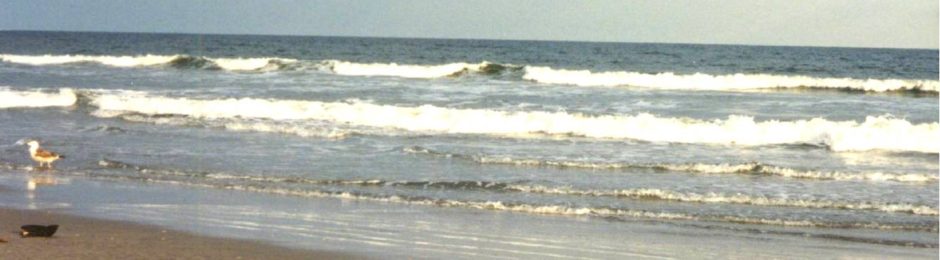



 For some reason the images no longer show here, but when you click on the question mark, it links to my books on Amazon.
